
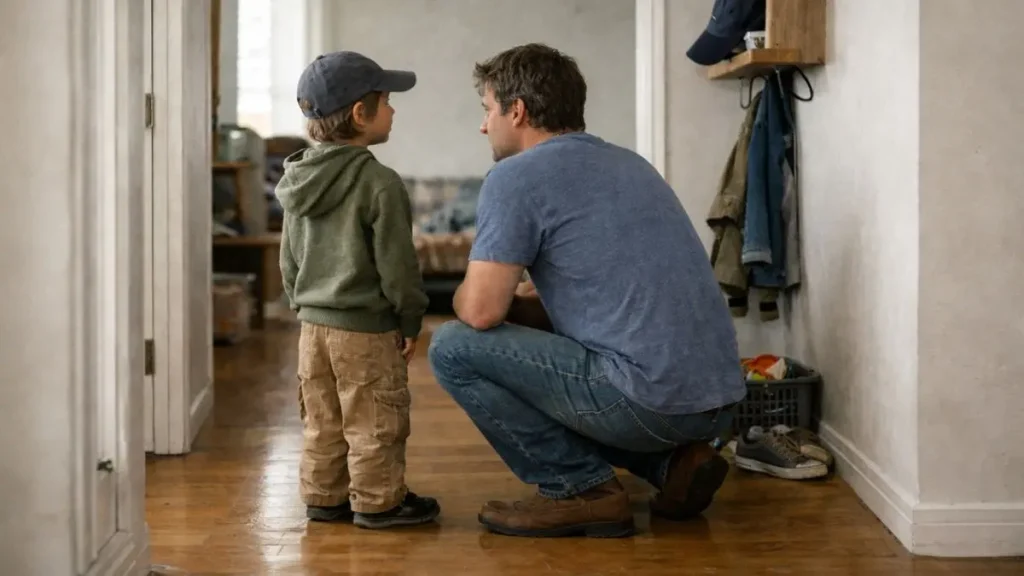
In some families, dads can be the calmer parent. That doesn’t mean mums are doing anything wrong. It usually means roles have formed around stress, capacity, and who is holding what at any given time.
TL;DR
In many families, one parent ends up being the calmer presence in moments of stress. Sometimes that parent is the dad.
- Calmness is not a personality trait, it is often a role
- Stress shows up differently in different parents
- One parent being calm does not mean the other is failing
- Calm roles can shift over time
- Understanding this dynamic can reduce guilt and resentment
This article is for / not for
This article is for:
- Parents noticing differences in how they respond under pressure
- Dads who find themselves as the steady presence
- Mums who feel judged or inadequate because they struggle more visibly
This article is not for:
- People looking to rank parenting styles
- Anyone wanting to assign blame
- Readers expecting simple fixes for complex dynamics
The calm parent myth
There is a strong cultural assumption that mums are naturally calmer, more emotionally regulated, and better at soothing children.
When reality does not match that expectation, guilt and judgement often creep in.
In many families, the calmer parent in difficult moments is the dad. That is not a problem. It is also not a verdict on either parent.
Calm is often a response, not a trait
Being the calm parent is rarely about temperament alone.
It often emerges as a response to who is carrying more mental load, who is more stretched, or who has less capacity in that moment.
Sometimes calm comes from being slightly less emotionally overloaded. Sometimes it comes from stepping in because the other parent is already overwhelmed.
Why calmness can fall to dads
There are several common reasons dads may end up as the calmer presence.
- One parent is already holding more emotional or logistical load
- One parent is more triggered by specific behaviours
- One parent is masking stress more effectively
- One parent has learned to stay outwardly calm as a coping strategy
None of these make one parent better than the other.
When calm gets misread
Calmness is often misinterpreted.
A calm dad may be seen as more capable or more patient. A visibly stressed mum may be seen as failing or less suited to parenting.
In reality, the calm parent may simply be the one with a bit more space left in that moment.Judging parenting through outward behaviour alone misses what is happening underneath.
The cost of always being the calm one
Being the calm parent comes with its own cost.
It can mean suppressing emotion, absorbing tension, and staying regulated for everyone else.
Over time, this can lead to exhaustion or delayed stress responses.
Calm is not free. It is effort, and it often needs space to be released later through rest, time alone, movement, or simply having somewhere safe to put the pressure down.
Why this dynamic can shift
Calm roles are not fixed.
They change with sleep, work pressure, mental health, support, and life events such as a new baby, returning to work, illness, bereavement, financial stress, or periods of burnout.
Many parents find that the calm parent switches at different stages or even day to day.
Recognising this can reduce the sense that anyone is permanently getting it wrong, and make it easier for one parent to support the other, easing pressure and bringing more calm overall.
What helps
Once this dynamic is understood, it becomes easier to respond with empathy rather than judgement. A few things that help families navigate this dynamic:
- Naming the roles without judgement
- Recognising calm as effort, not ease
- Allowing roles to shift without shame
- Supporting the parent who is carrying more load at that time
These are not instructions. They are observations.
Closing thoughts
When dads are the calm parent, it does not mean mums are failing.
It often reflects how pressure, responsibility, and emotional labour are being distributed at that point in time, not anyone’s ability or commitment as a parent.
It usually means stress is being shared in the only way it can be at that moment.
Calm is a role, not a measure of worth.