
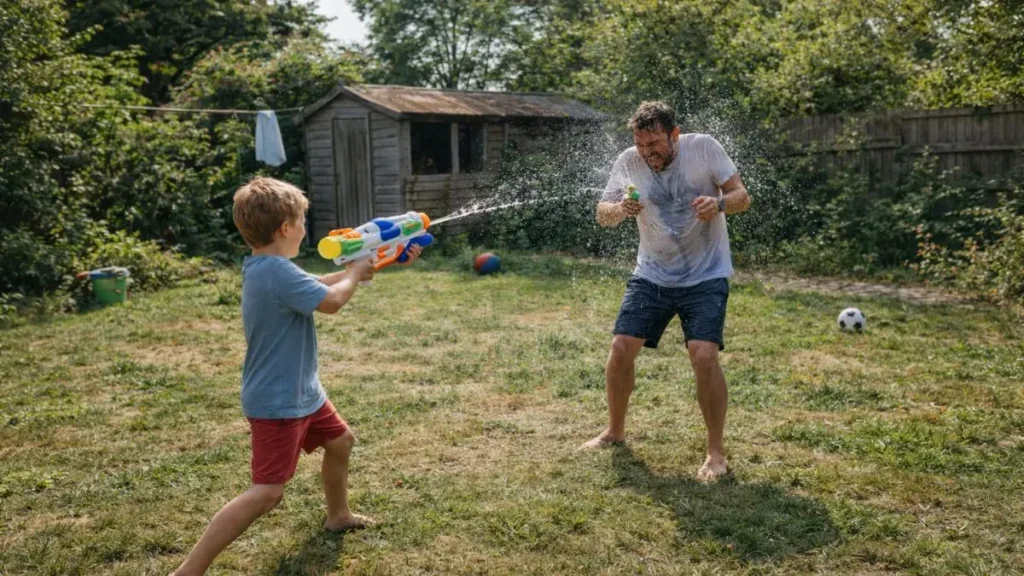
Play is often where dads feel most confident as parents. It is not a distraction from connection. For many dads, it is the connection. It’s often where relationships grow quietly, without pressure or performance.
TL;DR
Play is a core way many dads bond with their children.
- Play creates connection without pressure
- It allows dads to show care through action rather than words
- Children experience play as attention, safety, and shared focus
- Play-based bonding looks different to talk-based bonding, but is just as meaningful
- Dismissing play can quietly dismiss how many dads relate
This article is for / not for
This article is for:
- Dads who feel most connected to their children through play
- Parents who notice different bonding styles between mums and dads
- Anyone who worries that play is “not enough”
This article is not for:
- People looking to rank parenting styles
- Anyone wanting to reduce parenting to stereotypes
- Readers expecting a guide on how to play with children
Play is not a lesser form of bonding
There is a quiet hierarchy in parenting that places talking, explaining, and emotional discussion above physical or playful interaction.
Because of this, play is sometimes treated as secondary. Fun, but not serious. Enjoyable, but not meaningful.
For many dads, this framing does not match lived experience.
Why play works so well for dads
Play removes pressure.
You don’t have to find the right words. You don’t have to sit face to face and talk about feelings. You just do something together.
That might be building Lego side by side, kicking a ball back and forth, or lining up toy cars on the floor. Conversation, if it happens at all, happens naturally and without being forced.
For many dads, that makes connection feel easier and more honest. Care is shown through attention and time, not explanations.
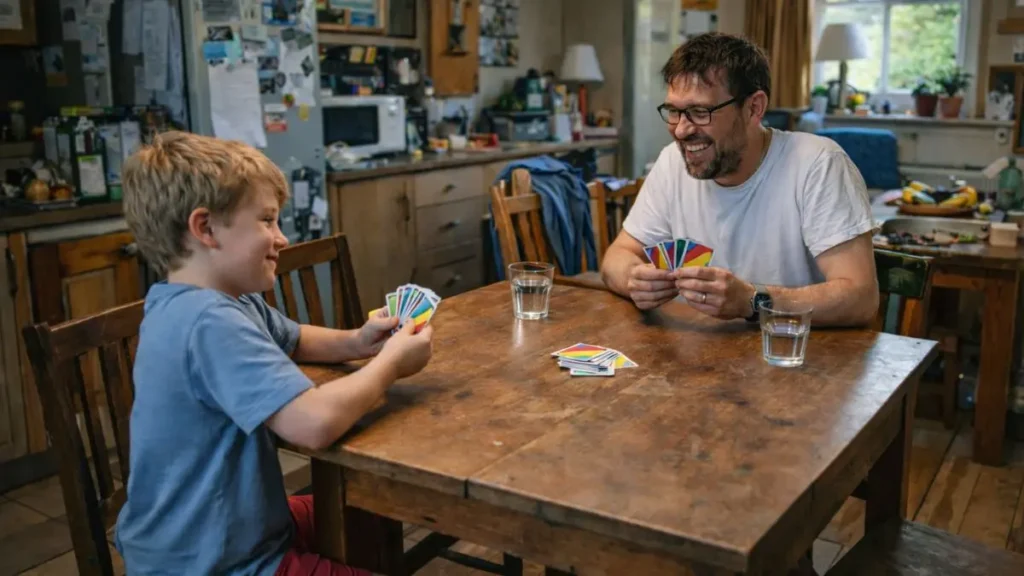
Play does not have to look one way either. For some children it is physical and energetic. For others it is quieter. A game of Uno, drawing together, building something slowly, or sitting side by side doing the same activity.
What matters is not the type of play, but that it suits the child.
Play as presence
When a dad plays, he is usually fully there.
He’s not checking his phone, thinking about work, or planning the next thing that needs doing. He’s following the child’s lead, sticking to their rules, and staying in the moment.
From a child’s point of view, that kind of attention matters. It feels like being chosen, even if it’s only for ten minutes on the living room floor.
Often, that connection happens because a dad starts something small rather than waiting to be asked. Picking up a game, kicking a ball, or getting down on the floor can be an invitation that makes it easier for a child to join in.
Physical play and regulation
Many dads naturally gravitate toward physical play.
This often looks very ordinary. Chasing each other round the park. Rolling around on the floor. Wrestling on the bed. Being the one who says, “Go on then, one more,” when everyone else is ready to stop.
From the outside, it can look noisy or chaotic. But for children, this kind of play helps them work out where their body ends and the world begins. They learn when things are getting too much, when to pause, and when it is safe to let go.
For dads, physical play is a way to connect without having to explain feelings or find the right words. You don’t have to ask how they feel. You’re already tuned in, adjusting your strength, slowing things down, or stopping when they need it.
That back-and-forth builds trust and helps children move between excitement and calm in a way that feels natural, not forced.
Why play is sometimes misunderstood
Because play looks light, it is easy to underestimate it.
From the outside, it can look like messing about or passing the time. Especially when compared to talking things through or setting boundaries.
But for children, play is how they make sense of relationships. It’s how they test trust, learn how others respond, and feel safe enough to be themselves.
When dads connect through play, they are not avoiding emotional connection. They are using a language that makes sense to their child.
When play is the bridge
In many families, play becomes a quiet bridge between different parenting styles.
One parent may naturally talk things through, ask questions, and check in emotionally. The other may connect more easily by doing something together.
This isn’t a problem to solve. Children benefit from having more than one way to connect, and from seeing different kinds of care in action.
Play and neurodivergent children
For many neurodivergent children, play can feel safer than conversation.
Talking can be demanding. Eye contact, questions, emotional language, and other things that can quickly become overwhelming can all add pressure. Playing alongside someone removes a lot of that.
Shared activities allow connection to build without putting the child on the spot. For dads, this can feel familiar and reassuring. A way of connecting that works without needing to change who you are.
Closing thoughts
Play is not a break from parenting. It is parenting.
It is showing up on the floor, in the garden, or at the park. It is giving your child your attention, even when you’re tired or busy.
For many dads, play is where connection feels most natural and sustainable. Recognising its value means recognising the many quiet ways dads build strong relationships every day.
Related reading
- How dads bond differently and that is okay
- When dads are the calm parent (and mums aren’t failing)
- Being a dad to a neurodivergent child: what surprised me
A note on the research
Research shared by the University of Cambridge suggests that playtime with dads may support children’s self-control.