
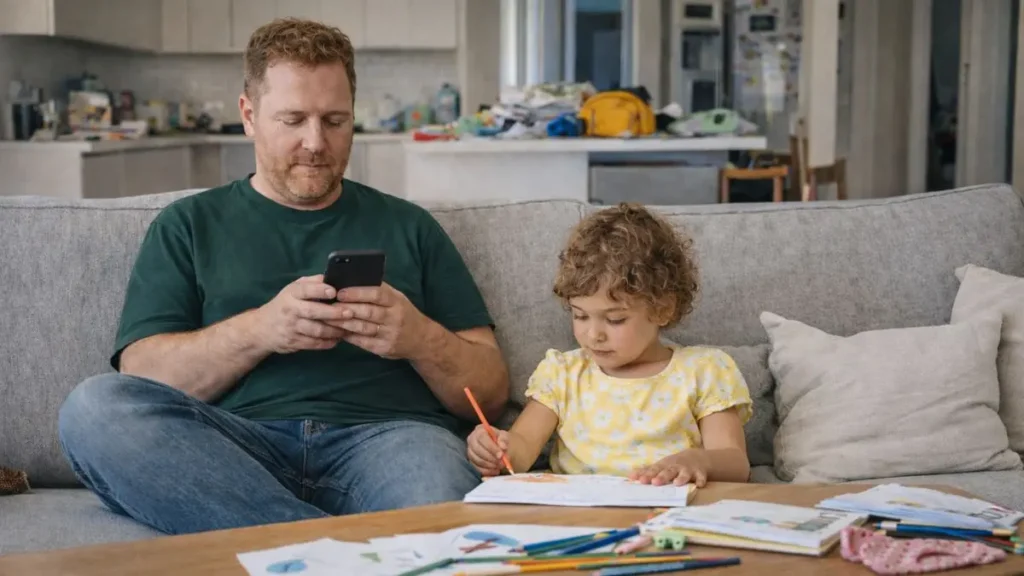
If parenting feels heavier the more advice you read or the more you scroll, comparison may be part of the problem. This article looks at why comparing yourself to other parents makes things harder, and what actually helps instead.
TL;DR
Comparison parenting rarely motivates in the way we hope. What tends to help more is this:
- Noticing when comparison creeps in
- Remembering that you only see highlights, not context
- Focusing on what works in your own family
- Reducing exposure to advice or content that increases pressure
- Letting “good enough” be enough
This article is for / not for
This article is for:
- Parents who feel worse after scrolling social media
- Anyone who constantly second-guesses their parenting
- Parents who feel behind, even when things are going okay
This article is not for:
- Parents who find comparison genuinely motivating
- People looking for performance-driven parenting goals
- Anyone wanting quick fixes or confidence hacks
If this isn’t quite right for you
You might find these more helpful:
Or, browse all our Parenting articles.
If this feels familiar, you’re in the right place. Read on.
Why comparison feels so hard in parenting
Parenting is already personal. Comparison makes it public.
When we compare ourselves to other parents, we rarely compare fairly. We compare our worst days to someone else’s best moments.
That gap creates pressure, doubt, and a sense that we are falling short, even when our children are okay.
Social media amplifies the problem
Social media turns parenting into a stream of moments.
Short clips, tidy homes, calm routines, and confident explanations create the impression that everyone else has it figured out. Context is missing. Hard days, support systems, and individual circumstances are invisible.
Social media often shows the face after the heavy make-up has been applied, curated for clicks, likes, and views rather than real life. The result is not inspiration, but quiet erosion of confidence.
Advice culture adds another layer
Parenting advice often presents itself as neutral or helpful.
But when advice is constant, it can turn into comparison by another name. Another routine to measure yourself against. Another standard you did not choose.
Not all advice fits all children or all parents all of the time. Every family and situation is different. When you stack advice that does not fit you, it can become overwhelming fast.
We once followed advice for weeks about a bedtime routine that simply did not fit our child or our family. Instead of helping, it created extra stress and made us doubt ourselves.
Even well-meaning guidance can land as pressure when you are tired.
What comparison takes away
Comparison shifts your attention outward.
They say comparison is the thief of joy, and that fits parenting perfectly. When your attention is pulled towards how others seem to be doing, it becomes harder to see what is actually working well in your own family.
Instead of noticing your child, your progress, or the small wins in front of you, your focus moves to where you think you are struggling. Over time, that can paint a picture that you are failing when you are not.
Over time, that makes parenting feel performative rather than responsive.
What helps more than comparison
Most parents do not need more benchmarks. They need more permission.
That might look like:
- Muting or unfollowing accounts that increase self-doubt
- Limiting how much advice you consume at once
- Checking in with what actually works in your home, and pausing to question whether the advice you’re following is right for you
- Talking to parents you trust rather than scrolling
Small boundaries around comparison can have a big impact.
What surprised us about comparison
One thing that surprised us was how quickly parenting felt lighter when comparison was reduced.
Nothing else changed. The children did not change. The routines did not change. Only the measuring stopped.
That shift mattered.
Related reading
If this resonates, you may also find these articles helpful:
- Screen time rules that actually work for real families
- Empower yourchild 20 things to say to your child and the reasons why
If comparison or pressure is affecting your wellbeing, these UK organisations offer support and perspective:
A gentle close
Comparison is understandable. It is also optional.
If something you read or watch makes parenting feel harder, you are allowed to step away. Your family does not need to look like anyone else’s to be okay.
FAQ
Is comparison always harmful?
Not always. It becomes unhelpful when it increases pressure or self-doubt rather than offering ideas.
How can I stop comparing completely?
Some parents cannot stop entirely, but you can stack the odds in your favour with small changes. Reducing exposure and noticing when it happens is often enough.