
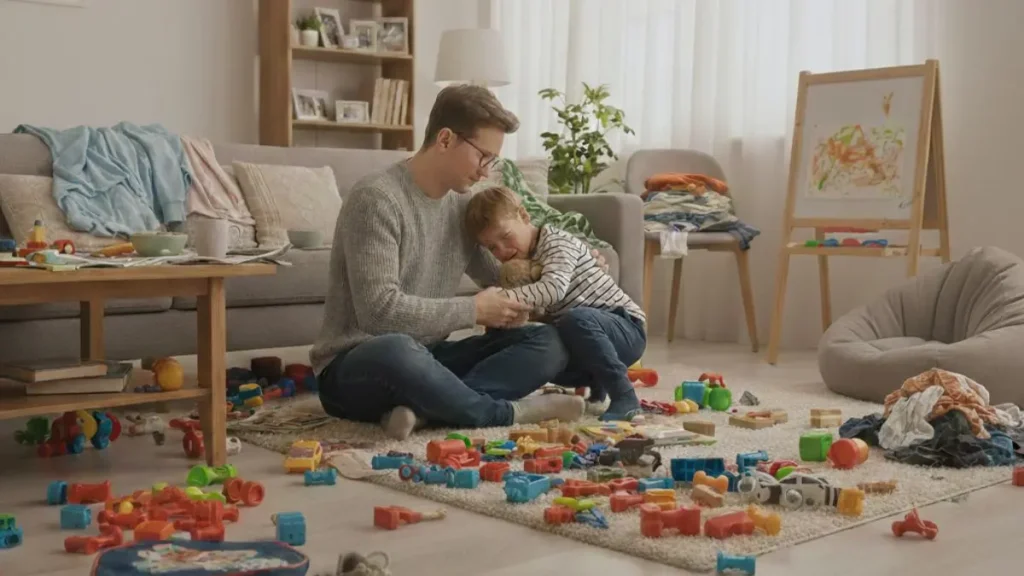
Big emotions are part of childhood. This article looks at how parents can help children move through strong feelings without relying on punishments, focusing on support, boundaries, and what actually helps in the moment.
TL;DR
Big emotions are not bad behaviour. They are a sign that something feels overwhelming. Approaches that tend to help more include:
- Staying calm and present during emotional moments
- Naming feelings without judgement
- Holding boundaries without adding punishments
- Helping children calm first, then talk later
- Remembering that emotional skills take time to develop
This article is for / not for
This article is for:
- Parents dealing with meltdowns, outbursts, or intense emotions
- Families who want alternatives to punishment-based responses
- Parents trying to support emotional regulation, not control
This article is not for:
- Parents looking for quick behaviour fixes
- Anyone expecting emotions to stop once addressed
- Families comfortable using punishments as their main tool
If this isn’t quite right for you
You might find these more helpful:
- Why comparison parenting makes everything harder
- How to support a child’s mental health without overreacting
Or, browse all our Parenting articles.
If this feels familiar, you’re in the right place. Read on.

Why punishments often fail with big emotions
When a child is overwhelmed, their brain is not in a place where learning or reasoning happens. Threats of punishment at this point can lead to shutdown, making it even less likely you will get the outcome you are hoping for.
Punishments in these moments may stop a behaviour temporarily, but they rarely teach a child how to manage what they are feeling. Often, they add shame or fear to an already difficult moment.
Big emotions need support before correction.
What helps more in the moment
In the middle of a meltdown or emotional outburst, connection usually matters more than consequences.
That might look like:
- Sitting nearby rather than sending them away
- Keeping your voice calm and steady
- Using short, simple phrases
The goal in the moment is not to teach a lesson. It is to help the nervous system settle. Building connection and having understanding in these moments can often diffuse a situation much faster.
Naming feelings without amplifying them
Putting words to emotions can help children feel understood.
This does not mean analysing everything or turning feelings into a big conversation. Simple statements are often enough.
For example:
- “That feels really frustrating.”
- “You’re upset because things changed.”
Feeling seen often reduces intensity.
Boundaries without punishments
Supporting emotions does not mean removing boundaries.
You can be kind and firm at the same time. Boundaries help children feel safe, even when emotions are big.
For example:
- “I can’t let you hit, but I’m here.”
- “It’s okay to be angry. It’s not okay to hurt.”
This separates feelings from behaviour.
What surprised us about emotional support
One thing that changed how we saw big emotions came from remembering what they felt like from the inside.
I remember as a child having emotional outbursts that felt completely out of proportion for the actual situation. After things had calmed down, I often knew that. In the moment, though, I felt out of control.
When punishment was introduced during those moments, it usually made things worse. It added pressure and fear when I was already overwhelmed. After the dust had settled, what often followed was shame, and no clear understanding or way to explain why the emotion had felt so explosive in the first place.
Looking back, it became clear that emotions are powerful fuel and are not easily softened by rational thought alone.
Later, as parents, we noticed something similar with our own child. When we focused on calm presence rather than consequences, things settled more quickly.
Some parents also recognise these moments in themselves. That realisation can be powerful. It can shift the response from frustration to understanding, and make it easier to meet a child’s emotions with compassion rather than punishment.
Nothing about the boundary changed. The emotional temperature did.
Related reading
If you’re thinking about emotional support and parenting approach, these articles may also help:
- What tired parents really need from advice articles
- Screen time rules that actually work for real families
Useful guidance
If you want more guidance on supporting children’s emotional wellbeing, this UK resource may be helpful:
- Childline support page – Some parents also find it helpful to see how emotions are explained directly to children, such as this support page on feelings and emotions.
A gentle close
Helping children manage big emotions is a long process, not a quick fix. It is often more helpful to talk about what happened much later, once everyone is calm. Focusing on understanding emotions rather than blame or shame can make those conversations easier.
If your child’s emotions feel big right now, that does not mean you are doing it wrong. Skills develop slowly, and your calm presence matters more than perfect responses.
FAQ
Does this mean children should never face consequences?
No. Consequences still exist. This approach focuses on separating emotional support from discipline.
What if this doesn’t work straight away?
That is normal. Emotional regulation skills take time and repetition.