
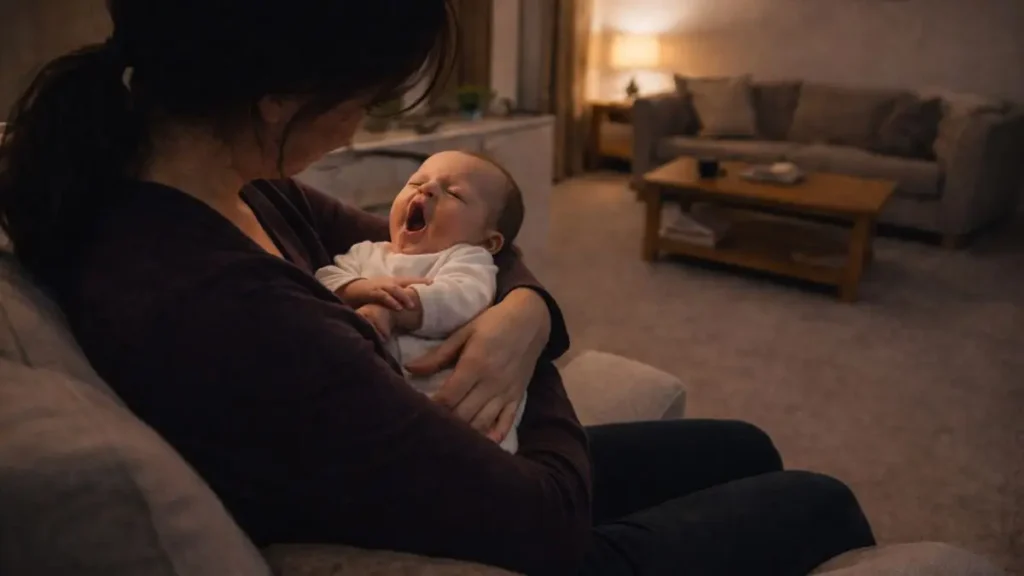
If your baby looks shattered but still resists sleep, you’re not imagining it and you’re not doing anything wrong. This is a really common, confusing phase for many families. Understanding why it happens can make nights feel a little less tense and help you respond with more confidence.
Quick summary
When a baby fights sleep despite being exhausted, it’s usually not stubbornness or bad habits. It’s more often about how their body and brain handle tiredness:
- Overtired babies can struggle to switch off
- Sleep pressure and overstimulation can clash
- Developmental changes can disrupt settling
- Your calm response matters more than a perfect routine
This article is for / not for
This article is for:
- Parents of babies who seem exhausted but won’t settle
- Families feeling stuck in bedtime battles
- Tired parents looking for reassurance, not rigid rules
This article is not for:
- Parents looking for a strict sleep training method
- Situations where you’re worried about illness or medical issues
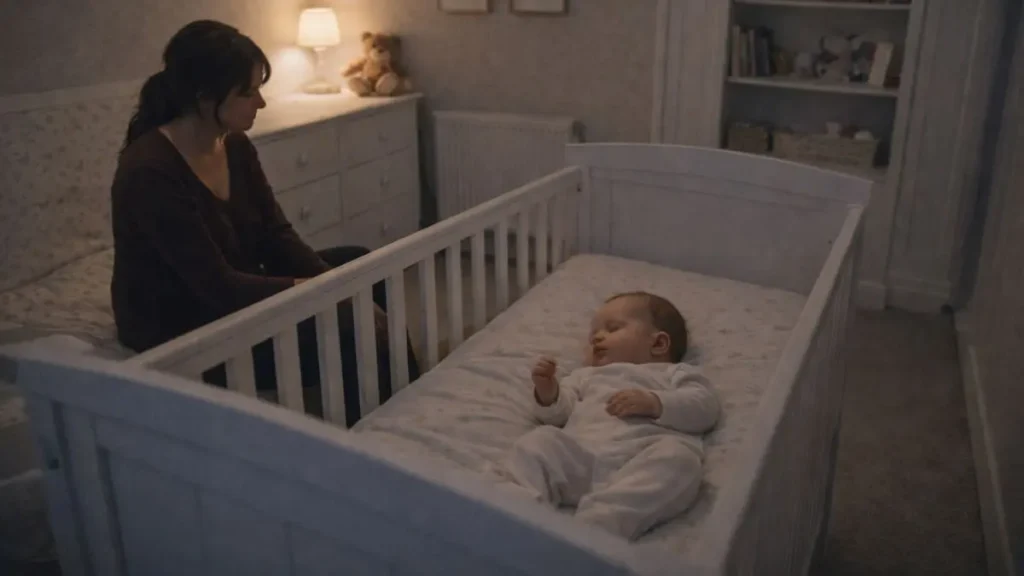
When tired doesn’t lead to sleep
One of the biggest surprises for many parents is that being very tired doesn’t always make sleep easier. In fact, for some babies, it does the opposite.
When a baby becomes overtired, their body can release stress hormones like adrenaline. These hormones are useful for staying alert, but not for drifting off. So even though your baby looks exhausted, their nervous system may be quietly stuck in “alert mode”.
This can show up in different ways. Some babies arch or stiffen when you try to settle them, others cry the moment they’re put down. You might see short bursts of dozing followed by sudden, wide‑awake fussing that feels completely at odds with how tired they look.
It’s frustrating, especially when all you want is for them to rest.
Sleep pressure and overstimulation
Babies rely on a balance between sleep pressure (how tired they are) and calmness. Too much stimulation close to sleep can tip that balance.
This kind of overstimulation can creep in without you realising it. Bright lights, busy rooms, or lots of well‑meaning cuddles from different people can all add to it. Screens, noisy toys, or a rushed, tense bedtime atmosphere can have the same effect.
Even positive stimulation can make it harder for a tired baby to settle. This is why evenings often unravel first.
Developmental leaps can disrupt sleep
Sleep resistance often shows up during periods of rapid development. As babies grow, their brains are constantly rewiring.
This often coincides with big developmental changes. Learning to roll, crawl, or sit can suddenly make sleep harder. Increased awareness of their surroundings or stronger separation awareness can also play a part.
During these phases, babies may seem more alert at bedtime, need extra reassurance, or wake more easily. It doesn’t mean you’ve created a problem. It usually means something big is happening developmentally.
Why routines help, but don’t fix everything
A calm, predictable bedtime routine can be very helpful. It signals safety and consistency. But routines are not magic.
If your baby is overtired, unwell, or in the middle of a developmental shift, even the best routine might not work smoothly every night. That’s normal.
What often helps more than perfect timing is focusing on the overall feel of bedtime. Keeping the environment calm and low‑stimulus can make a difference, as can responding early to tired cues when you notice them. Staying emotionally steady, even if sleep doesn’t happen quickly, can also help your baby feel safe enough to switch off.
A small but important realisation
We and many other parents discover this the hard way:
Trying harder to make sleep happen can sometimes make things worse.
When we feel stressed and tired, babies can often sense it. Softening the goal from “you must sleep now” to “I’m here and you’re safe” can reduce the pressure for both of you.
Sleep usually follows calm, not force.
Related reading
- Breastfeeding: The benefits and how to make it easier
- A realistic reset for parents after a hard year
Or browse all our Babies articles
For general guidance on baby sleep patterns and what’s considered normal at different ages, the NHS has a helpful overview:
A gentle close
If your baby is fighting sleep even when exhausted, it doesn’t mean you’re failing or missing something obvious. It usually means their little system is still learning how to switch off.
Tonight doesn’t need to be perfect. A calmer moment, a bit of rest, or simply getting through is enough.
FAQ
Is it normal for babies to fight sleep?
Yes. Many babies go through phases where settling feels harder, especially during growth or routine changes.
Does fighting sleep mean my baby needs less sleep?
Not usually. It more often means they’re overtired or overstimulated, not that they don’t need rest.