

Many parents notice the same confusing pattern: their child seems to manage school just fine, only to unravel as soon as they get home. This can feel worrying, frustrating, or even personal. In reality, this behaviour is common and often a sign of coping, not failure.
TL;DR
If your child has a meltdown after school, it usually isn’t because they’ve had a bad day or because you’re doing something wrong. What’s happening is often this:
- Your child is holding themselves together all day in a demanding environment
- School uses up emotional, social, and sensory energy
- Home feels safe enough for those bottled-up feelings to come out
- The meltdown is a release, not misbehaviour
This article is for / not for
This article is for:
- Parents of primary-aged children
- Families dealing with after-school meltdowns or emotional outbursts
- Parents wondering why teachers report a “good day” when evenings feel hard
This article is not for:
- Parents looking for behaviour charts or discipline strategies
- Situations involving immediate safety concerns
What this pattern often looks like at home
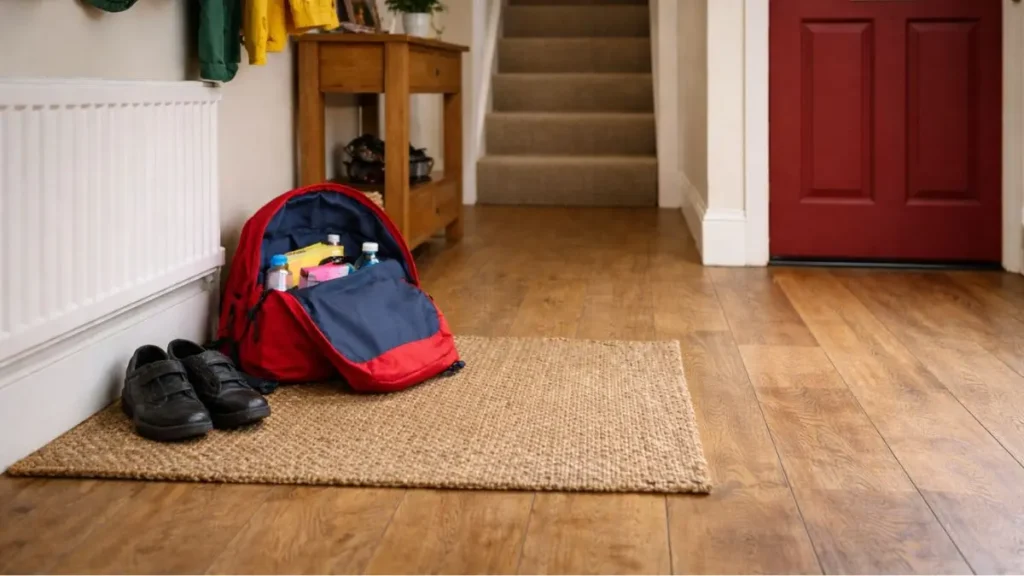
For many families, the pattern is predictable. A child gets through the school day, follows rules, manages transitions, and copes socially. Then, within minutes of getting home, things unravel.
That might look like tears over small things, anger that seems to come from nowhere, refusal to talk, or a complete emotional shutdown. The contrast can be confusing, especially when school feedback is positive.
Why children can cope all day at school
School asks a lot of children, even when things appear to be going well. They are expected to listen, follow instructions, manage noise, navigate friendships, sit still, concentrate for long periods, regulate their behaviour, cope with constant transitions, and deal with the behaviour of other children — including loud classmates, disruptions, conflict, or unkind behaviour.
For many children, especially sensitive or neurodivergent ones, this means they spend the day consciously or unconsciously holding themselves together. They may mask tiredness, anxiety, sensory overload, or emotional stress in order to get through.
This effort takes energy.
Why it comes out at home
Home is usually the place where a child feels safest. It’s where expectations are lower, support is familiar, and mistakes feel less risky.
When a child finally relaxes, all the effort they used to cope during the day can spill out at once. The meltdown isn’t planned. It can be the nervous system letting go, or simply the child no longer being able to hold together the overwhelm that has built up across the day. When this is combined with tiredness, hunger, and sensory load, it can quickly become a tinderbox for a meltdown.
This is why after-school meltdowns often happen with the people a child trusts most. A child is more likely to let go with adults they feel safe with, because they know those big feelings will be met with care rather than judgement.
This doesn’t mean school is the problem
It’s easy to assume something must be wrong at school if evenings are difficult. Sometimes that’s true, but often it isn’t.
Many children who melt down at home are managing school exactly as expected. The issue isn’t that school is failing them, but that it is demanding.
Coping all day and falling apart later is often a sign that a child is working very hard to meet expectations.
When this is more common
This pattern is particularly common in children who are using a lot of energy to manage their environment or meet expectations during the school day. It often shows up in children who, on the surface, seem to be coping well at school, but are quietly working very hard underneath. You might recognise it more clearly in children who:
- Are sensitive to noise, crowds, or change
- Put a lot of effort into following rules or pleasing adults
- Find social situations tiring
- Are neurodivergent or awaiting assessment
That said, it can happen to any child during busy or demanding periods.
What helps in the moment
There is no single fix, but small, supportive changes can make a difference. Developing your own routine that fits your family life can really help regulation and reset.
It can be a matter of trial and error for a while until you find what works well for your child.
Some families find it helps to:
- Lower or remove demands immediately after school
- Offer food, quiet, or downtime before asking questions
- Keep routines predictable in the early evening
- Avoid jumping straight into problem-solving
Why children often can’t explain what’s wrong
You might feel the urge to ask your child what happened at school, or what caused the meltdown. Sometimes that conversation is helpful, but often, children genuinely don’t know themselves.
Speaking personally, even as an adult there have been times when I’ve felt completely overwhelmed but wouldn’t have been able to tell someone exactly what was wrong. There wasn’t one clear cause – just too much, for too long.
For children, that lack of words or insight can be even more frustrating for them, than it is for us. They may feel something is wrong without being able to explain it.
Because of that, pushing for answers in the moment can sometimes add to the pressure. It’s often kinder to give space first, and later ask broader, gentler questions about how they’re feeling, rather than trying to pin down a specific cause.
The aim isn’t to stop feelings, but to make them easier to move through.
When worries are understandable
If meltdowns are intense, last a long time, or are affecting your child’s wellbeing, it’s reasonable to want more support.
In those cases, talking to the school, your GP, or a relevant support service can help you understand what your child needs and how to support them consistently.
Related reading
You might also find these articles helpful:
- Helping children manage big emotions without punishments
- How to talk to family about parenting choices without conflict
External support and guidance
If you want to explore this further, these UK resources could be helpful:
A short takeaway
When a child falls apart at home after coping all day, it’s often a sign they feel safe enough to let go.
It doesn’t mean you’ve caused the meltdown, and it doesn’t mean your child isn’t coping. It means they’ve been coping for a long time. Their battery is run down, and now they need rest, understanding, and support.