
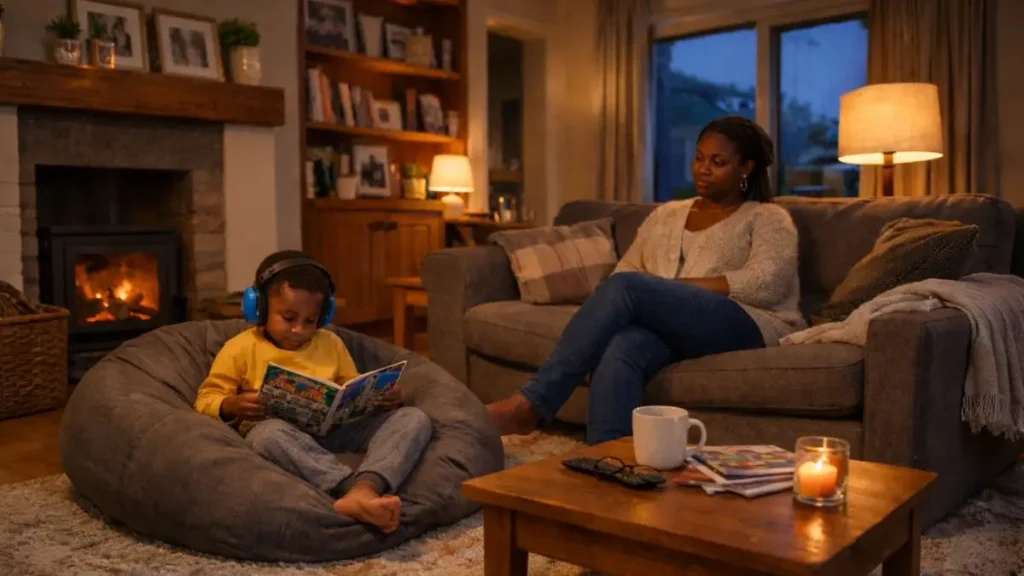
If your home often feels louder, busier or more tense than you would like, you are not alone. Many neurodivergent families are not dealing with “bad behaviour”, but with nervous systems that are already stretched. This article shares small, realistic changes that can gently lower the overall stress level without turning your home into a rule book.
Quick summary
Creating a calmer home rarely requires a dramatic overhaul. It usually begins with small, intentional adjustments. The core ideas in this article are simple:
- Lower background sensory load before correcting behaviour
- Soften transitions that feel abrupt or rushed
- Build one predictable calm moment into the day
- Adjust the environment before increasing expectations
This article is for / not for
This article is for:
- Parents of neurodivergent children who feel evenings are tense or chaotic
- Families where small triggers regularly escalate
- Parents who want practical ideas rather than rigid systems
This article is not for:
- Diagnosing Autism or ADHD
- Creating strict behaviour programmes
- Suggesting one approach works for every family
Medical disclaimer
This article is for general information and parental understanding only. It does not diagnose conditions or provide medical or therapeutic advice. If you are concerned about your child’s development or mental health, consult a qualified professional or refer to recognised UK guidance such as the NHS.
If this isn’t quite right for you
You might find these helpful:
- Emotional regulation for children: what actually helps at home
- Why some children cope all day then fall apart at home
Or browse all our Neurodiversity articles.
If this article feels relevant for your family, read on.

When calm feels out of reach
A calmer home is not about silence or perfection. It is about reducing the overall load on everyone’s nervous system.
In many neurodivergent families, the day already contains noise, transitions, expectations and social effort. By the time children walk through the door, there is often very little margin left. Even small additional demands can tip the balance.
Small, consistent changes can begin to create that missing margin. Here are five small shifts that can gently lower the pressure in your home.
1. Lower the background noise first
Before addressing behaviour, look at the environment.
Is the television on when no one is really watching? Is music playing while someone else is speaking? Are multiple conversations happening at once?
Switching off background noise, even temporarily, can noticeably reduce tension. It may seem minor, but for children with sensory sensitivities it can feel like turning the volume of the world down. That reduction alone can prevent escalation later.
2. Soften the transitions
Many tense moments happen not because of the activity itself, but because of how quickly it changes.
Instead of “Dinner now”, try a short runway. Offer a five minute warning. Use a visual timer. Give a gentle reminder that something is about to shift.
Predictability reduces the spike in stress that abrupt transitions can cause. When children know what is coming, their nervous systems have more time to adjust.
3. Create one predictable calm anchor in the day
This does not need to be elaborate. In fact, the simpler it is, the more sustainable it becomes. The goal is not to create a perfect routine, but to introduce a small, predictable pause where nothing extra is required and everyone knows what to expect.
It might be:
- Ten minutes of quiet play after school
- A consistent snack and decompression time
- A short walk together before homework
- Sitting under a blanket with low lighting before bed
The activity itself matters less than the reliability. A known calm moment gives the nervous system something steady to lean on.
4. Reduce demand before increasing discipline
When things escalate, the instinct is often to tighten control. More rules. A firmer tone. Clear consequences.
Sometimes that works. Often, particularly in neurodivergent families, it increases pressure.
Ask first: is this behaviour coming from overload?
Lowering demand temporarily can prevent a larger explosion. That might mean postponing a conversation, simplifying instructions, or allowing recovery time before tackling expectations. Regulation tends to improve cooperation more effectively than intensity does.
5. Make the physical environment work harder for you
Small environmental tweaks can do a surprising amount of heavy lifting.
Lamps instead of overhead lights in the evening. Comfortable clothing options after school. A quiet corner that is not used for time out but for decompression.
Some families also find tools such as soft lighting, weighted blankets, noise‑reducing headphones or simple fidget items helpful. These are not magic solutions, but when used thoughtfully they can support regulation and reduce overall strain.
What this is not about
This is not about creating a perfectly controlled house where no one makes noise and nothing ever goes wrong.
It is not about walking on eggshells or removing every challenge from your child’s life. Children still need boundaries, guidance and opportunities to grow.
It is also not about blaming yourself for every difficult moment. Neurodivergent nervous systems can be more sensitive and reactive, and that is not a parenting failure.
From our own experience, even with systems in place, they do not always work. Some days everything flows. Other days the same approach falls flat. We have put routines in place that worked for months, only to realise they needed adjusting again. Different days bring new challenges, and what helps one child may not help another. We have tried many ideas over the years, and we are still adapting.
This is about recognising that behaviour is influenced by environment. When the nervous system feels safer and less overwhelmed, cooperation and flexibility are far more likely to follow — often without the need for louder instructions or stricter control.
Bringing it together
A calmer neurodivergent home rarely comes from one big, dramatic overhaul. It usually grows from small decisions that gently reduce friction across the day.
When you lower background noise, soften transitions and build one reliable calm anchor, you are not “giving in”. You are adjusting the environment so that everyone’s nervous system has more space to cope.
Lower the load. Soften the edges. Build one predictable calm moment.
You do not need to implement everything at once. Choose one small change that feels manageable this week and notice what shifts. Calm tends to grow gradually — not because everything becomes perfect, but because the overall pressure has quietly reduced.
You may also find these helpful
If creating a calmer home feels connected to what you are noticing, these articles explore related themes in more depth:
- Sensory overload at home: what parents often miss – explores how everyday background triggers such as lighting, noise, smells and sibling movement quietly build across the day, and how small adjustments can reduce overall nervous system load.
- What actually helps children calm down after a busy day – focuses on realistic regulation strategies that support decompression after demanding situations, helping you build wind‑down routines that feel manageable rather than rigid.
Further information
For broader UK‑based guidance on neurodiversity and family wellbeing, you may find these helpful:
A key takeaway for a calmer home
A calmer home is rarely created through stricter control.
It is created through lower pressure and thoughtful environmental adjustments. Small, consistent changes often have a greater impact than louder instructions.
When you focus on reducing overall load rather than increasing intensity, you create conditions where regulation, cooperation and connection have room to grow.