
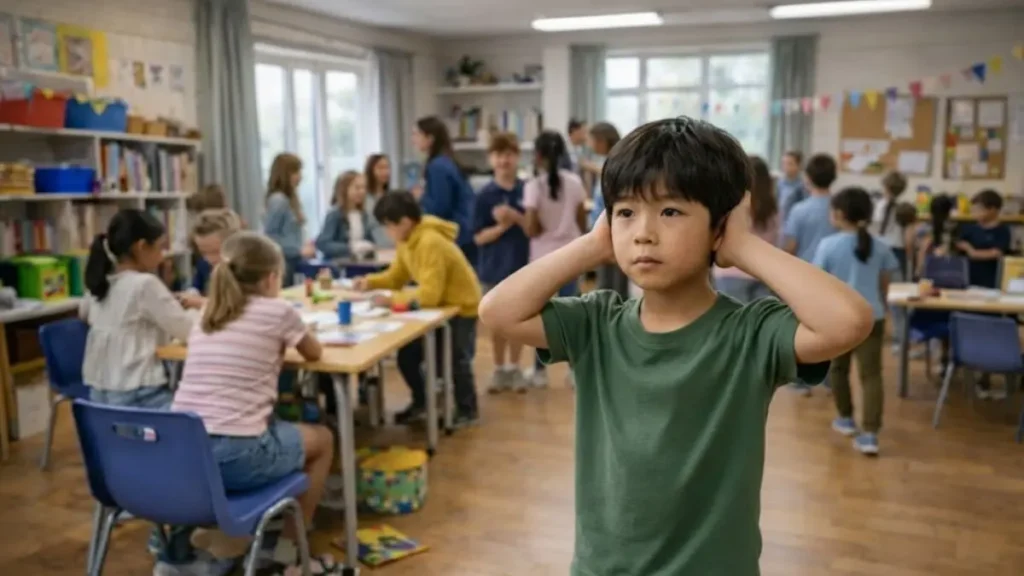
When your child is overwhelmed, it can look loud, tearful, or completely shut down. It can leave you feeling unsure what to do next — or desperate to make it stop. In those moments, it’s natural to focus on stopping the behaviour. But what children often need most isn’t control or correction. It’s calm, steady support. This article explains what truly helps when a child feels overloaded.
Quick summary
When a child feels overwhelmed, their nervous system is struggling to cope. What helps most is not fixing or lecturing, but helping their body feel safe and supported:
- Reduce demands and stimulation first
- Stay physically and emotionally steady
- Offer simple choices, not lots of questions
- Prioritise safety and connection before addressing behaviour
If you just need quick help in the moment, read this short version for when your child is overwhelmed.
This article is for / not for
This article is for:
- Parents whose child becomes tearful, angry, frozen, or chaotic when overwhelmed
- Families dealing with after‑school meltdowns or sudden shutdowns
- Parents who want reassurance about what actually helps in the moment
This article is not for:
- Situations involving serious harm or immediate danger
- Diagnosing anxiety, ADHD, Autism, or other conditions
- Structured behaviour programmes or reward systems

Why overwhelmed children don’t need more input
When a child is overwhelmed, their brain is already overloaded. Adding more words, more instructions, or more consequences usually increases the pressure.
Overwhelm can show up in different ways. Some children explode. Others withdraw. Some become silly or defiant. Underneath those behaviours is the same thing: a nervous system that has reached its limit.
In that state, thinking clearly, explaining feelings, or making good choices becomes much harder.
So if more input doesn’t help, what does?
What children really need in that moment
They need the intensity around them to come down.
That often looks like lowering your voice, reducing noise, and pausing whatever demand triggered the moment. It might mean turning off the television, stepping into a quieter room, or simply sitting nearby without talking.
What matters most is that the adult becomes the steady one.
Children borrow regulation from the people around them, because their brains are wired to tune into the tone, breathing, and body language of the adults nearby. This simple process, often called co‑regulation, means your calm can help their nervous system settle.
When you slow your breathing, soften your tone, and keep your movements calm, their body has a better chance of settling too.
This isn’t about discipline
It’s tempting to address the behaviour straight away. But overwhelmed children usually cannot process correction until they feel safer.
A short, simple phrase is often easier for an overwhelmed child to take in than a longer or more complex instruction.
For example:
- “I’m here.”
- “You’re safe.”
- “We’ll sort it out in a minute.”
These don’t solve the problem. They signal that the relationship is intact, even when things feel big.
Once calm begins to return, then you can revisit what happened, if it still needs revisiting.
Overwhelm doesn’t mean your child can’t cope generally, or that something is wrong with their character. It means they’ve reached the edge of their capacity in that moment.
Small choices help restore control
Overwhelm often comes with a sense of losing control. Offering a simple choice can gently hand some of that back, such as choosing between a cuddle or space, or deciding whether to sit on the sofa or go to their room. Too many options can add pressure, so keeping it to one or two is usually enough.
When doing less actually works better
Parents often feel they should do more in hard moments — more explaining, more reasoning, more problem‑solving.
In reality, overwhelmed children tend to settle faster when the adult does less but stays present. That might look like dimming the lights slightly, moving to a quieter part of the house, putting on soft background music, gently rubbing their back if they’re open to touch, or simply pausing the conversation and letting the moment breathe.
It can feel counter‑intuitive. But reducing stimulation is often the fastest route back to calm.
A pattern many families notice
For example, it might be a long school day followed by a noisy after‑school club, a rushed dinner, and then homework. By the time you’re asking them to tidy up or get ready for bed, their nervous system has already handled more than it can comfortably process.
Overwhelm rarely comes from nowhere.
It often follows busy days, social demands, unexpected changes, tiredness, or sensory overload. Recognising those patterns can help you step in earlier next time, before things tip over.
You’re not trying to remove all stress from your child’s life. You’re helping them build the skills to handle it safely.
If you want to go a bit deeper
If this article connects with what you’re seeing at home, these may help you explore the same ideas more practically:
- How to calm an overstimulated child at home (step‑by‑step) – clear, in‑the‑moment support when a child is overloaded and struggling to regulate.
- Why tired children often seem ‘hyper’ instead of sleepy – how tiredness and overwhelm can show up as chaotic or wired behaviour.
What matters most
When a child is overwhelmed, they don’t need perfect parenting. They need a calm adult who can hold steady while their nervous system regulates to a calmer state.
Reducing pressure, staying present, and reconnecting before correcting may sound simple, but those small responses build emotional safety over time — and that safety is what makes learning and resilience possible.
If you’re not sure where to start tomorrow, begin by noticing one early sign that your child is becoming overwhelmed and gently lower the pressure before it peaks.