

Many families feel like money disappears each month without a clear reason why. In reality, it is rarely one big purchase causing the problem. More often, it is small everyday spending patterns that quietly build up over time. Once you start noticing where the money actually goes, it becomes much easier to bring spending back under control without feeling deprived.
Quick summary
These are some of the most common family overspending habits that quietly leak money from household budgets without anyone really noticing.
When families feel stretched financially, the cause is often a handful of everyday habits rather than a single expensive decision. Some of these spending patterns are so normal they barely register day to day:
- Small food top‑ups from convenience shops often cost far more than planned
- Subscriptions and memberships quietly accumulate over time
- Convenience spending increases when parents are tired or busy
- Children’s activities and school costs can slowly creep higher each term
- Buying quick replacements rather than repairing or reusing items adds up
None of these habits mean a family is “bad with money”. They are simply very common patterns that happen in busy family life.
This article is for / not for
This article is for:
- Parents who feel their monthly spending creeps higher than expected
- Families trying to understand where everyday money actually goes
- Households looking for small, realistic ways to reduce spending
This article is not for:
- Families dealing with serious debt or financial crisis
- Situations that require professional financial advice
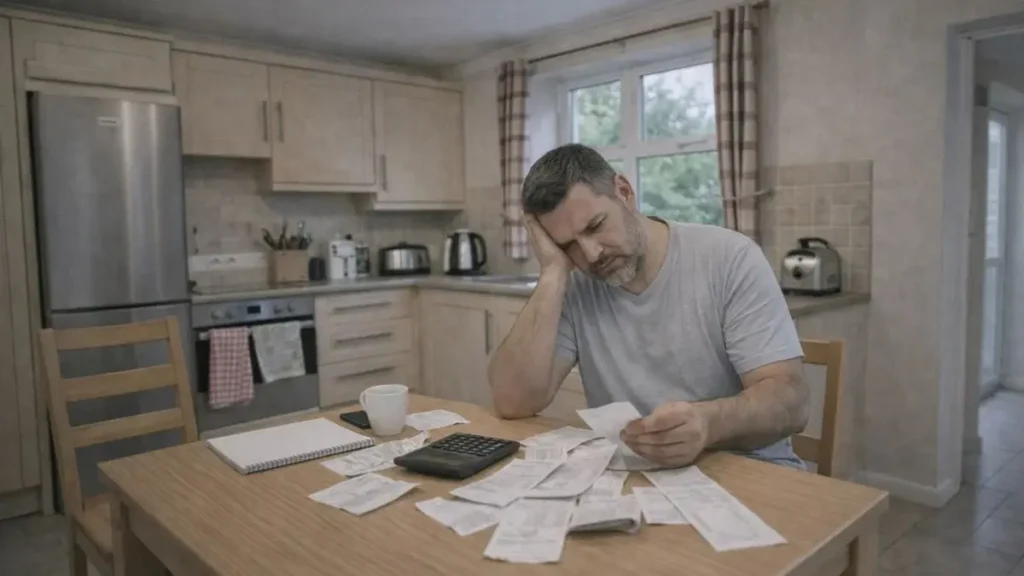
Why overspending happens in normal family life
Most families do not overspend because they are careless. In reality, modern family life makes it very easy for spending to drift upwards without anyone consciously deciding to spend more.
A takeaway coffee here, a quick supermarket top‑up there, or a new streaming service for the kids. None of these feel like big decisions at the time. But when they repeat every week, the total can become surprisingly large.
Understanding where this happens is not about blame. It simply gives families a clearer picture of what is actually happening in their monthly budget.
The quiet overspending that happens in convenience shopping
One of the biggest hidden spending patterns in family life is the convenience shop. A quick visit to the local shop for milk, snacks, or bread often costs far more per item than a planned supermarket shop.
For example, a £3–£5 convenience top‑up shop happening three times a week might not feel significant in the moment. But over a year that can quietly add up to roughly £450–£750 simply from small top‑up purchases.
This does not mean families should never use convenience shops. They exist for a reason. But noticing how often they are used can sometimes reveal why the food budget feels higher than expected.
A pattern many parents notice is that these trips often happen when routines break down. A late evening, a missed weekly shop, or a busy weekend can quickly lead to several small but expensive purchases.
A quick way to visualise this is to compare how a single item might cost in different places:
| Item (example) | Convenience shop | Supermarket shop | Difference |
|---|---|---|---|
| 4‑pint milk | ~£2.30 | ~£1.65 | ~65p |
| Bread loaf | ~£1.70 | ~£1.20 | ~50p |
Small price differences like this repeated several times a week can quietly add hundreds of pounds to a family food budget across a year.
Subscription creep in modern family life
Subscriptions are another place where spending quietly builds up. Streaming services, apps, delivery memberships, children’s learning platforms, gaming subscriptions, and even photo storage services can accumulate slowly over time.
Individually they may only cost a few pounds a month, but together they can become a surprisingly large monthly total. This is why it can help to occasionally write down every subscription leaving your bank account and check which ones the family is actually using.
Many families are surprised when they see the total for the first time. Some modern banking apps now automatically highlight recurring subscriptions, which can make it much easier to spot services you forgot were still active.
The tired parent spending trap
Parenting is exhausting. When energy is low, convenience becomes very tempting.
Takeaways, last‑minute supermarket purchases, and impulse online orders often happen when parents are overwhelmed or running out of time.
This is not poor money management. It is a very normal response to fatigue and busy schedules.
What helps many families is reducing the number of situations where these decisions have to be made in the moment. A simple meal plan, a repeat grocery list, or keeping easy freezer meals available can quietly reduce many of these last‑minute spending decisions.
A quick example from our own spending
When we looked closely at our own finances, we realised that a lot of our overspending came from convenience decisions.
For example, we would often buy takeaways when we were too tired to cook or when we got home later than planned after a day out at the weekend. That usually cost around £30–£35 each time. We were doing that roughly every three weeks, so it did not feel like a lot when viewed individually. But that is just over 17 times a year, which quietly works out at over £510 a year.
We also had a subscription membership that seemed like a good idea at the time, but we hardly used it in the end. It was costing £14 a month. That alone was another £168 a year, and it was not the only one.
Something else we noticed is that convenience spending often happens on three specific days:
- The day before the weekly food shop
- The evening after a busy workday
- Weekends when routines break down
Once we spotted that pattern, it became much easier to notice when spending was about to creep in. We did not eliminate everything, but we did manage to reduce how often it happened.
Try this: a simple 10‑minute family spending check
A quick way to spot hidden spending habits is to ask a few simple questions:
- How many convenience shops happened this week?
- How many subscriptions left your account this month?
- Did any “extra trolley items” appear in the last shop?
Even a short check like this can reveal spending patterns most families never notice day to day.
Children’s activities and the slow cost creep
Clubs, sports, lessons, and school activities can slowly increase over time. Each one usually feels reasonable on its own. But together they can push family spending much higher than expected.
Common examples include:
- Weekly activity fees
- New equipment or uniforms
- Competition or event costs
- School trips and fundraising
Parents often agree to these because they want their children to have opportunities. That instinct is completely understandable.
Sometimes it simply helps to step back and look at the full picture of activity costs across the whole year rather than focusing only on the weekly payment.
The replacement habit
Modern life encourages replacing things rather than repairing them. Clothes, small household items, toys, and electronics are often replaced quickly because it feels easier than fixing them.
Individually these purchases may feel small. Over time they create a steady background level of spending.
Some families find that setting a short “wait before replacing” rule can help. Waiting even a few days before buying a replacement often reveals that the item was not as urgent as it first seemed.
Another option some parents explore is using local repair cafés, school uniform swaps, toy libraries, or neighbourhood parent groups where items can be repaired, shared, or passed on instead of replaced.
The invisible cost of “just one more thing”
Another quiet spending habit is the small extras that appear during normal shopping.
A few extra snacks for the kids, a new toy in the trolley, or an extra online purchase added during checkout. None of these are large purchases, but they can happen very frequently.
Over a month, these small extras can easily become one of the biggest hidden spending categories.
This is why many budgeting approaches focus less on large purchases and more on awareness of everyday spending habits.
More from our money guides
If this article has helped you spot where spending quietly creeps in, these guides look at the next step — how families start bringing those costs back under control.
- Saving money tips for parents: A practical guide to small changes families often make to reduce everyday spending without feeling like they are constantly cutting back.
- The best place to sell baby items:
If you’re trying to balance the family budget, selling items children have grown out of can be one of the simplest ways to bring a bit of money back into the household.
You may also find guidance from UK organisations helpful when thinking about family money. MoneyHelper, a UK government‑backed service, provides practical information on budgeting and managing household spending.
What matters most
Most family overspending does not come from reckless decisions. It usually comes from ordinary routines repeating week after week.
The encouraging part is that this also means small changes can have a real impact. Noticing a few spending habits and adjusting them slightly can often free up more money than families expect.
No family runs a perfectly efficient budget all the time. The goal is simply becoming a little more aware of where money quietly slips away.
A simple question can sometimes make that clearer: Which of these habits shows up most often in your week?