
Looking after your wellbeing can often feel like another thing to get right. For many parents, even the idea of “doing something for yourself” can quietly turn into pressure. This article is about a different approach, one that supports you without adding more to your plate.
Quick summary
Supporting your wellbeing does not have to mean doing more or doing it perfectly. This shift can make a noticeable difference to how your day feels.
In everyday life, it often looks like:
- Choosing smaller, easier forms of support rather than big routines
- Letting go of the idea that you need to “do it properly”
- Noticing what already helps, even if it seems small
- Allowing things to count, even if they are brief or imperfect
- Reducing pressure before trying to add new habits
This article is for / not for
This article is for:
- Parents who feel overwhelmed by self-care advice
- Those who want to feel better without adding more pressure
- Parents who struggle to keep up with routines
This article is not for:
- Situations where you need immediate professional support
- Severe or worsening mental health symptoms without support
Medical disclaimer
This article is for awareness and support only and does not provide medical advice or diagnosis. If your wellbeing is significantly affecting your daily life, speaking to a GP or qualified professional is important.
For more trusted guidance on mental health and wellbeing, you can visit NHS Every Mind Matters.
When wellbeing starts to feel like pressure
Wellbeing advice is often built around doing more. More routines, more habits, more structure.
For parents, this can quickly become another expectation to meet.
You might notice this as a quiet sense of pressure, a feeling that you should be doing more for yourself even when you are already stretched. Instead of helping, it can leave you feeling like you are falling short.
This is where things start to backfire.
When support feels like pressure, it becomes harder to start, harder to stick with, and easier to avoid altogether.
A more realistic starting point
A more helpful place to begin is not with adding something new, but with reducing what feels heavy.
This might mean lowering expectations rather than raising them.
It can look like giving yourself permission to do something in a simpler way, or to do less of it than you think you should. For example, choosing to sit for two minutes after lunch instead of pushing straight on. It might also mean noticing what already supports you, even if it does not look like traditional “self-care”.
For example, a short walk, sitting quietly for a few minutes, or even finishing a task without rushing can all count.
These moments may seem small, but they often fit into real life more easily than structured routines.
Why smaller support works better
Small forms of support are easier to return to.
When something feels manageable, you are more likely to do it again without resistance. There is less pressure to get it right, which means it fits more naturally into your day.
Over time, this creates consistency without needing effort or motivation in the same way.
This is often where wellbeing actually improves, not through intensity, but through repeatable, low-pressure moments.
Why “doing nothing” can actually help
When your day is full of constant tasks, your mind and body stay slightly switched on.
Moving straight into something like a workout or structured “self-care” can sometimes feel like just another thing to process.
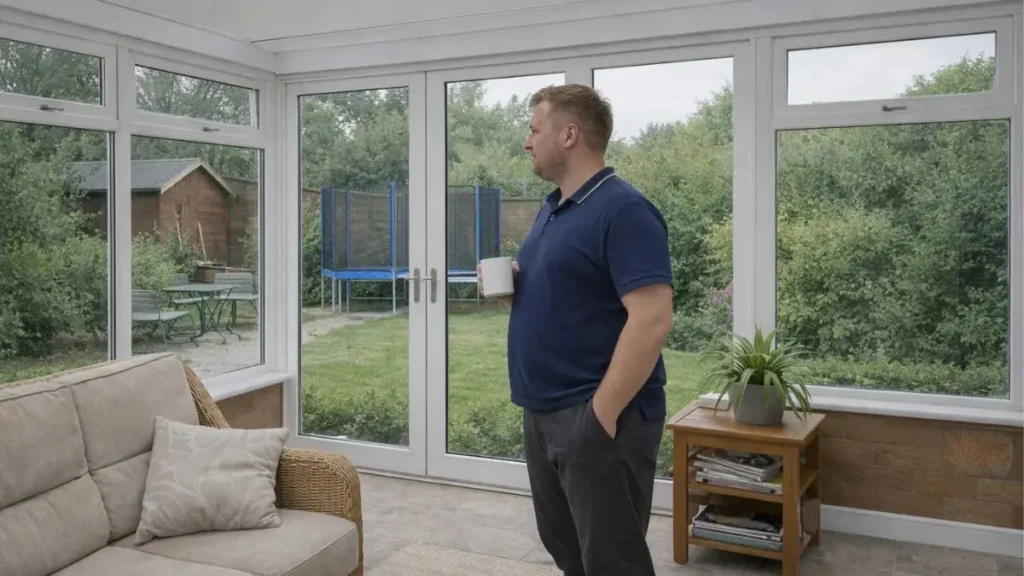
A quieter moment, like sitting still, staring out the window, or sitting in the car before going inside, gives your system a chance to slow down properly.
It might look like you’re doing nothing, but this is often when your body actually starts to settle.
This is why small, low-input moments can feel more helpful than bigger, more effortful ones.
Letting things count
One of the biggest shifts is allowing small things to count.
It is easy to dismiss something because it was too short, interrupted, or not done “properly”. But these are often the only kinds of moments that realistically fit into parenting life.
Letting them count changes how you experience them.
Instead of feeling like you have done nothing, you begin to notice that you are already doing something.
This reduces the feeling of starting from zero each day.
This is often where things begin to shift.
What this can look like in real life
In day-to-day life, this often shows up in small, realistic moments that fit around everything else, rather than anything structured or time-consuming:
- Sitting for five minutes without trying to be productive
- Stepping outside briefly between tasks
- Pausing instead of immediately moving on to the next thing
- Choosing a slightly easier option when you feel stretched
These are not big changes, but they are often enough to create small shifts in how your body and mind feel.
What you can lower the bar on today
After seeing what this can look like in real life, it can help to go one step further and be clear about what does not need to be done perfectly.
Sometimes it helps to be clear about what does not need to be done perfectly.
If you can’t manage a longer walk, even a couple of minutes on the doorstep still counts. You do not need to do this every day for it to help, and it does not have to follow a routine to be effective. Sitting for five minutes without planning the next thing or checking your phone still matters.
These are not shortcuts. They are often what make support possible in real life.
If routines have not worked for you
If you have tried routines before and struggled to keep them going, it does not mean you have failed.
Often, it means the approach did not fit your situation.
Many wellbeing routines are designed for ideal conditions, with time, space, and consistency.
Parenting rarely offers those conditions.
A more realistic approach is to work with what your day already looks like, rather than trying to reshape it completely.
This might mean attaching small moments of support to things you already do, rather than creating something new.
You might also find this helpful
If this feels familiar, it often links to why rest itself can feel difficult in day-to-day parenting:
- Why rest feels so hard for parents: understanding why stopping does not always feel restful and what helps instead
- How stress shows up physically in parents (and what to notice): if you are noticing tension, tiredness, or physical symptoms, this helps you understand how stress can show up in the body and why it is easy to miss.
If you want further trusted guidance around wellbeing, these resources can help:
What matters most
Supporting your wellbeing does not need to add pressure.
In many cases, it works better when it removes it.
Small, imperfect moments still count. And often, they are the ones that fit your life best.
You do not need to do more to feel better. You may just need to approach it differently.
Less pressure often leads to more consistency.