
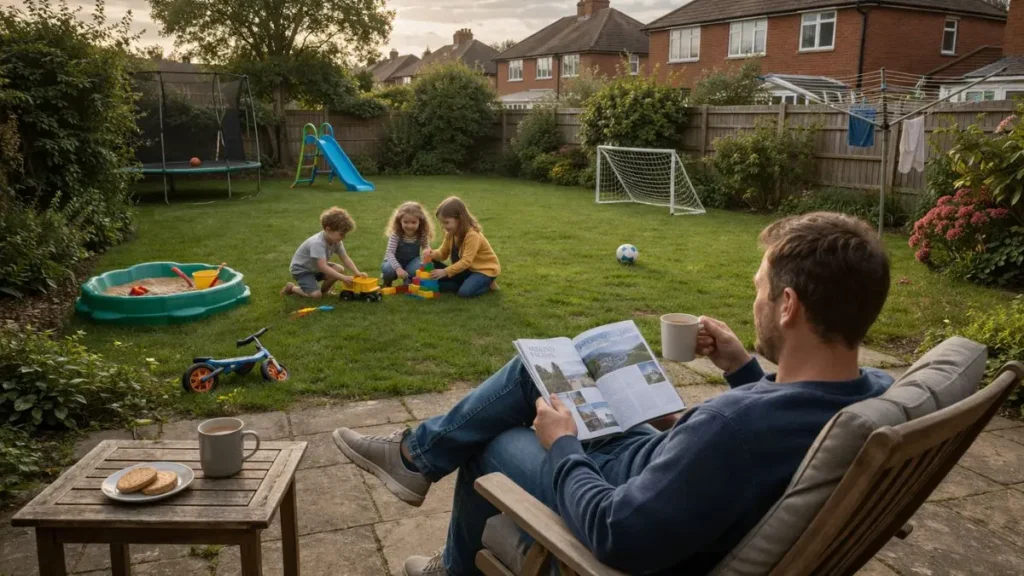
When everything feels like it needs your attention, doing more can seem like the answer. But for many families, stepping back slightly can actually bring more calm, not less. This isn’t about caring less. It’s about creating space for what matters most.
Quick summary
Sometimes, the pressure to do everything “right” can make family life feel heavier than it needs to be. A different approach can help:
- Doing less can reduce overwhelm for both parents and children
- Not every moment needs correcting, guiding, or optimising
- Children often grow confidence when given small amounts of space
- A calmer pace can improve connection, not weaken it
- Letting go of “perfect parenting” can ease daily pressure
This article is for / not for
This article is for:
- Parents who feel stretched or constantly “on”
- Families feeling pressure to do everything perfectly
- Those noticing signs of burnout or overwhelm
This article is not for:
- Situations where a child needs urgent support or safeguarding
- Parents looking for strict routines or structured programmes

When parenting starts to feel like constant effort
Many parents reach a point where everything starts to feel like effort, not because they are doing anything wrong, but because they are trying to do everything at once. Answering every question, fixing every problem, and trying to get every moment “right” can slowly turn into carrying more than you actually need to.
It usually comes from a good place. You care deeply and want the best for your child, but over time that level of constant input can become exhausting rather than helpful. That is often where a small shift can make a real difference.
Why doing more can start to feel like too much
There is a common belief that good parenting means being consistently involved, offering support, guidance, and input at every step. In reality, more involvement does not always lead to better outcomes. Sometimes it simply adds noise to everyday life.
When everything feels important, everything begins to feel urgent. That can leave you feeling like you are always catching up, always slightly behind, and always needing to do more. Over time, that pressure builds, not because you are failing, but because you are trying to carry too many things at once without enough space to pause.
What “doing less” actually means in real life
Doing less does not mean stepping away or becoming uninvolved. It means being more intentional about where your energy goes and recognising that not everything needs your input.
In practice, this might look like letting a small disagreement play out for a moment before stepping in, or allowing a quiet pause to remain quiet instead of filling it. It can also be as simple as pausing before reacting and asking yourself whether something genuinely needs your attention right now. Often, it does not.
As those small choices begin to add up, the overall pace of family life can start to feel different. There is more breathing room, and things begin to feel less rushed and more manageable.
What children gain from a little more space
When you ease off slightly, children are often given the opportunity to work things out in their own way. They may take longer or approach things differently, but that process helps build confidence over time.
They begin to handle small frustrations, test their own ideas, and gradually trust their ability to manage situations, even if it is not perfect. This kind of learning is not always neat or immediate, but it is meaningful, and it is often missed when parents feel they need to step in straight away.
Why it can feel uncomfortable at first
For many parents, doing less can feel unfamiliar and even slightly uncomfortable. It can bring up the feeling that you are not doing enough or that you should be stepping in more often.
That reaction is completely understandable, especially if you are used to being very involved. In many cases, you are not doing less care. You are simply focusing on what is actually needed, rather than everything that is possible. That distinction can take time to feel natural, but it is an important one.
Slowing the pace of everyday family life
Modern parenting often feels constant, with advice, expectations, routines, and activities all competing for attention. It can create the sense that every moment should be productive or meaningful in some way.
When you slow that pace down, even slightly, it can shift the tone of your day. A quieter afternoon, a less structured evening, or a moment where nothing in particular is happening can feel more grounding than empty. These are not gaps that need filling. They are often the spaces where connection and calm naturally develop.
Protecting your own energy as a parent
Doing less can also support your own energy in a practical way. When you are already running low, it becomes harder to respond calmly, think clearly, or enjoy time together.
For a lot of parents, it can feel a bit like trying to get through the day with your phone on 10% battery. Your phone goes into power-saving mode and you do not get the best from it. You can keep going for a while, but everything feels slower, more frustrating, and harder than it needs to be. Giving yourself a chance to recharge, even slightly, makes everything feel more manageable again, and helps you show up for your family in a more steady way.
Reducing the pressure on yourself allows you to show up more consistently. That might mean letting a small mess wait until later, choosing not to correct every behaviour immediately, or deciding to come back to something rather than solving it in the moment.
These choices are not about giving up. They are small boundaries that help protect your time and energy, and over time they can make family life feel noticeably more manageable.
If this resonates, you might find these helpful
If this idea connects with how things have been feeling recently, these articles explore it from slightly different angles:
- Supporting your wellbeing without added pressure looks at simple ways to care for yourself without adding more to your plate
- Parental burnout: early signs and what helps – can help you spot when things are becoming too much and what might ease it
For further guidance on parenting and family wellbeing, you can also visit NHS advice on family life and mental wellbeing
What matters most
Doing less is not about lowering your standards. It is about choosing where your energy goes.
Most families do not need more input, more structure, or more pressure. They need a little more space.
And sometimes, that space is what allows things to settle into something that feels more manageable, and more like your version of family life.