
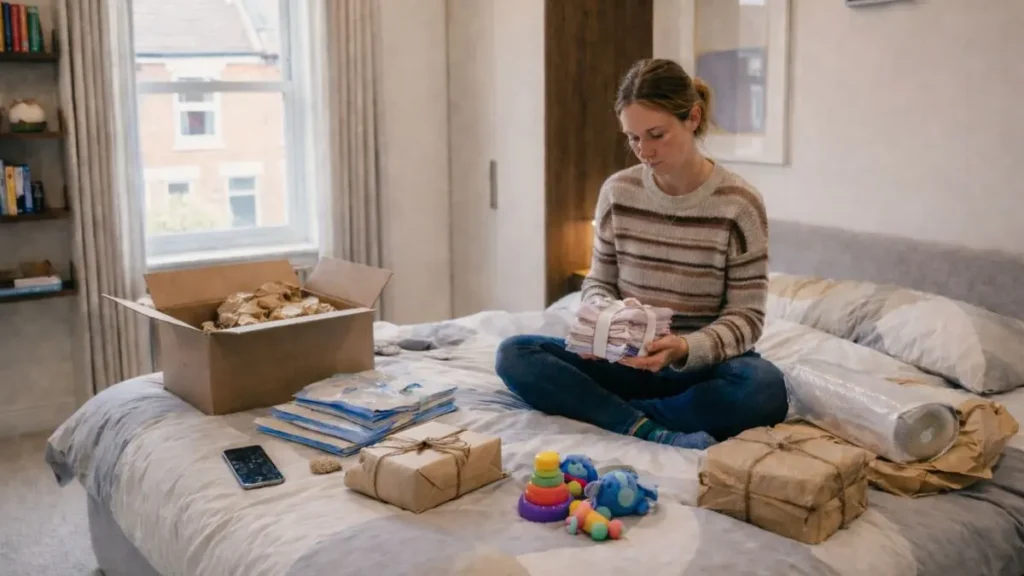
Selling baby items on Vinted can look like an easy win, especially when you have a pile of clothes your child has outgrown. In reality, it can work well for some items and feel slow or frustrating for others. This guide looks at what tends to sell, what often stalls, and whether it is worth your time as a busy parent.
Quick summary
If you are wondering whether Vinted is worth using, it helps to set expectations early. It can be a useful way to clear out baby items, but it rarely works as a quick or high-earning option. Here is the short version of how it tends to play out:
- Baby clothes (especially bundles) usually sell better than single low-value items
- Branded or nearly-new pieces tend to move faster
- Buyers expect low prices, and offers are common
- Bulky items and higher-value gear are harder to sell here
- Simple, clear listings often outperform overly detailed ones
This article is for / not for
This article is for:
- Parents clearing out baby clothes and smaller items
- Anyone considering Vinted as a low-effort way to make some money back
- People unsure whether to use Vinted, eBay, or Facebook Marketplace
This article is not for:
- Selling high-value items like prams or furniture
- Maximising profit above all else
- Running a resale business at scale
If this isn’t quite right for you
You might find these more helpful:
- The best place to sell baby items – compares Vinted, eBay, and Facebook so you can choose the right platform
- Why saving money as a parent can feel surprisingly difficult – helps put the small returns from selling into context, especially if you are weighing up whether the time spent listing items is actually worth it
Or browse all our Money articles.
If this article feels relevant for you, read on.
What tends to sell well on Vinted
Vinted works best when you match how people actually shop on it. Most buyers are browsing casually, looking for value rather than hunting for a specific item.
In practice, baby clothes tend to sell more easily when they are grouped together rather than listed individually. Bundles in the same size feel like a better deal and save buyers time, which is often what they are really looking for. Recognisable high street brands also tend to move faster, especially when they are in good condition or only lightly worn.
Nearly-new items can do particularly well, as buyers often search for pieces that still feel fresh but cost less than buying new. Timing also plays a part. Seasonal clothing tends to shift more easily when it matches what parents are currently shopping for, and bundles tend to perform better overall. Selling one baby vest for £1 rarely feels worth the effort, but grouping several items together makes it more appealing to buyers and more worthwhile for you.
One thing many parents notice is that condition matters more than description. Clean, well-presented items with clear photos often sell faster than listings with long explanations.
What often does not sell (or takes a long time)
Some items look like they should sell but tend to sit for weeks or months.
Single low-value items are a common example. Even if they are priced cheaply, they often get overlooked because buyers can find bundles that feel like better value. Non-branded basics in used condition can also struggle, as there is usually a lot of similar stock available.
Bulky items such as bouncers or high chairs are harder to shift on Vinted as well. While they might have value, the added effort of packaging and posting can put both sellers and buyers off. Older or more heavily worn clothing tends to fall into the same category, where it simply does not stand out enough to compete.
The main reason is simple. Buyers on Vinted are often comparing dozens of similar listings. If something does not stand out on price, condition, or convenience, it gets skipped.
Larger items are also harder because of postage. Even though Vinted simplifies labels, packing and sending bulky items can quickly feel like more effort than it is worth.
The reality of offers, messages, and slow sales
One of the biggest adjustments with Vinted is expectations around pricing.
It is very common to receive offers below your listed price, sometimes much lower, even as low as 30% off. This is part of how the platform works rather than a reflection on your item, but it can take a bit of getting used to and helps to set expectations early.
You may also notice that items are favourited without being purchased, or that messages come in but do not lead anywhere. It is also normal for there to be long gaps between sales, even when you have multiple listings live.
This can feel frustrating, especially if you were hoping for quick results. In reality, Vinted often works best as a slow drip of small sales rather than a fast clear-out.
From experience, if an offer comes in soon after you list an item, it is often worth replying to say you would prefer to wait as it has not been listed for long. Quite often, the buyer will come back with a higher offer or even pay the full asking price. Similarly, if an item is getting a lot of favourites, it is usually a sign there is interest and that holding your price for a bit longer can pay off.
Being realistic about the time involved
Listing can easily take up to 20 minutes per item or bundle, especially if you are taking photos and writing descriptions.
Packing might take another 5 to 10 minutes, and posting can take 20 to 30 minutes depending on where you need to go. You can sometimes combine posting with another errand, like a supermarket trip, but that does not always line up.
When you add it all together, it helps explain why Vinted works best when you treat it as clearing space with some money back, rather than a quick or efficient income stream.
Why Vinted can feel slow even when items are good
One thing that becomes clear after using Vinted for a while is that most buyers are not searching for your specific item. They are browsing.
That changes how everything behaves. Decisions are quick, price-led, and often impulsive. If your item does not immediately feel like a good deal compared to others on the screen, it is very easy for it to be skipped, even if it is fairly priced. For example, a parent might scroll past 15 to 20 very similar babygrows in seconds and only stop on the one that feels like the best deal straight away.
This helps explain why you might see lots of favourites without purchases, or why items can sit for a while before suddenly selling. It is less about your item being wrong and more about how people are using the platform.
When Vinted works better than eBay or Facebook
Vinted has a specific role, and it suits some situations better than others.
It tends to work best when you are clearing out a lot of lower-value clothing and are happy to accept slightly lower prices in exchange for a simpler process. There is no auction pressure like on eBay, and the overall setup feels more relaxed.
Compared to Facebook Marketplace, Vinted can feel more structured. You avoid a lot of the back-and-forth messaging about availability or people not turning up, which many parents find draining.
However, if you are selling higher-value items or want to maximise profit, other platforms are often a better fit.
Simple listing tweaks that actually help
You do not need to overcomplicate your listings to improve your chances of selling.
Clear, natural lighting makes a noticeable difference, as it helps items look clean and true to life. Laying clothes flat or grouping them neatly also makes listings easier for other parents to scan, which is how most buyers are browsing.
Simple, descriptive titles tend to work better than anything overly detailed. Including the size, type of item, and brand is usually enough. Pricing also plays a role. Some sellers choose to list slightly higher than their minimum so there is room to accept offers without feeling like they are losing out.
Listing similar items at the same time can help build a bit of momentum, as it gives buyers more to browse and increases the chances of combined purchases.
One useful insight is that consistency helps more than perfection. A batch of decent listings often performs better than spending too long perfecting one item.
It is also worth quickly checking if other sellers have the same or very similar item listed. You may find the market is quite saturated, or that some listings are priced well below what feels realistic because those sellers want a quick sale. That does not mean you have to match the lowest price, but it helps you understand what you are competing against and set your expectations.
Choosing your approach: quick clear-out vs more money
It helps to be clear about what you actually want from Vinted, as that changes how you use it.
If your goal is to clear space quickly, pricing lower and bundling items more aggressively tends to work better. Things move faster, but you will usually make less per item.
If your goal is to get more money back, it often means waiting longer, holding your price, and dealing with more offers and slower sales.
Most parents end up somewhere in between, adjusting as they go depending on how much time and energy they have.
When it stops being worth your time
There is a point where selling on Vinted can feel like more effort than it gives back.
This often happens when you are listing lots of very low-value items individually, as the time spent creating listings and posting items starts to outweigh what you earn. Packing and posting can also become repetitive, especially if sales are slow or inconsistent.
For some parents, this is the point where it stops feeling worthwhile. Instead of pushing through, many adjust their approach by creating larger bundles, donating items, or moving higher-value pieces to platforms like eBay.
There is no single right way to do it. It depends on how much time and energy you want to put in.
Related reading you may find helpful
If you are working through a bigger clear-out, these can help you decide what to do next:
- How to price second-hand baby items fairly – helps you avoid listings that sit unsold
- What baby items sell best second-hand – focuses on demand so you can prioritise what to list
For further guidance on consumer selling rights and responsibilities in the UK, you can refer to Citizens Advice.
What to take away
Vinted can work well for selling baby clothes, especially if you treat it as a simple way to clear space rather than a way to maximise profit.
The key is matching your expectations to how the platform actually works. Smaller sales, lower prices, and a steady pace tend to be the norm.
If that fits your situation, it can be a helpful tool. If not, it is usually a sign to try a different platform rather than forcing it.
FAQ
Is Vinted worth it for baby clothes?
For bundles and decent-condition items, it can be. For single low-value pieces, it often feels slow.
How quickly do items sell on Vinted?
It really varies. Some items sell within days, others can take weeks depending on price, demand, and timing.
Do you need to accept offers on Vinted?
No, but most buyers expect some flexibility, so pricing with that in mind can help..