
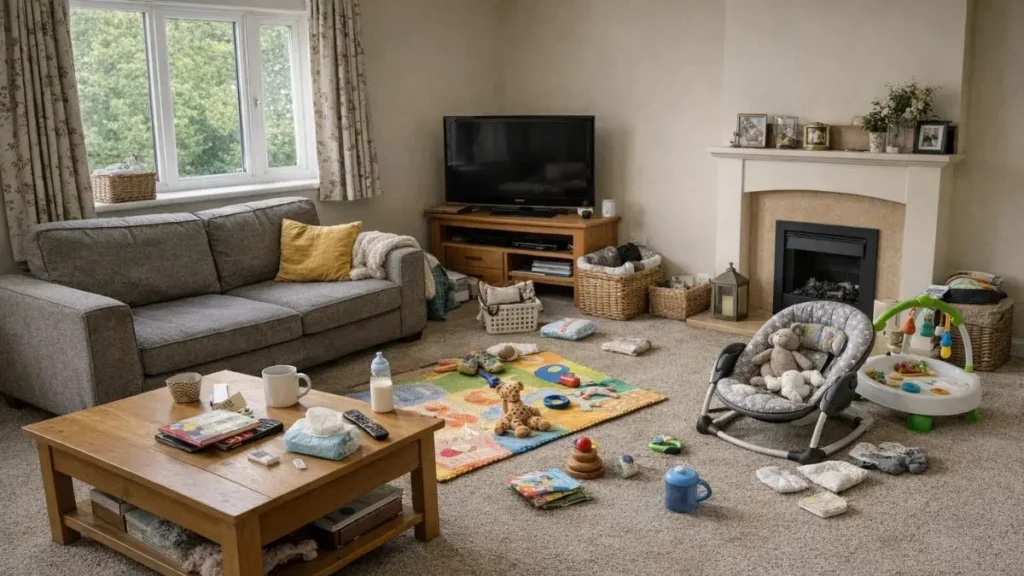
When you’re expecting a baby, it can feel like you need everything. Lists get longer, recommendations pile up, and it’s easy to assume more stuff will make life easier. In reality, many families end up using far less than they thought, and a few simple things end up being used again and again. This is a realistic look at what actually helps in the first year, and what often doesn’t.
Quick summary
If you’re trying to work out what’s actually worth buying, it can feel like every list tells you something different. Some focus on what you might need, others on what’s popular, and it quickly adds up, both in cost and overwhelm.
In practice, it often comes down to this:
- A few well-used essentials tend to matter more than lots of extras
- Some popular products sound helpful but rarely get used
- What works depends on your baby and your home, not trends
- You can always add things later if you need them
This article is for / not for
This article is for:
- Parents preparing for a new baby or early months
- Families wanting to avoid overspending on unused items
- Anyone feeling overwhelmed by long baby shopping lists
This article is not for:
- Parents looking for detailed product reviews or comparisons
- Situations with specific medical or developmental needs
This article may contain affiliate links. If you buy through them, we may earn a small commission at no extra cost to you.
The expectation vs reality of baby products
This is where some products start to fall away in practice.
Before having a baby, it’s easy to picture needing a fully equipped setup for every situation, with changing stations in every room, multiple sleep options, and specialised gadgets for feeding, soothing, and cleaning. In reality, daily life usually settles into something much simpler.
What many parents notice over time is that a small number of items get used constantly, while others sit untouched after the first week. The day-to-day rhythm doesn’t match the ideal setup imagined beforehand, and that gap becomes clearer quite quickly.
A big part of this shift is realising that babies themselves don’t need very much to begin with. Much of the extra equipment is about trying to make things easier for adults, rather than something the baby actually requires.
Products that often aren’t as useful as expected
This doesn’t mean these products are bad, and some families do find them helpful. But for many, they end up being used far less than expected once real routines take over.
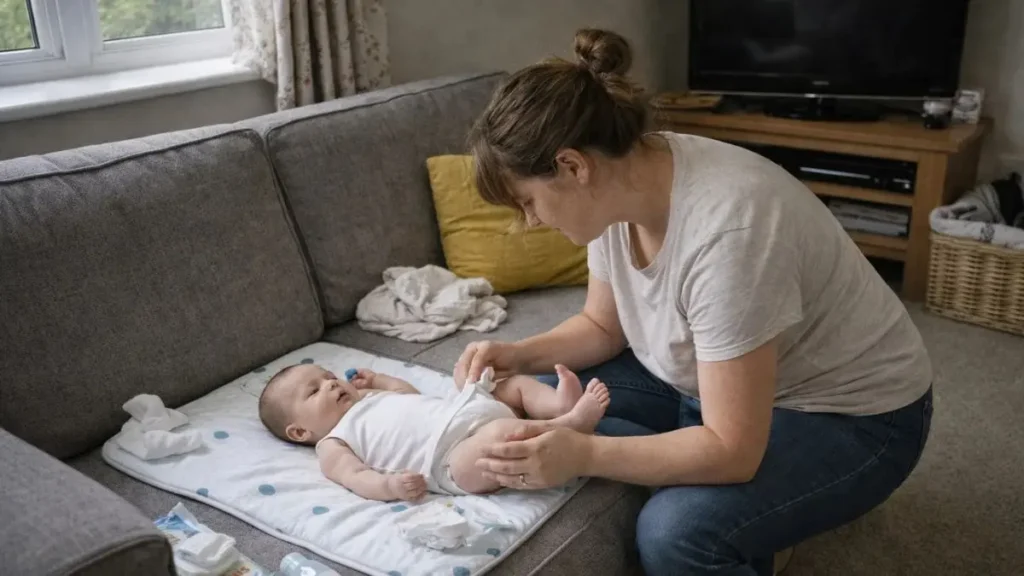
Large or fixed changing units, for example, can feel like a must-have before the baby arrives. In practice, many parents find themselves changing their baby wherever they are, using a simple changing mat instead because it’s quicker and more flexible.
The same pattern often shows up with specialised gadgets for soothing or sleep. They promise to make things easier, and sometimes they do, but babies don’t always respond to them in a consistent way. What works one day may not work the next.
Clothing is another area where expectations and reality differ. Outfits that look nice but are fiddly to put on tend to be used rarely, if at all, because ease quickly becomes more important than appearance. It also becomes clear quite quickly how fast babies grow, meaning some clothes are only worn a handful of times before they’re outgrown.
It’s also common to buy duplicate or “just in case” items, thinking it will make life smoother to have everything in multiple places. In reality, most parents end up relying on the same few items and simply moving them around as needed.
Across all of these, the pattern is similar: they sound useful in theory, but don’t always match how real days unfold.
What tends to be genuinely useful
What actually helps tends to be simpler, more repeatable, and easier to rely on day to day, especially when you’re tired or short on time.
Rather than lots of specialised items, most families find themselves coming back to a few reliable basics. A safe and comfortable place for your baby to sleep is one of them, but it doesn’t need to be complicated — something like a bedside crib or a Moses basket often works well. Having one main sleep space usually works better than switching between multiple options.
Clothing that is quick and easy to put on becomes another everyday win. Things like baby vests and sleepsuits tend to get used constantly. When you’re changing your baby several times a day, anything that reduces effort makes a noticeable difference.
Getting out of the house also becomes easier with the right setup, whether that’s a pram or a baby carrier that fits your routine. These tend to be among the most used items, simply because they support your day rather than add to it.
Feeding is similar. A few simple, reliable essentials that match how you plan to feed your baby are usually enough to begin with. Items like baby bottles or muslin cloths are often all you need to start. If something else would genuinely help, it can always be added later once you know what you need.
A simple essentials baseline (what most families actually use)
If you’re still wondering what counts as “essential”, a short, practical list can help without becoming overwhelming. Most families can cover the early months with:
- A safe sleep space (cot, crib, or Moses basket)
- A simple changing setup (mat + nappies + wipes)
- Easy, practical clothing (vests, sleepsuits)
- A way to get out (pram or carrier)
- Feeding basics (based on how you plan to feed)
This isn’t a fixed list, and it won’t fit every situation. It’s a starting point you can build from once you see what you actually use day to day.
Borrowing and buying second-hand can make a big difference
Alongside buying less, many families find it helpful to borrow or buy second-hand, especially for items that are only used for a short time.
Baby carrier and sling libraries are a good example. They allow you to try different styles before committing, which can save money and help you find something that actually works for you and your baby.
There are also local options such as toy libraries, community lending schemes, and parent groups where items are shared or passed on. These can be especially useful for things your baby may only use for a few weeks or months.
Second-hand baby markets, charity shops, and online marketplaces are another practical route. Many baby items are used for such a short time that they are still in very good condition.
This approach doesn’t just reduce costs. It also takes some of the pressure off getting everything right first time, because you can try things without committing to buying new.
One thing to be aware of is that some items are usually recommended to be bought new for safety reasons, such as car seats and cot mattresses. This is mainly because their history and condition can be harder to verify second-hand.
A quick check before you buy
Before buying something new, it can help to pause and run through a few simple questions. Many parents find this prevents impulse purchases that don’t get used.
- Do I actually need this, or does it just sound helpful?
- Will I use it often enough to justify the cost?
- Is there a simpler version that would do the same job?
- Can I borrow, rent, or buy this second-hand instead?
- Will this still be useful in a few weeks, or only briefly?
These small checks can make a noticeable difference over time, especially when you’re seeing lots of recommendations at once.
A small but important realisation
Many parents notice this over time:
The things you use most are usually the simplest, not the most specialised.
This can be surprisingly freeing, especially when you feel pressure to buy more.
Buying less doesn’t mean missing out
It’s easy to worry that not buying everything might make life harder later. In practice, the opposite is often true.
Starting with the basics gives you space to figure out what your baby actually responds to. If something would genuinely help, you can add it when you know what you need.
This approach often leads to less clutter, less wasted money, and more confidence in your own decisions.
More on spending and real costs
If you’re trying to get a clearer picture of where money actually goes in the first year, these articles may help give some context:
- Where families actually overspend without realising – a look at the common areas where costs quietly add up without much benefit
- The realistic cost of baby nappies in the UK – a breakdown of one of the most consistent and unavoidable expenses
What matters most
In the first year, it’s not about having the perfect setup. It’s about finding what works for you and your baby, and letting that guide your choices.
A few reliable, well-used items will carry you much further than a long list of rarely used ones.