
Keeping children entertained at home can feel expensive, especially when budgets are tight and energy is low. The good news is that kids don’t need constant new toys or paid activities to stay engaged. With a few simple ideas, you can create calm, fun moments at home without spending much at all.
TL;DR
If you’re trying to keep kids busy at home without spending money, this article focuses on simple, realistic ideas that actually work for everyday families:
- Activities that use things you probably already have at home
- Ideas that suit different ages and attention spans
- Options that don’t rely on screens or expensive resources
- Low-pressure activities you can dip in and out of
This article is for / not for
This article is for:
- Parents looking for calm, realistic ideas rather than big projects
- Tired parents who want options that don’t need lots of prep
- Families who want to keep costs down
This article is not for:
- Parents looking for structured lesson plans or formal home schooling
- Families wanting day trips or paid classes
- Children who need constant adult-led entertainment
A quick reality check before we start
Not every activity will work every day. Some days kids want noise and chaos, other days they want quiet and familiarity. These ideas are meant to be flexible – something you can suggest, set up, or leave out without pressure if it doesn’t land.
Creative activities using what you already have
You don’t need expensive craft kits to do creative play. Often, children enjoy having freedom more than polished results.
Children are often capable of getting absorbed for longer when they feel ownership over what they’re doing. Giving them open-ended materials, rather than a fixed end goal, can take some pressure off you and make the activity last longer.
Simple ideas to try:
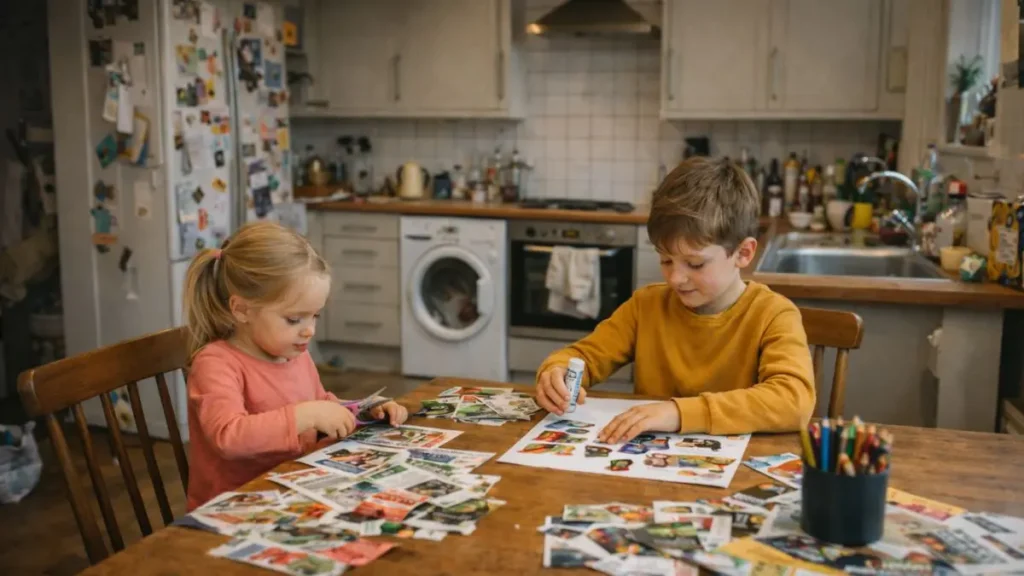
- Drawing or colouring with scrap paper, envelopes, or the backs of old letters
- Making collages from magazines, leaflets, or packaging
- Designing a board game on paper using dice from another game
- Creating a comic strip about their day or a made-up character
What we noticed is that creativity lasts longer when there’s no ‘right’ outcome.
When children aren’t worried about getting it perfect or following instructions, they tend to settle into what they’re doing for longer.
Letting go of neatness can feel uncomfortable at first, but it often leads to deeper focus and more satisfying play for them.
Quiet activities for calmer moments
Some days call for lower energy ideas, especially after a busy day or when everyone is feeling a bit worn out.
These kinds of activities work well when children want to be close to you, but not necessarily chatty or excitable. They can also help smooth the transition from busy school days into calmer evenings.
Calmer options include:
- Jigsaw puzzles picked up cheaply or borrowed
- Audiobooks or children’s podcasts while drawing or building
- Simple card games like snap, pairs, or old maid
- Reading together, even if the child reads and you just listen
These work particularly well when children need connection but not conversation, being near you, sharing a space, or doing something side by side can feel comforting without requiring lots of talking or emotional energy from either of you.
Movement and physical play indoors
Kids don’t need a big garden to burn off energy. A bit of creativity can help them move safely indoors.
Short bursts of movement are often enough to reset moods and concentration. You don’t need to turn this into exercise, just something playful that lets them stretch, climb, or laugh.
Budget-friendly movement ideas:
- A homemade obstacle course using cushions and chairs
- Dance breaks with music you already own
- Balloon games (keeping one balloon off the floor)
- Simple stretching or yoga-style poses turned into a game
If you need something more guided, short exercise videos can work well too, especially on days when motivation is low or you’re juggling other things. These don’t have to be long or intense to be effective.
We had great success with:
- Child-friendly workout videos led by familiar faces
- Kids’ yoga sessions that focus on movement and breathing
- Game-style movement videos that feel more like play than exercise
Keeping rules loose helps avoid arguments and keeps things fun. When activities aren’t about doing things ‘properly’, children are less likely to get frustrated or competitive, and you’re less likely to feel like you’re constantly correcting them.
The aim here isn’t perfect behaviour or burning off a set amount of energy, just giving them a safe way to move, reset, and enjoy themselves for a bit.
Everyday life as an activity
Some of the best low-cost activities don’t look like activities at all.
Everyday tasks can feel satisfying to children because they involve real responsibility and shared time. When they’re framed as teamwork rather than chores, they often hold attention surprisingly well.
Children often enjoy:
- Helping cook or bake simple meals
- Sorting laundry by colour or size
- Making up games while tidying
- Planning a pretend shop, café, or library
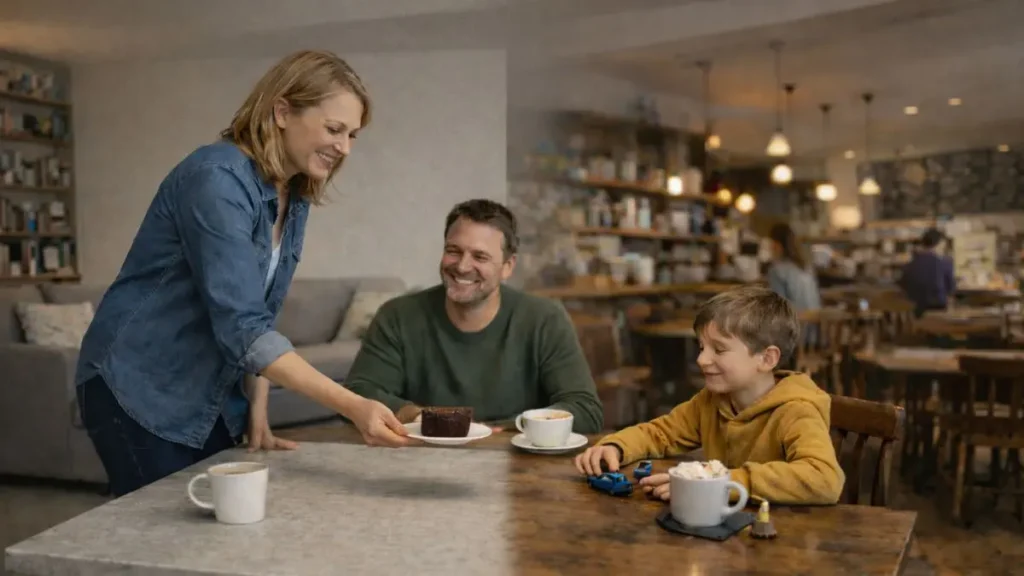
One thing that’s worked really well for us during school holidays is what we call “coffee shop at home”.
We pick up a few favourite treats from the supermarket, use napkins we already have, and make a simple babychino with warm milk and marshmallows. It felt special to our son, cost a fraction of a real café visit, and turned an ordinary afternoon into something memorable.
If you have a smart speaker, you can ask it to play gentle coffee shop background sounds which can add to the atmosphere without any extra effort.
These moments can feel slower, but they often lead to longer attention spans and quieter afternoons.
Related reading
If you want to read more on Babies and children, these might be helpful next:
You might also find practical ideas and printable resources here:
- National Literacy Trust activities (UK)
- Joe Wicks’ children’s workout videos on YouTube
- Cosmic Kids Yoga on YouTube (UK)
Links included here are suggestions only. We only link to resources we think parents may genuinely find useful, and there’s no requirement to use or follow any of them.
A final thought
You don’t need to fill every hour or compete with paid activities. Often, children remember the feeling of being included and relaxed far more than what you spent. Picking one idea and seeing how it goes is more than enough for today.