
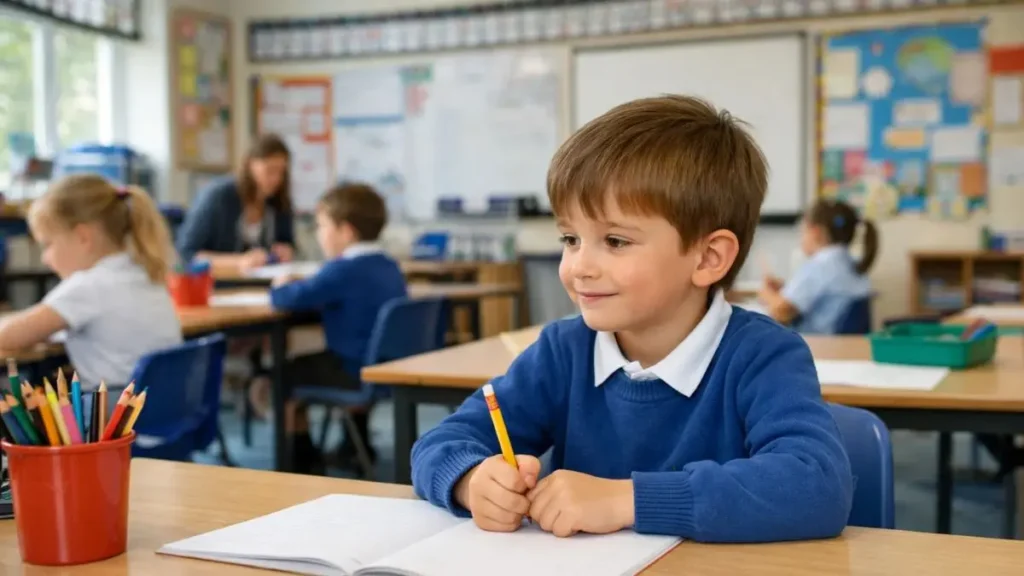
Some children never cause trouble. And sometimes you are the only one who senses something is not quite right, even when everyone else says they are doing well. They follow instructions. They sit quietly. They try hard. From the outside, they look like they are coping. But sometimes “good behaviour” is not ease. It is effort. This article explores child masking behaviour and how to recognise when compliance might be hiding stress underneath.
Quick summary
Child masking behaviour happens when a child hides distress, confusion, or overwhelm in order to meet expectations. It can look like:
- Being unusually quiet or compliant
- Copying peers closely to avoid standing out
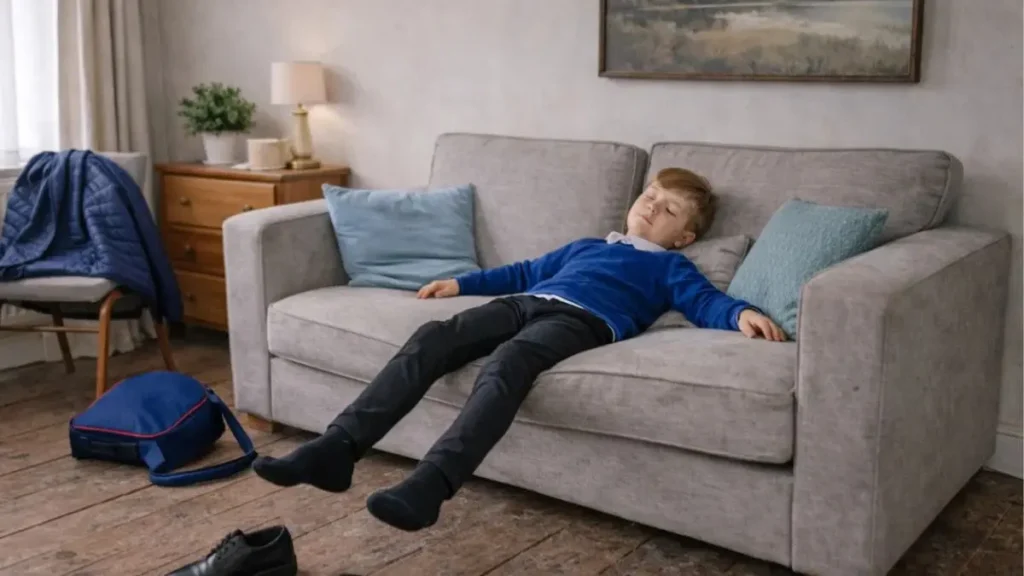
- Suppressing emotions until they get home
- Meltdowns that only happen in safe spaces
Understanding this helps you respond to the child’s internal experience, not just their outward behaviour.
This article is for / not for
This article is for:
- Parents whose child seems “fine” at school or other settings but falls apart at home
- Families confused by big after-school emotions
- Parents who sense something is wrong despite positive reports
This article is not for:
- Diagnosing autism, ADHD, or anxiety
- Formal clinical assessment guidance
- Situations involving safeguarding concerns
What is child masking behaviour?
Masking is when a child consciously or unconsciously hides their difficulties to fit in or avoid negative attention.
It is often discussed in relation to neurodivergence, but masking is not limited to any single label. Any child who feels pressure to appear capable, calm, or “easy” may learn to conceal discomfort.
A child might stay silent when confused, laugh along when overwhelmed, force eye contact, push themselves to tolerate sensory discomfort, or agree when they want to say no.
From the outside, this can look like maturity. Inside, it can feel exhausting.
Why some children mask
Children mask for different reasons. For example, a child might copy classmates’ laughter during a confusing group task so they do not stand out or draw attention.
Common reasons include:
- Wanting to please adults
- Fearing being seen as difficult
- Worrying about losing friendships
- Learning that showing distress leads to negative reactions
Masking is often a survival strategy. It helps a child stay safe socially or emotionally. But it comes at a cost.
Holding everything in during the day can mean emotional release later, often at home where it feels safer.
Signs good behaviour may be hiding struggle
Masking does not always announce itself clearly. It rarely looks dramatic or obvious. Instead, it can show up in small shifts: a child who seems unusually drained after social situations, who holds themselves very still in busy environments, or who appears calm but tense. The signs are often subtle and easy to miss, especially when a child is described as well behaved or easy.
There is no single pattern, but some common signs include:
- Extreme tiredness despite a calm day
- Headaches or stomach aches with no clear cause
- Sudden meltdowns after school
- Rigid thinking once home
- Perfectionism or intense fear of making mistakes
If school reports describe a child as quiet, compliant, and never disruptive, yet home feels emotionally intense, masking may be part of the picture.
What helps when you suspect masking
Create space without interrogation
Children who mask are often highly attuned to expectations. Direct questioning such as, “What happened?” or “Why are you upset?” can feel overwhelming.
Instead, offer safety first. Sit nearby. Provide a snack. Lower demands for a short period after school. Predictable decompression time can reduce the build-up.
Separate behaviour from identity
Avoid praising only compliance. When praise centres only on being “good,” children can learn that approval depends on how smoothly they perform. Instead, notice effort, honesty, problem-solving, and moments of self-expression. This shifts the message from “I am valued when I behave perfectly” to “I am valued even when things are hard.”
For example: “I noticed that was hard and you kept going.” This shows that struggle is allowed.
Watch for patterns, not single incidents
One hard afternoon does not mean a child is masking. Repeated after-school crashes or ongoing fatigue are more informative than isolated moments.
If patterns continue, consider gentle conversations with school about social load, sensory environment, or subtle pressures your child may be navigating.
Masking beyond labels
Masking is often associated with autism, but it can occur in anxious children, highly sensitive children, perfectionists, or those navigating social insecurity.
If you want to explore this more deeply, these articles expand on the wider picture:
- Understanding masking in children beyond neurodiversity labels – a broader look at how masking shows up across different personalities and environments.
- What children really need when they’re overwhelmed – practical guidance on responding when hidden stress spills over at home.
What matters most
Looking fine is not the same as feeling fine.
Some children cope by containing everything until they reach safety. If your child seems to unravel at home after holding it together all day, that may not be failure. It may be trust.
The goal is not to remove expectations. It is to ensure your child does not feel they must disappear to meet them.