
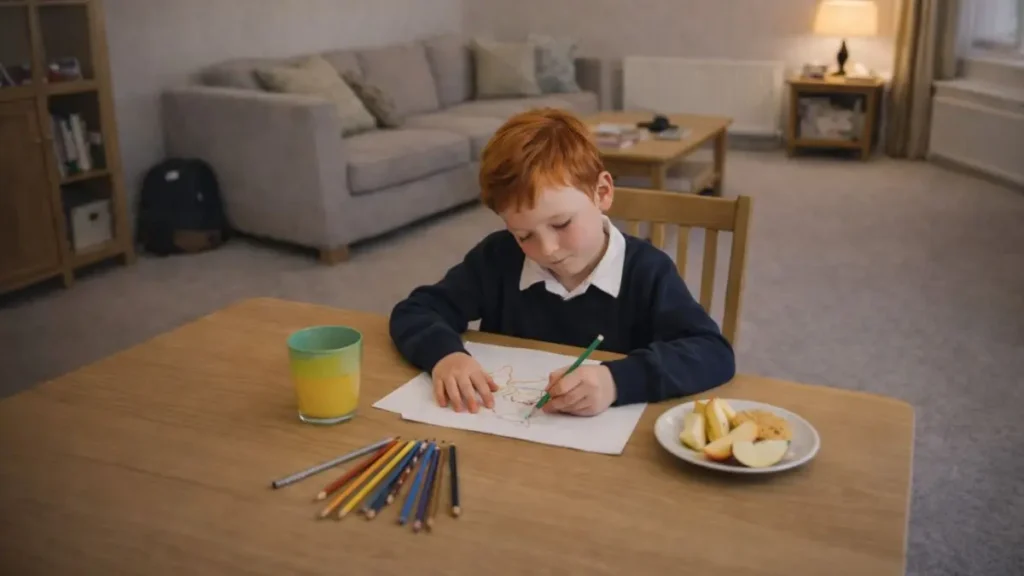
Some children come home from school chatty and full of stories. Others go quiet, avoid questions, or shut down completely. If your child won’t talk after school, it can feel worrying or rejecting – but it’s often a sign they’ve reached their limit, not that something is wrong.
TL;DR
If your child won’t talk after school, it is usually because:
- They may be emotionally, socially, or mentally exhausted after a demanding day
- Their brain can still be in recovery mode, focused on regulation rather than conversation
- They may not yet have the capacity to put their feelings into words
What usually helps most is reducing pressure, allowing space, and reconnecting later, rather than pushing for conversation straight away.
This article is for / not for
This article is for:
- Parents of children who go quiet after school
- Families dealing with shutdown, withdrawal, or one-word answers
- Parents wanting practical, gentle ways to respond
This article is not for:
- Situations involving immediate safeguarding concerns
- Children who are non-verbal or require specialist communication support
What this can look like
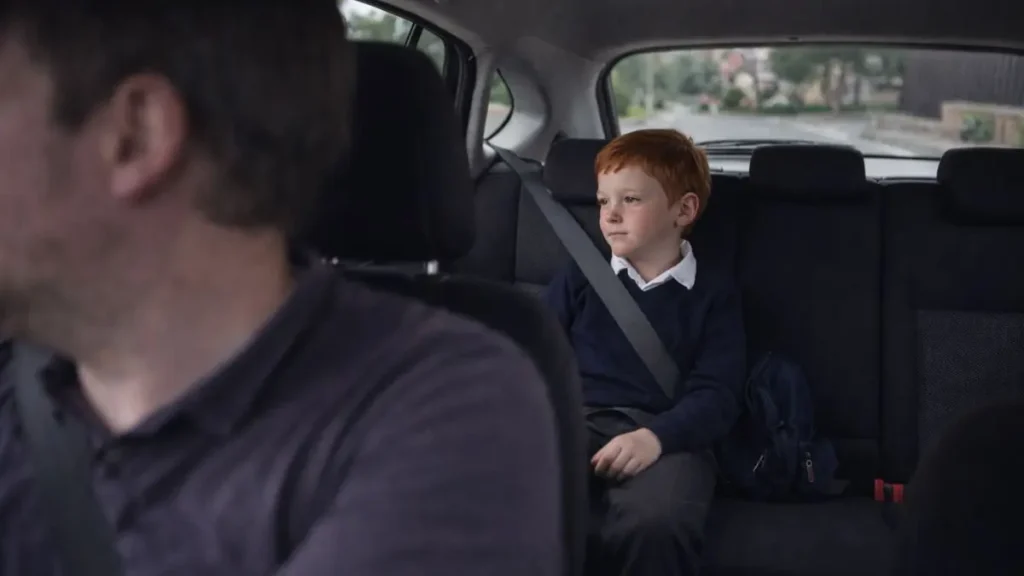
A child who won’t talk after school may respond with one-word answers or ignore questions altogether. Some become irritable when asked about their day, while others withdraw to their room or seek out a quiet space. You may notice they seem tired, flat, or emotionally distant.
This change can happen very quickly. For many families it starts in the car, on the walk home, or as soon as the front door closes.
Why talking feels hard after school
School places constant demands on children. Even on a calm day, they are listening, concentrating, following rules, navigating friendships, managing noise, and coping with social pressures.
For many children, especially sensitive or neurodivergent ones, this requires sustained effort. They may spend the day masking tiredness, anxiety, or overwhelm in order to cope.
By the time school ends, many children need time to decompress, make sense of the day, and regulate before they can reflect or talk about it. The brain may still be focused on regulation and recovery, not conversation. The systems needed to explain feelings and events simply aren’t fully online yet.
Silence is often a form of regulation
When a child goes quiet after school, it’s often their way of reducing input. Talking, answering questions, and explaining their day all require effort.
Choosing silence can help their nervous system settle. It’s not rudeness or avoidance – it’s self-protection. Even if you ask why they won’t talk, it’s very likely they won’t know themselves. This is a physiological response, and in that moment they don’t yet have the words or understanding for what they’re experiencing. It simply feels easier not to try to find the words.
This is why pushing for conversation in that moment can sometimes make things harder rather than easier, and for some children it can tip them into a meltdown. When the brain is already overloaded, additional demands to explain or respond can overwhelm their remaining capacity to cope.
What to try instead
Rather than pushing for conversation, it often helps to lower demands for a short while. Avoiding questions and instructions gives your child’s nervous system time to settle. Offering food or drink can also make a difference, as hunger and low energy make talking much harder.
Quiet companionship is often more effective than conversation in these moments. Sitting nearby, sharing a calm activity, or simply being present without talking can help your child feel safe and connected. Predictable routines also play a role, as familiarity helps the nervous system relax.
Think of this as giving your child space to land before asking them to explain their day.
When to talk and how
Conversation often comes more easily later, once your child has had time to rest or decompress. When you do talk, keeping things low-pressure can help. Open questions such as asking how they feel now, rather than what happened earlier, can feel safer. Sometimes commenting gently, rather than asking direct questions, makes it easier for a child to respond.
Many children find it easier to talk while doing something else, such as drawing, playing, walking, or watching something familiar. Talking side by side rather than face to face can reduce pressure.
If your child still won’t talk
It’s important to remember that children don’t owe adults a full account of their day.
If your child regularly refuses to talk but otherwise seems settled over time, this may simply be their way of coping.
If silence is combined with distress, changes in behaviour, or ongoing withdrawal, it may be a sign they need more support.
That support doesn’t have to start with fixing or questioning. Often it means widening the circle of safety around your child. Keeping routines predictable, reducing demands after school, and making sure they have regular opportunities to rest and decompress can make a real difference.
It can also help to look at the bigger picture rather than the moment itself. Gentle check-ins at calmer times, noticing patterns across days or weeks, and sharing observations with school can help you understand what might be contributing to the strain.
If concerns continue, seeking advice from your GP, school pastoral staff, or a trusted support service can help ensure your child gets consistent, joined-up support.
Related reading
You may find these articles helpful:
- After-school meltdowns: what’s actually going on
- How to calm an overstimulated child at home (step by step)
External support and guidance
If you would like further parent‑friendly guidance on meltdowns, shutdown, and emotional regulation, this UK resource may be helpful:
A calm takeaway
When a child won’t talk after school, it’s often because their brain is still busy recovering from the day.
Giving space first doesn’t mean you don’t care. It often shows your child that you understand what they need – and that makes connection easier when they’re ready.