
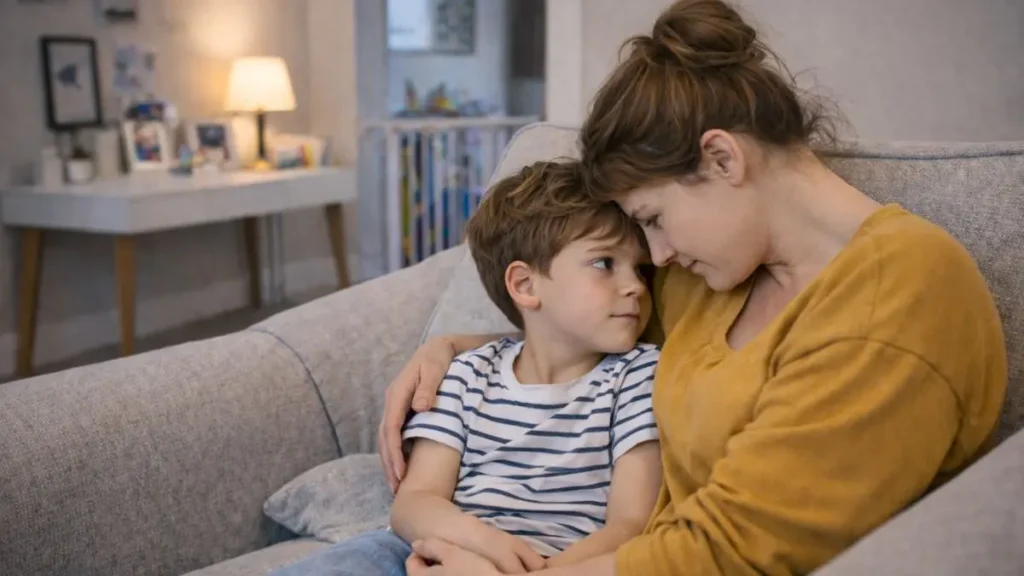
Emotional regulation is something many parents worry about, especially when emotions spill over at home. This article looks at what genuinely helps children learn to regulate their emotions in everyday family life, without pressure, punishments, or trying to force calm too quickly.
TL;DR
Emotional regulation is not about stopping emotions. It is about helping children feel safe enough to move through them:
- Regulation is learned through experience, not instruction
- Calm support matters more than quick fixes
- Children borrow regulation from adults before they can do it alone
- What helps will vary by child, age, and situation
- Home is where regulation is practised, not perfected
This article is for / not for
This article is for:
- Parents supporting children who struggle with big emotions at home
- Families dealing with frequent overwhelm, meltdowns, or shutdowns
- Parents looking for practical, realistic ways to support regulation
This article is not for:
- Emergency mental health situations
- Advice about diagnosis, therapy, or treatment plans
- Situations where a child is at immediate risk
Medical disclaimer
This article is written from lived experience and research and is for general information and parental support only. It does not diagnose emotional or mental health conditions or provide medical or therapeutic instruction.
If you are worried about your child’s emotional wellbeing, development, or safety, speak to your GP or seek guidance from recognised UK organisations such as the NHS or Mind.
If this isn’t quite right for you
You might find these more helpful:
- After-school meltdowns: what’s actually going on
- Helping kids with big emotions (without trying to fix them)
Or browse all our mental health articles.
If this article feels relevant for you, read on.
Emotional regulation starts with safety, not control
At home, emotional regulation is often misunderstood as getting children to calm down quickly.
In reality, regulation develops when children feel safe enough to experience emotions without being rushed, corrected, or shut down.
When a child is overwhelmed, their nervous system is doing its best to cope. Behaviour in those moments is communication, not defiance.
Why children struggle more at home
Many children hold themselves together during the day. School, routines, noise, expectations, and social effort all take energy.
Home is where that effort releases.
This is why emotional overwhelm often shows up after school or in the evenings, even if a child appears fine elsewhere.
What actually helps in the moment
When emotions are running high, logic and explanations rarely help.
What tends to support regulation instead is a calm, steady presence. This might look like staying nearby without crowding, keeping your voice low and predictable, or reducing demands until the moment passes.
Simple responses can help anchor a child:
- “I’m here.”
- “You’re safe.”
- “We can take this slowly.”
These do not remove the emotion. They help the nervous system settle enough for the feeling to rise, peak, and pass.
Borrowed regulation comes before self-regulation
Children are not born able to regulate their emotions on their own. They have to learn to recognise their feelings, name them, and gradually learn how to regulate them. This happens over time.
Before they can self-regulate, they rely on adults to co-regulate with them. This is how the skill develops.
Your calm does not have to be perfect. It just needs to be steadier than the moment.
When space helps, and when closeness helps
Some children regulate best with closeness. Others need physical or emotional space.
Watching your child’s cues matters more than following one rule. For some children, staying too close can increase overwhelm. For others, distance can feel abandoning.
Regulation improves when children learn that their needs will be noticed and respected.
Talking about regulation after the moment has passed
Once emotions have settled, children are often more open to gentle reflection.
This does not need to be a big conversation. It can be brief and low-pressure.
Questions like “What felt like it helped?” or “Was there anything that made it feel a little easier?” can support learning without blame.
Over time, these moments build awareness and confidence.
Trying to analyse or problem-solve in the middle of an emotional surge can inflame the situation further or lead to shutdown. When a child is overwhelmed, their brain is focused on coping, not reflecting. Waiting until calm returns makes learning far more likely.
If this resonated, you might also find these helpful
If emotional regulation is something you are trying to understand more deeply, these articles explore related situations many families experience at home:
- Why some children cope all day at school then fall apart at home – A closer look at why regulation often unravels after a long school day, even when everything seemed fine earlier.
- How to calm an overstimulated child at home (step-by-step) – A more practical, moment-by-moment guide for when overwhelm has already tipped into sensory overload.
For more UK information on children’s emotional wellbeing more broadly, these organisations offer clear, balanced guidance:
A realistic way to think about regulation
Emotional regulation is not about preventing emotions or getting it right every time.
It is about helping children feel safe, supported, and understood as they learn how emotions work.
At home, progress often looks like shorter storms, quicker recovery, or a child asking for help sooner.
Those small shifts matter.
FAQ
How long does emotional regulation take to develop?
Emotional regulation develops gradually throughout childhood. It is shaped by experience, support, and maturity rather than age alone.
What if nothing seems to help my child regulate?
If emotional overwhelm is frequent, intense, or affecting daily life, it can help to speak to a professional for reassurance and guidance.