
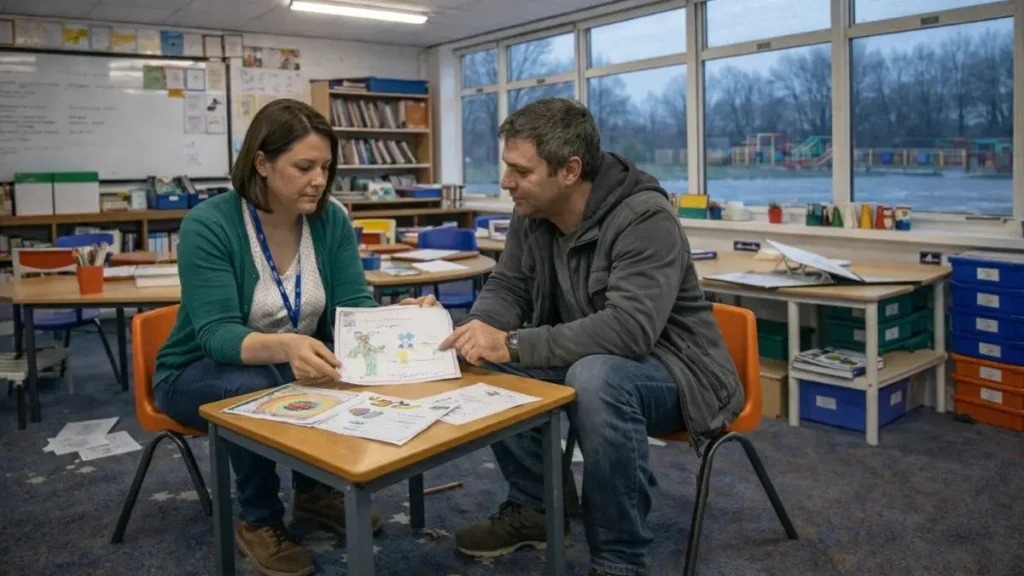
You may have heard teachers mention emotional resilience at parents’ evenings, in school newsletters, or in reports. The phrase can sometimes make parents briefly worry that something might be wrong with their child. In reality, schools usually use the term to describe something much simpler: helping children gradually learn how to cope with everyday challenges at school.
Quick summary
When UK schools talk about emotional resilience, they are usually referring to a child’s ability to:
- cope with small frustrations or setbacks
- recover after mistakes or difficult moments
- manage feelings in busy school environments
- keep trying even when learning feels challenging
It does not mean children should never feel upset. The aim is to help them gradually develop the skills to handle those feelings over time.
This article is for / not for
This article is for:
- Parents who hear schools talk about emotional resilience but are unsure what it means
- Families whose child has been described as needing to “build resilience”
- Parents who want to understand the language schools use around emotional development
This article is not for:
- Immediate mental health concerns
- Situations where professional assessment or support is already underway
What schools usually mean by emotional resilience
In UK schools, emotional resilience generally refers to a child’s ability to manage the normal day‑to‑day challenges that come with learning and social life.
These challenges might include getting an answer wrong in class, falling out with a friend, finding a task difficult, or feeling nervous about something new.
Teachers are not expecting children to stay calm all the time. What they are usually looking for is a child’s ability to recover from these moments and gradually return to learning.
A child becoming upset occasionally does not mean they lack resilience. Emotional development happens slowly and looks different for every child.
Why schools talk about it so often
In recent years there has been a broader shift in UK education toward supporting children’s wellbeing and mental health alongside academic progress.
Frameworks used by schools and referenced by organisations such as Ofsted encourage schools to support pupils’ emotional development as well as their learning. Ofsted’s inspection framework highlights the importance of personal development and wellbeing alongside academic progress (see Ofsted guidance within the school inspection handbook).
In practice teachers often look at whether children can:
- cope with normal classroom frustrations
- ask for help when they need it
- return to learning after something goes wrong
For teachers managing busy classrooms, these abilities help children participate more comfortably in the school day.
What resilience does not mean
The phrase can sometimes worry parents because it sounds as if schools expect children to simply “toughen up”.
In most cases that is not the intention.
Resilience does not mean ignoring a child’s feelings, pushing them through distress, or expecting them to deal with everything alone.
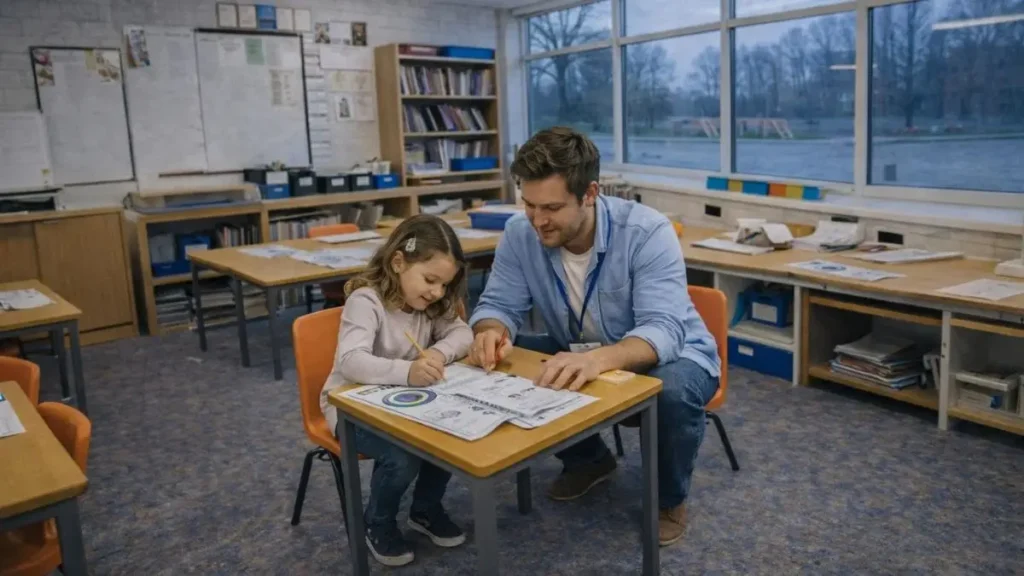
Healthy resilience develops through support, modelling, and practice. Children usually learn these skills alongside supportive adults rather than by being left to struggle.
How schools often try to support resilience
Primary schools usually build emotional resilience through everyday classroom practices rather than formal lessons.
Teachers may encourage children to try again after mistakes, help pupils name and talk about feelings, model calm responses when things go wrong, and guide children through friendship or problem‑solving situations.
Some schools also use wellbeing programmes or classroom approaches that support emotional regulation and confidence.
The aim is not perfection. It is helping children feel capable of handling ordinary bumps in the school day.
Why some children find this harder
For example, a child might become very upset after getting an answer wrong in class or feel overwhelmed during a noisy classroom transition.
Children differ widely in how they respond to pressure, change, or frustration.
Some children adapt quickly to challenges, while others feel things more intensely or need longer to recover after a setback.
Factors that can influence emotional resilience include:
- temperament
- tiredness or stress
- anxiety about school situations
- sensory overwhelm in busy environments
For these children, what schools describe as “building resilience” may simply mean providing extra support while they develop confidence.
How parents sometimes hear the phrase
When schools mention emotional resilience in meetings or reports, it is usually intended as a developmental observation rather than a criticism.
Often it reflects moments where a child becomes very upset after mistakes, struggles to return to work after frustration, or worries about getting things wrong.
For many children, these reactions become easier to manage as they grow older and gain experience handling challenges.
Talking with school if you are unsure
If the phrase appears in a report or conversation, the most helpful step is often to ask for specific examples.
If the wording feels unclear, it is completely reasonable to ask teachers what they mean in your child’s particular situation.
Helpful questions might include asking what situations seem hardest for your child at school, when they cope well, and what strategies appear to help in class.
These conversations often reveal that the issue is smaller and more specific than the phrase itself might initially suggest.
How emotional resilience develops over time
Resilience is not a fixed personality trait. It usually develops gradually through everyday experiences.
Children build these skills when they face manageable challenges, receive calm support from adults, learn that mistakes are part of learning, and experience success after persistence.
Many of the abilities schools describe as resilience naturally strengthen as children move through primary school. What resilience looks like also changes with age. For a Reception child it might involve separating from a parent or settling into classroom routines, while for a Year 6 pupil it may relate more to managing academic pressure such as SATs or navigating friendship changes.
Helpful reading if this topic resonates
If you are trying to make sense of school language around development or wellbeing, these articles explore related areas parents often encounter:
- What ‘school readiness’ really means in the UK explains what teachers are often referring to when they talk about children being ready for school and why the phrase can sometimes mean something different from what parents expect.
- Supporting anxious children around school without escalating it explores calm ways parents can support children who feel overwhelmed by school situations without unintentionally increasing pressure.
If you are curious about where some of this language comes from, Ofsted’s inspection framework also explains how schools are expected to support pupils’ personal development and wellbeing:
- Ofsted school inspection handbook – personal development that outlines how schools are expected to support pupils’ personal development, including emotional wellbeing and resilience.
What matters most
When parents first hear the phrase emotional resilience, it can sound worrying, as if it signals a problem with their child.
In reality, when schools use the term they are usually describing everyday coping skills that are still developing.
Most children continue building these abilities throughout primary school.
With time, support, and experience, many situations that initially feel overwhelming gradually become easier for children to manage.