
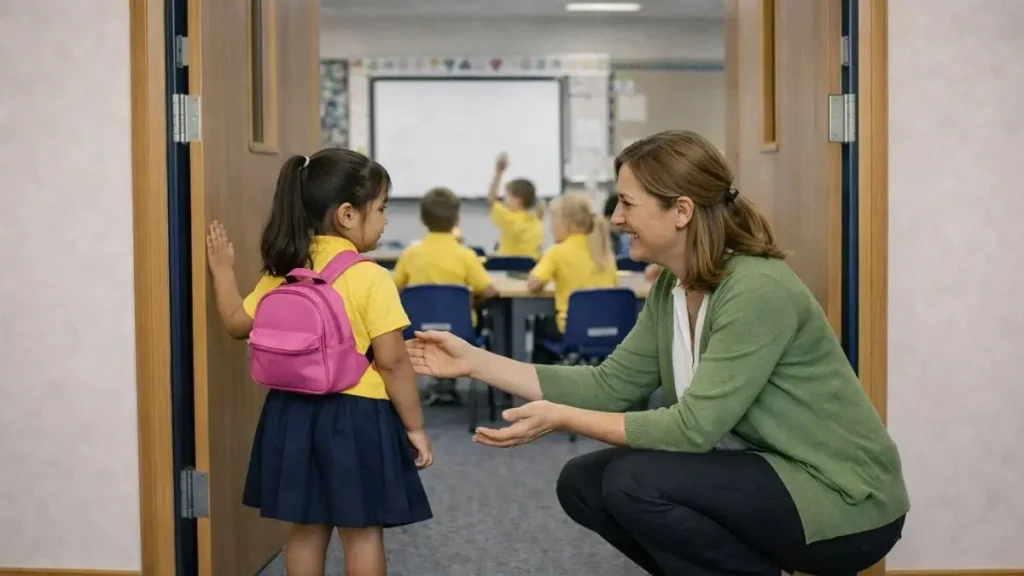
Change is part of childhood. It can also be exhausting when every small shift turns into a struggle , especially if you worry others think your child should cope more easily. New teachers, different routines, cancelled plans, moving up a school year. Some children adjust quickly. Others struggle more than you expect. If your child finds change hard, you might feel torn between protecting them and pushing them to cope. This article explores how to help children cope with change without adding pressure that makes it harder.
Quick summary
Helping children cope with change is not about forcing flexibility. It is about building it gradually and safely. Small, repeated experiences of manageable change help children discover that they can cope, even when something feels unfamiliar:
- Prepare gently before changes happen
- Reduce pressure during transitions
- Stay steady when emotions rise
- Build tolerance through supported exposure, not force
This article is for / not for
This article is for:
- Parents whose child struggles with transitions or unexpected changes
- Families dealing with anxiety around new situations
- Parents who want reassurance about how to respond without being too soft or too strict
This article is not for:
- Diagnosing anxiety or other conditions
- Situations involving immediate risk or safeguarding concerns
- Formal behaviour plans or therapeutic programmes
Why change feels so big for some children
For some children, change does not feel neutral. It feels uncertain.
Uncertainty activates the nervous system. The brain scans for what might go wrong. Even small shifts , a different breakfast, a substitute teacher, a change of seating , can feel destabilising.
From the outside, it can look like an overreaction. Inside, it can feel like losing control.
Understanding this helps you respond to the feeling underneath rather than just the behaviour on top.
What makes change harder
Change is rarely the only factor. It often lands on top of other stressors.
A busy week. Poor sleep. Social pressure. Sensory overload. For example, a change in PE day after a poor night’s sleep can feel far bigger than it looks on paper. When those stack up, even a small change can tip the balance.
Recognising patterns helps. If transitions regularly fall apart after school or before bed, it may not be the change itself. It may be capacity.
Lowering pressure slightly earlier can prevent bigger reactions later.
Helping children cope with change in everyday life
Preparing before the change
Preparation makes a quiet difference.
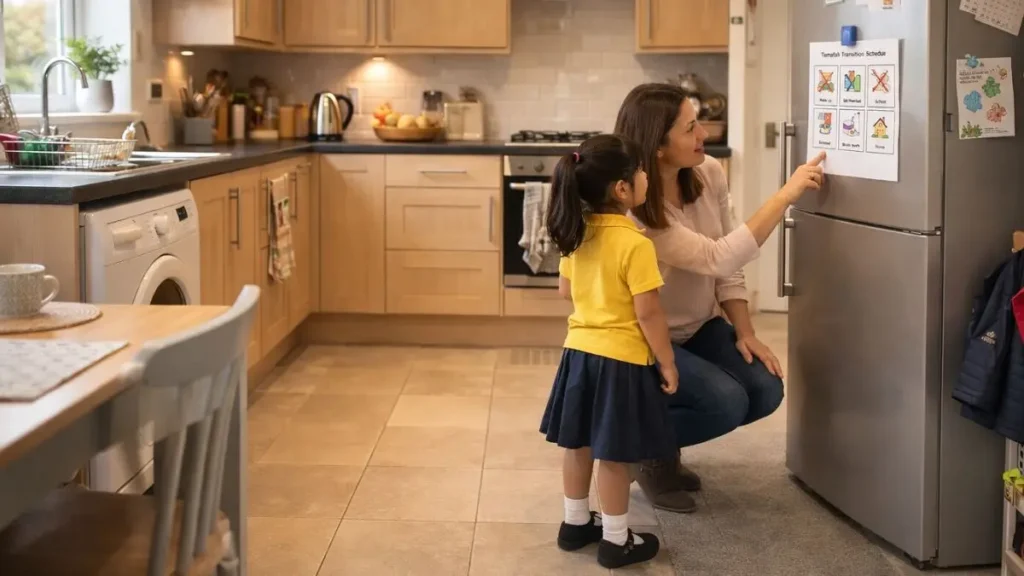
Giving a short heads-up by using transitions such as , “After this programme finishes, we’re getting ready for bed” , allows the brain to start adjusting. Visual schedules, countdowns, or predictable routines can help some children feel steadier.
In the moment
When resistance appears, calm matters more than persuasion. If emotions rise, slow your voice and reduce extra input. Arguing about whether the change is reasonable rarely helps when a child already feels unsettled.
You are not trying to eliminate all discomfort. You are helping their nervous system stay within a manageable range.
Without pressure does not mean without expectations
Supporting a child through change does not mean avoiding change completely.
Resilience develops through supported exposure. That means staying alongside them during manageable discomfort rather than removing every challenge or pushing them through alone.
You might stay close the first time they try a new club, gradually stepping back as their confidence grows. Over time, repeated experiences of coping safely build confidence.
Pressure tends to shrink tolerance. Steady support expands it.
When they push back
It can be frustrating when a child resists something that feels minor to you.
Instead of focusing only on compliance, try naming the feeling underneath. “This feels different.” “You weren’t expecting that.” Being understood often reduces resistance more effectively than insisting.
Once calm returns, reinforce the expectation gently and consistently.
If you would like to explore this further
If helping children cope with change is an ongoing theme at home, these articles explore related areas:
- What helps children transition between activities more easily – practical ideas for smoothing everyday shifts without escalating conflict.
- What children really need when they’re overwhelmed – how to respond when change tips into overload and emotions spill over.
What matters most
Adding pressure does not teach children to handle change.
They learn through safety, repetition, and the gradual stretching of their comfort zone.
If you want to try one small step this week, choose one predictable transition that often causes friction and add a brief heads-up before it happens. Notice whether lowering surprise lowers intensity.