
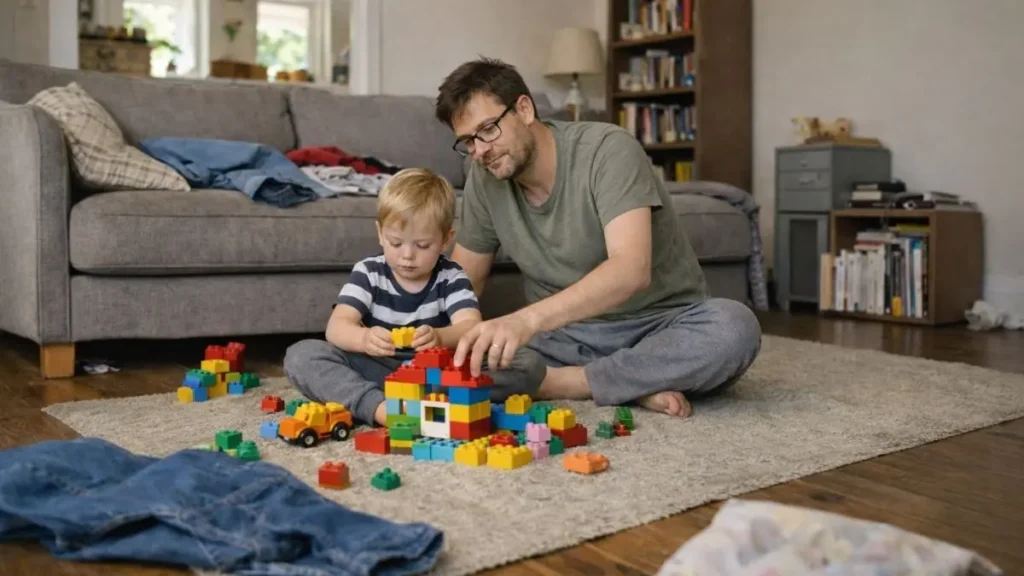
Many dads worry they are doing something wrong because bonding doesn’t look the way they expected it would. In reality, dads often bond differently, and that difference is not only normal, it can be a real strength.
TL;DR
Bonding does not look the same for every parent, and dads are often judged against cultural models of bonding that were never built for them.
- Dads often bond through doing, play, and shared activity
- Bonding can take longer to feel emotional or obvious
- Different bonding styles do not mean weaker attachment
- Children benefit from having more than one way of connecting
This article is for / not for
This article is for:
- Dads who feel unsure or behind when it comes to bonding
- Parents noticing differences in how each caregiver connects
- Anyone worried that bonding should look a certain way
This article is not for:
- People looking for guarantees or timelines
- Readers expecting one “right” way to bond
- Anyone wanting to compare mums and dads competitively
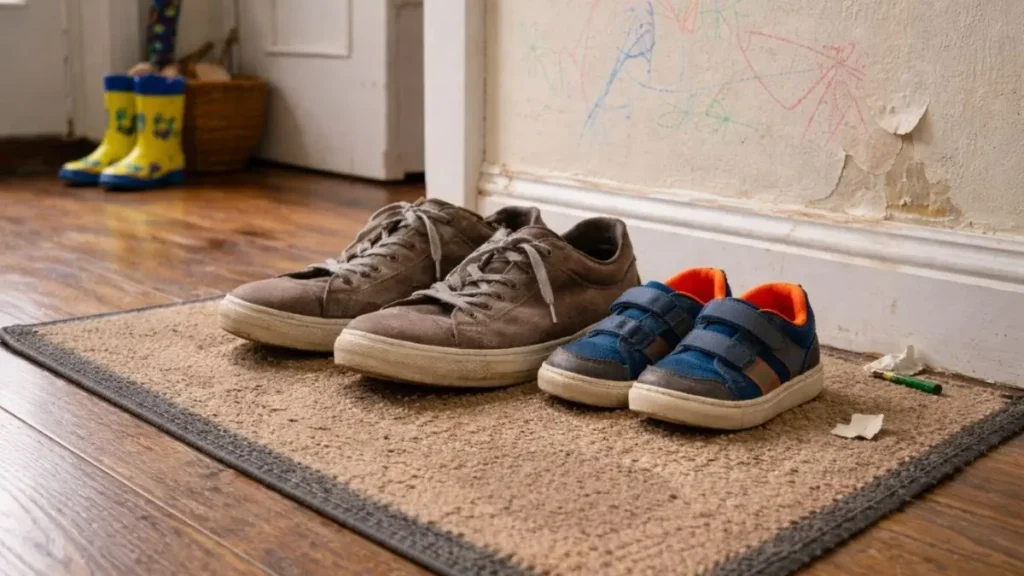
When bonding does not look like you expected
Many dads grow up with the impression that bonding should feel instant, emotional, and obvious, often picked up indirectly from films, social media, antenatal messaging, and how early parenting is talked about.
When that does not happen, it can quietly create anxiety.
You might care deeply about your child but not feel overwhelmed with emotion. You might feel more comfortable playing, fixing, walking, or doing something practical rather than sitting and gazing.
None of that means bonding is missing.
Dads often bond through action
For many dads, connection grows through shared experience.
Rather than bonding arriving as a sudden emotional moment, it often develops through repetition and familiarity.
- Play on the floor
- Walks with the pram
- Bath time routines
- Fixing, building, or making things together
These moments build trust and familiarity over time. Each small interaction adds to a sense of safety and recognition. On their own they may feel ordinary, but together they compound into a secure, reliable connection.
Bonding does not always announce itself while it is happening.
Why comparison causes unnecessary worry
Much of the anxiety around bonding comes from comparison.
If one parent appears more emotionally expressive early on, the other can feel as though they are failing.
But children do not need identical relationships. They benefit from different energies, styles, and rhythms.
A calm, playful, practical bond is not less meaningful than a nurturing, emotionally expressive one.
Together, different bonding styles give children a wider emotional toolkit, helping them feel secure in more situations and confident relating to different people.
Bonding can be quieter and slower
For some dads, bonding arrives gradually.
It may show up as confidence rather than emotion. As ease rather than intensity. As comfort rather than overwhelm.
That slower build is still bonding.
Many dads only realise how strong the bond is once it is already there.
Why this matters for children
Children learn that relationships can take different forms.
They learn that connection is not limited to one style or role.
Having more than one way of bonding gives children flexibility, security, and resilience.
Difference does not weaken attachment. It often strengthens it.
Closing thoughts
There is no single template for bonding.
If you are showing up, spending time, and staying present, connection is forming, even if it feels different from what you expected.
Dads do not need to copy someone else’s version of bonding. When a dad feels comfortable connecting in his own way, that connection often becomes more natural, consistent, and confident.
Trusting their own style usually makes bonding stronger, not weaker.
If you are interested in the wider Dadinist perspective, you may also want to read Why parenting advice often leaves dads out, which explores how dads can feel sidelined by parenting advice and why inclusion matters.
If you would like a clear, UK‑based perspective on how children build secure relationships with their parents and carers, the NSPCC has a helpful overview that focuses on connection, consistency, and everyday care:
NSPCC: How children form secure attachments with parents and carers