
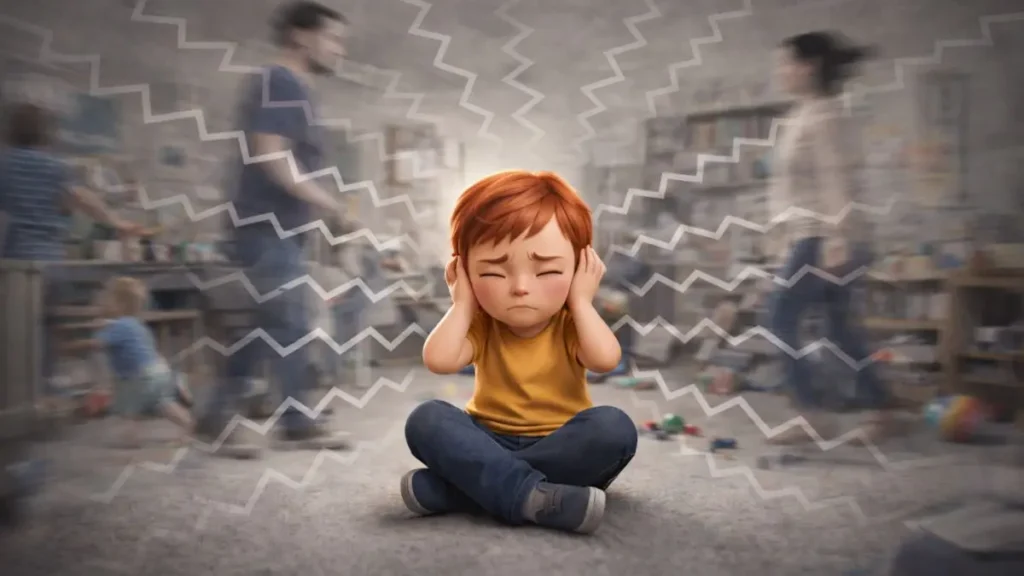
Spotting the early signs of sensory overload can feel hard, especially when everything seems fine one minute and overwhelming the next. But many children do show small, early signals before things tip into a meltdown. Knowing what to look for can help you step in sooner, with less stress for everyone.
TL;DR
Sensory overload often builds quietly before it becomes obvious. The earlier you notice it, the easier it is to support your child.
Signs of sensory overload in a child can include:
- Small changes in behaviour rather than big emotions
- Growing irritability, withdrawal, or restlessness
- Physical signs like covering ears or seeking pressure
- A sudden drop in tolerance for things they usually manage
This article helps you notice those early signals, so you can act before things boil over.
This article is for / not for
This article is for:
- Parents of neurodivergent children (including autistic, ADHD, or sensory‑sensitive children)
- Parents who notice meltdowns seeming to come “out of nowhere”
- Families who want practical, low‑stress ways to support regulation
This article is not for:
- Diagnosing sensory processing differences
- Managing acute crisis situations or severe distress
- Replacing professional advice or assessment
Medical disclaimer
This article is for general information and parental support only. It does not diagnose sensory differences or provide medical or therapeutic instructions. If you have ongoing concerns about your child’s development, wellbeing, or emotional regulation, speak to your GP, health visitor, or another qualified professional. You may also find guidance from recognised UK organisations such as the NHS helpful.

One of the hardest parts of sensory overload is that it rarely starts with a bang. More often, it builds quietly in the background. Looking back, many parents realise the signs were there, just smaller and easier to miss in the moment.
What helps is learning your child’s early warning signs, not in a checklist way, but as patterns you start to recognise over time.
What sensory overload looks like before a meltdown
Before a meltdown, many children are not being dramatic or defiant. Their nervous system is already working too hard.
Early signs are often subtle and can be mistaken for tiredness, moodiness, or just a difficult day. The key is not the individual behaviour, but the shift from what is typical for your child.
Small behaviour shifts
You might notice your child’s patience shortening, or small frustrations tipping them more quickly than usual. Some children become snappy over minor things, while others go quiet or withdrawn. Restlessness can increase too, with more pacing, fidgeting, or difficulty settling.
These changes often appear before any big emotional reaction, which is why they are easy to overlook at the time.
Lower tolerance for everyday things
As sensory load builds, things your child usually manages can suddenly feel unbearable. Clothes may start to feel wrong, everyday noise may seem too loud, or simple instructions may trigger frustration.
A helpful way to think about this is that their tolerance is already used up. Their nervous system is already in a heightened state, working hard to filter noise, light, movement, and information. When that system is overloaded, even small demands can feel physically uncomfortable or painful, leaving very little room left to cope.
Physical signs of overload
Some children show overload through their body rather than words. They might cover their ears or eyes, rub their skin or hair repeatedly, or seek pressure by leaning, squeezing into small spaces, or pressing against furniture.
Others complain of headaches, tummy aches, or feeling generally unwell. These responses are usually about self-protection, not attention-seeking.
Emotional signals that feel out of proportion
Another early clue is emotional reactions that feel bigger than the situation in front of you. Tears over something small, sudden anger with no obvious trigger, or saying they “can’t do this” or “want to go home” can all be signs that overwhelm is already there.
The emotion is real, even if the trigger seems minor.
Why overload often goes unnoticed
Many children hold themselves together for long periods, especially at school or in busy environments. By the time they are home or somewhere they feel safe, their nervous system may already be exhausted.
This is why overload can appear sudden, even though it has been building all day. One insight that helped us was realising that meltdowns were rarely about the last thing that happened. They were about everything that came before it.
Places where sensory overload often builds faster
Sensory overload is not just about what is happening inside a child. The environment matters too. Some locations place much higher demands on the nervous system, even if nothing obvious has gone wrong.
Busy public places are a common example. Supermarkets, shopping centres, and large shops combine bright lighting, unpredictable noise, strong smells, visual clutter, and constant movement. For some children, that combination is simply too much.
From our own experience, supermarkets were especially difficult for our son. At first, meltdowns there felt sudden and confusing. Over time, we realised it was not one thing, but the lights, the noise, and the busyness of the space all at once.
Once we understood that, we made the decision not to take him into busy shops where possible, and it reduced overload significantly.
Other environments that can increase sensory load include schools at transition times, parties, soft play centres, medical settings, or anywhere noisy, crowded, or unfamiliar. Not every child will struggle in the same places, but noticing patterns across locations can be very revealing.
What helps once you spot the early signs
Noticing overload early does not mean you can always prevent a meltdown. But it can reduce how intense or long-lasting it becomes.
Early support is usually about lowering the overall load rather than fixing the problem. That might mean reducing demands where you can, softening noise or lighting, offering quiet connection without lots of questions, or allowing access to a familiar calming activity.
Trying to push through, explain, or reason at this stage often makes things harder.
Related reading
If this topic feels relevant, you might find these articles helpful too:
- When your child’s Autism helps you recognise your own
- After‑school meltdowns and what’s actually going on?

External support and further reading
For wider guidance and support, the UK‑based National Autistic Society resource may be useful:
A closing thought
Sensory overload is not a failure to cope. It is a nervous system asking for relief.
Learning to spot the early signs takes time, and you will not catch them every time. But even small moments of earlier support can make things feel calmer and more manageable for both you and your child.