
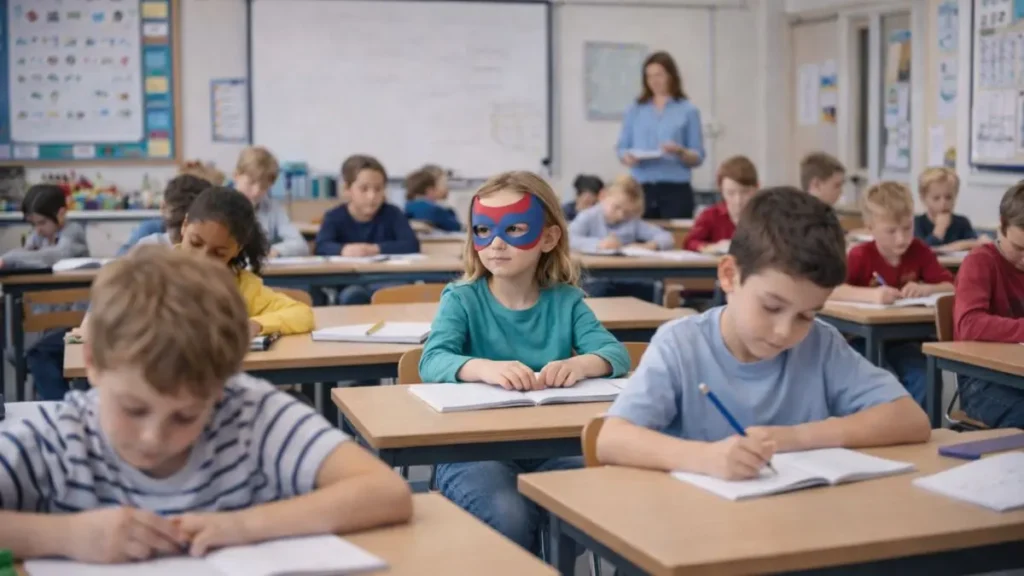
Some children seem to cope all day, follow the rules, and hold everything together, only to fall apart later at home. This article explains masking in children in clear, practical terms, without assuming a diagnosis or using labels parents may not recognise or feel comfortable with.
TL;DR
In simple terms, masking in children is about hidden effort. Here are the key points this article explains:
- Masking is when a child hides distress, confusion, or differences in order to cope or fit in
- It is usually not a conscious choice, but an automatic response to expectations and pressure
- Masking can happen in many children, not only those with diagnoses
- The effort of masking often leads to exhaustion, meltdowns, or shutdowns later
This article is for / not for
This article is for:
- Parents whose child appears fine in school or public, but struggles at home
- Families trying to understand emotional outbursts that seem to come from nowhere
- Parents who want practical understanding without labels or assumptions
This article is not for:
- Diagnosing Autism, ADHD, or other neurodivergence
- Suggesting children are being deceptive or manipulative
- Replacing professional advice or assessment
Medical disclaimer
This article is for general information and parental understanding only. It does not diagnose conditions or provide medical advice. If you are concerned about your child’s wellbeing, development, or mental health, a qualified professional or recognised UK guidance such as the NHS may be helpful.
If this isn’t quite right for you
You might find these articles more helpful:
- Emotional regulation for children: what actually helps at home
- Sensory overload at home: hidden triggers parents often miss
Or browse all our Neurodiversity articles.
If this is something you want to understand further, read on.
What masking in children actually means
Masking describes the ways children hide, suppress, or work around their natural responses in order to meet expectations. This might involve copying others, staying unusually quiet, forcing eye contact, suppressing emotions, or tolerating discomfort.
In most cases, masking is not deliberate or a conscious effort. Children are not pretending or trying to mislead adults. Masking develops because a child learns, often very early, what is expected of them and adapts in order to feel safe, accepted, or to avoid negative attention.
It is also important to understand that masking can delay recognition of a child’s needs. When a child appears to cope, achieve academically, or follow rules without disruption, adults may assume everything is fine. As a result, underlying difficulties can go unnoticed for longer.
This pattern is especially common in girls, who are often socialised to be compliant, observant, and accommodating. Many become highly skilled at blending in, which can delay assessment, support, or a deeper understanding of what they are managing internally.
Masking is not limited to diagnoses
Masking is often discussed in relation to Autism or ADHD, but it can occur in many children. Any child who feels pressure to behave a certain way, manage strong feelings alone, or avoid standing out may mask.
This includes children who are sensitive, anxious, overwhelmed, gifted, or simply trying hard to cope in environments that are demanding or unpredictable.
Common examples of masking at school
Masking can take many forms, and it often blends into what adults see as good behaviour or maturity. It is usually subtle rather than dramatic, which is why it can go unnoticed for so long.
Masking can look like:
- Staying very quiet and compliant to avoid drawing attention
- Copying how other children behave, speak, or react
- Forcing themselves to tolerate noise, discomfort, or confusion
- Holding in emotions until they are in a safe place
From the outside, these children may appear calm, well behaved, or mature for their age. Internally, they may be using a significant amount of mental and emotional energy to maintain that appearance.
Why masking uses so much energy
Masking requires constant monitoring. Children may be checking their behaviour, analysing social situations, managing their reactions, and suppressing natural responses throughout the day.
This sustained effort uses cognitive and emotional energy. Over time, it can leave children mentally and physically exhausted, even if nothing obvious has gone wrong. When that energy runs out, the effects often surface later in the day.
Why the impact often shows up at home
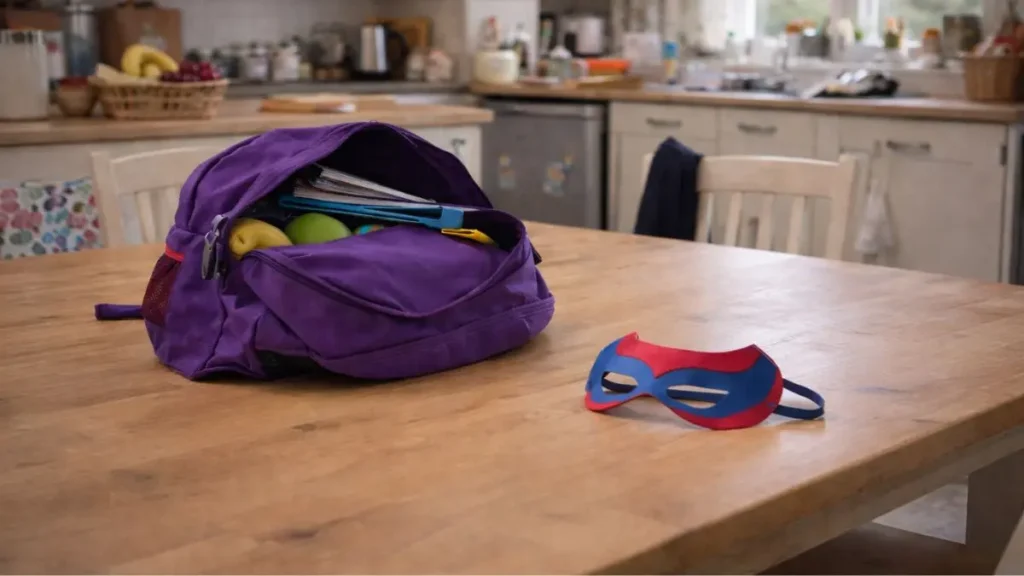
Home is usually where children feel safest. After holding everything together all day, the release often comes once expectations drop.
This can show up as meltdowns, irritability, withdrawal, tears, or seeming unable to cope with small frustrations. It does not mean the child is behaving badly. More often, it means they have reached the end of their capacity.
What masking can be mistaken for
Because masking hides struggle, it is frequently misunderstood. When adults only see the outward behaviour — the compliance, the academic achievement, the lack of disruption — they draw conclusions based on what is visible. Without realising it, they may interpret the child’s coping as ease rather than effort.
As a result, adults may assume a child is:
- Lazy or unmotivated
- Overreacting
- Seeking attention
- Fine because there are no problems at school
In reality, masking can delay recognition of a child’s needs and increase emotional strain over time.
What this means for parents
Understanding masking can help parents reframe behaviour that feels confusing or sudden. It shifts the question from “Why are they acting like this?” to “What effort have they been putting in all day?”
One helpful step is to reduce demands during transitions, especially after school. Predictable routines, low pressure time, and acceptance of big emotions can make a meaningful difference. Creating a space where a child does not need to perform or hold everything together allows their nervous system to settle.
Related reading you may find helpful
If masking seems relevant for your child, these articles explore how it connects to after school behaviour and regulation:
- Why some children cope all day then fall apart at home – explains how sustained effort and emotional holding in often lead to meltdowns or shutdowns once a child feels safe.
- Sensory overload at home: hidden triggers parents often miss – explores how everyday background noise, lighting, smells, and sibling activity can quietly overwhelm a child’s nervous system, especially after they have already been masking or managing their responses elsewhere.
Further information
For broader information about children’s emotional wellbeing and neurodiversity in the UK, you may find these helpful:
Final thoughts
Masking is not a sign that a child is coping well. It is often a sign that they are trying very hard.
Recognising masking allows parents to respond with understanding rather than correction, and to create spaces where children do not feel the need to hide how they are really feeling.