
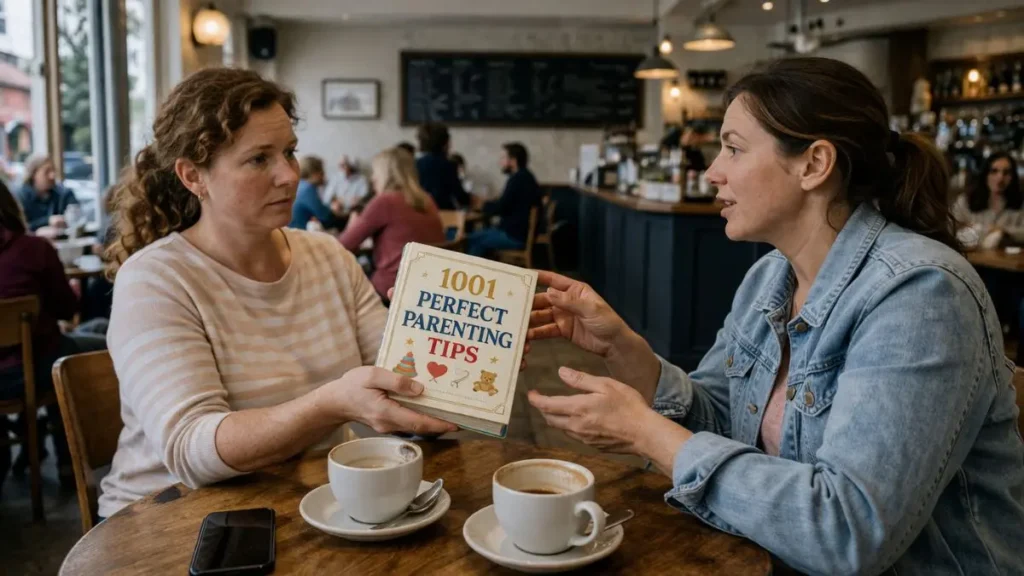
Many parents describe the same feeling in different ways: parenting feels heavier than they expected. Not always harder in obvious ways, but more constant, more pressured, and more mentally full. If you have found yourself feeling this, you are not imagining it.
Quick summary
If it feels like everything has become more mentally demanding, here’s why:
Modern parenting can feel more intense not because parents are doing it “wrong”, but because the environment around parenting has changed. A few key shifts help explain why it feels different:
- There is more information than ever, which can create pressure to get everything right
- Social media increases comparison and second-guessing
- Expectations around parenting have quietly risen over time
- The mental load is more visible and often shared differently across families
- Boundaries between work, home, and parenting are less clear than they used to be
This article is for / not for
This article is for:
- Parents who feel like parenting is more intense than expected
- Families feeling mentally stretched rather than physically overwhelmed
- Parents who are trying to understand why things feel harder
This article is not for:
- Situations needing specific behavioural or clinical support
- Parents looking for structured step-by-step parenting methods
If this isn’t quite right for you
You might find these more helpful:
Or browse all our Parenting articles.
If this article feels relevant for you, read on.
It is not just you, the context has changed
A simple example of this might be finding yourself scrolling through parenting advice late at night or second-guessing a routine that was working fine the day before.
It can be easy to assume that parenting has always felt this intense and that you are simply finding it harder than others might. But when you look more closely, the context around parenting has shifted significantly, and that changes how it feels day to day.
Previous generations were not dealing with the same volume of information, opinions, and expectations. Parenting advice existed, but it was more limited and easier to step away from. Now, advice is constant. It appears in articles, social media posts, videos, and conversations, and even when you are not actively looking for it, it still finds you.
That constant input subtly changes your experience. Instead of trusting your instinct or settling into a routine, it can start to feel like there is always something you should be doing better, adjusting, or rethinking.
The pressure to get it right has increased
One of the biggest shifts is not necessarily what parents are doing, but what they feel expected to do. There is now a strong focus on doing things “well” rather than simply getting through the day. While that can be positive, it quietly raises the bar.
Parents are often trying to support emotional development while also managing behaviour calmly and consistently. At the same time, there is an expectation to create enriching environments and make thoughtful choices about routines, activities, and responses.
When all of this sits alongside everyday life, work, and tiredness, it can create a steady sense that you are always slightly behind or not quite meeting the standard.
Information overload makes decision-making harder
Having access to more information sounds helpful, but in practice it often creates more pressure rather than less.
For almost every parenting decision, there are multiple viewpoints, and those viewpoints do not always agree. Whether it is feeding, sleep, routines, behaviour, or screen time, it is easy to find conflicting advice.
Instead of making a decision and moving on, many parents find themselves weighing options, second-guessing, and revisiting choices repeatedly. This does not just take time, it takes mental energy. Over time, that constant decision-making can make parenting feel more intense, even when nothing obvious has changed.
Comparison has become part of everyday parenting
It is much easier now to see how other families are doing things, and that changes the emotional backdrop of parenting.
Through social media, you might see routines that look calmer, homes that look more organised, or parenting approaches that seem to work more smoothly. Even when you know these are only snapshots, they can still influence how you feel about your own situation.
This creates a quiet layer of comparison. Not always consciously, but enough to make you question whether you are doing enough or doing things the “right” way. Over time, that comparison adds a subtle but persistent pressure that previous generations were less exposed to on a daily basis.
The mental load is more visible and increasingly constant
Parenting has always involved a mental load, but it is now more visible and often feels more constant.
Planning meals, remembering school events, managing routines, and thinking ahead to what is needed next have always been part of family life. What has changed is how those tasks show up.
With digital calendars, school apps, messages, and reminders, there is less natural separation between them. Instead of tasks coming and going, they can feel like they are always present in the background.
That can create the sense that you are always holding something in your head, even when you are trying to rest. For many families, this load is shared more than it used to be, which is positive, but it can also mean both parents feel that constant pressure rather than one person carrying most of it.
If, like me, you work from home or run your own business, this can feel even more constant. There is often no clear end to the day, no real “switch off” point at 5pm, just a sense that there is still something left unfinished.
If the day has been interrupted, that feeling can become stronger. You might find yourself thinking about the piece of work you didn’t quite finish, or what you need to catch up on later. Even while you are with your children, it can sit quietly in the background, not urgent enough to act on, but present enough that it is hard to fully settle.
It becomes less about time, and more about headspace. The task follows you mentally, adding another layer to the load you are already carrying.
Boundaries between roles are less clear
Work, home, and parenting used to be more separate for many families, but those boundaries are now often blurred.
Working from home, flexible schedules, and constant connectivity mean it is harder to fully switch off from one role and into another. You might find yourself thinking about work while parenting, or holding parenting tasks in your mind while working.
That overlap reduces the space where you would normally reset, which can make both roles feel more intense.
Why it can feel constant rather than difficult
One of the key differences is that modern parenting often feels constant rather than obviously difficult.
There may not be one clear challenge to point to, but instead a steady stream of small demands, decisions, and expectations. Each one on its own feels manageable, but together they build into a level of pressure that is hard to pinpoint and difficult to ignore.
This is often why parents describe feeling drained without being able to clearly explain why.
You are responding to the environment, not failing within it
It is important to recognise that this feeling is not a sign that you are doing something wrong.
In many cases, it is a reasonable response to an environment that asks more from parents than it used to. When expectations increase, information is constant, and comparison is built into everyday life, it makes sense that parenting would feel more intense.
Understanding that shift can help take some of the pressure off, because it moves the focus away from trying to fix yourself and towards recognising what you are working within.
Further reading that may help
If this feels familiar, these articles explore two of the biggest drivers behind that pressure in more detail:
- Mental load isn’t just a mum issue, dads feel it too – looks at how the mental load shows up for both parents and why it can feel constant rather than shared.
- Why comparison parenting makes everything harder – explores how comparison affects confidence and why it is so difficult to ignore.
What matters most
Modern parenting is not just about what you are doing each day, but the context you are doing it in.
When you recognise that the intensity often comes from that wider environment, it can make your experience feel more understandable and less personal.
You may not be able to remove all of that pressure, but you can start to see it more clearly. And often, that alone is enough to make it feel slightly lighter.
You might notice one small area today where you can ignore the noise and trust what is already working for your family, whether that’s sticking with a routine instead of rechecking advice, or choosing not to engage with another opinion.
FAQ
Has parenting actually become harder?
Not in every way, but it has become more mentally demanding. There is more information, more visibility, and higher expectations, which can make it feel more intense.
Why do I feel overwhelmed even on normal days?
Because the pressure often comes from many small things rather than one big problem. That steady build-up can feel draining over time.
Is social media the main cause?
It is one factor, but not the only one. It increases comparison and exposure to different approaches, which can add to the overall pressure.