
When days feel full and constant, even the idea of “looking after yourself” can feel like too much. The pressure to do something meaningful for your wellbeing can quietly add to the load. This article focuses on small habits that fit into real parenting life and help things feel a little lighter.
Quick summary
You do not need big routines to feel a difference. Small, low-effort habits often work better because they fit into the day you already have.
In practice, this often looks like:
- Short pauses between tasks that reset how your body feels
- Small choices that ease the load rather than add to it
- Letting things count so habits are easier to repeat
- Linking habits to things you already do
- Low-effort moments that create more consistency than big plans
This article is for / not for
This article is for:
- Parents who feel stretched or mentally tired
- Those who struggle to stick to routines
- Parents who want practical, realistic support
This article is not for:
- Situations where you need immediate professional support
- Ongoing mental health symptoms that need structured support
Medical disclaimer
This article is for awareness and support only and does not provide medical advice or diagnosis. If your wellbeing is significantly affecting your daily life, speaking to a GP or qualified professional is important.
For further guidance on mental health and wellbeing, you can visit NHS Every Mind Matters.
A different way to think about wellbeing habits
This is where many wellbeing approaches fall down for parents. They are often presented as something you need to build into your day, which can feel unrealistic when your time and energy are already stretched.
A more helpful way to approach this is not by adding new habits, but by adjusting small moments that already exist. Instead of asking “what should I do?”, it becomes “what could feel slightly easier here?”.
That shift is subtle, but it changes how habits fit into your day. Rather than needing extra time or effort, they begin to sit naturally within what you are already doing.
Here are small habits you can try today, without needing extra time.
Small habits that actually work in real life
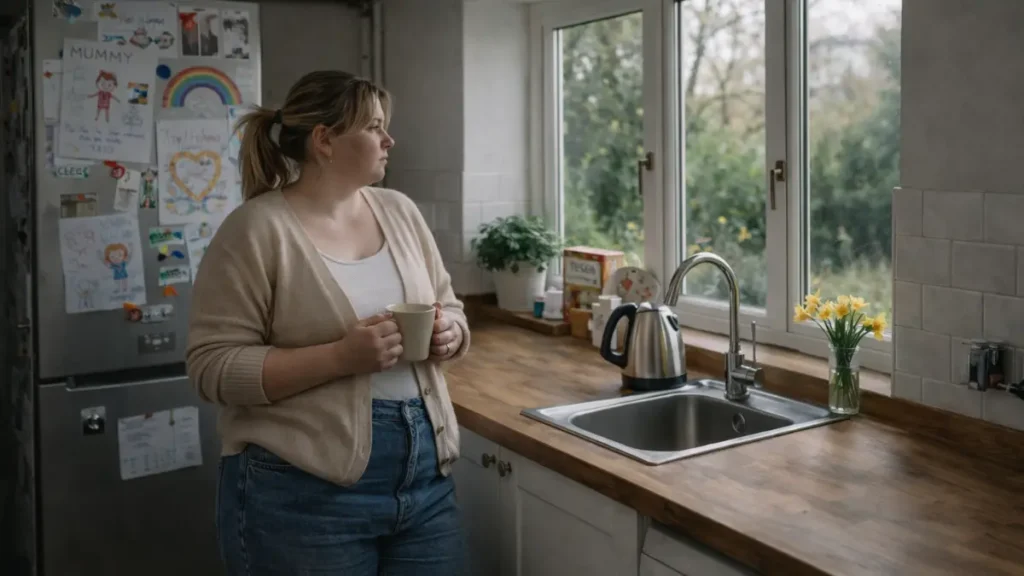
For example, this might be something as simple as standing at the sink after washing up and pausing for a slow breath before moving on.
These are not routines to follow perfectly. They are small shifts that tend to work because they are flexible and low-pressure:
- Taking a slow breath before moving to the next task
- Sitting for a minute after finishing something instead of rushing on
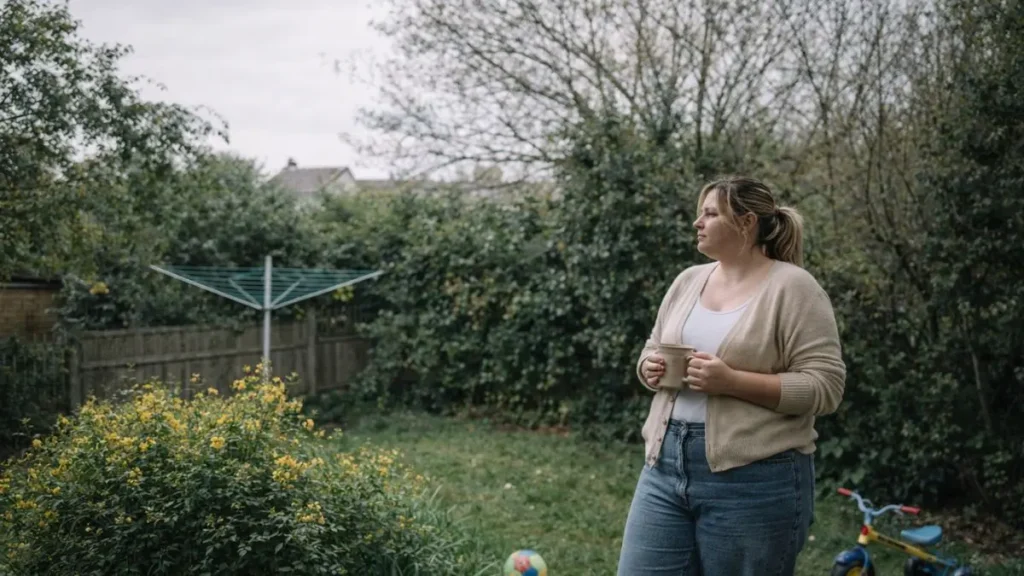
- Stepping outside briefly, even just onto the doorstep or into the garden for a few minutes
- Choosing an easier option when you feel stretched
- Finishing one thing fully before starting another
These habits do not need time set aside. They sit within what you are already doing.
You do not need to do all of these. Even one can be enough to notice a difference.
Why small habits feel more effective
Big plans often rely on energy, time, and consistency.
Small habits rely on opportunity.
When something is easy to start, it does not create resistance. You are more likely to do it again without needing to think about it.
Over time, this creates a quieter kind of consistency that does not depend on motivation.
This is often where things begin to feel lighter.
For some parents, especially those with children who have sensory needs, these quieter, low-input moments can be even more important. A brief pause or reduction in noise and activity can help both you and your child feel more settled, without needing to introduce anything new.
Linking habits to your day
One of the simplest ways to make habits stick is to attach them to things that already happen, rather than trying to create something new. When a moment already exists in your day, it does not require extra planning or memory to use it.
For example, the pause might come naturally after putting the kettle on, or in the moment before you leave a room. Because the habit is anchored to something familiar, it begins to feel part of your routine rather than an added task. Over time, this makes it easier to repeat without effort.
Letting small things count
It is easy to dismiss small moments because they feel too brief to matter. In parenting life, those small windows are often the only ones available.
When you allow these moments to count, your perspective on the day begins to change. Instead of feeling like nothing has helped, you start to notice where things felt slightly easier, even for a short time. That shift in awareness can reduce pressure and make your day feel more manageable.
This is often where things begin to shift.
When habits feel like another task
Sometimes even small habits can begin to feel like something else to manage. This usually happens when they become too structured or start to feel like something you “should” be doing.
When that happens, it can help to step back and return to something simpler. Not every day needs the same approach, and not every moment needs to be used. Allowing yourself that flexibility is often what makes habits sustainable over time.
You might also find this helpful
If you are finding that even small habits feel hard to start, it often links to how rest and stress are showing up in your day:
- Supporting your own wellbeing without adding pressure: a reassurance-led approach to reducing the feeling of “having to do more”
- Why rest feels so hard for parents: understanding why stopping does not always feel restful and what helps instead
External support
If you want further guidance on wellbeing, this resource can help:
What matters most
Wellbeing does not need to come from doing more. In many cases, it comes from allowing small moments to feel easier within the day you already have.
Simple, low-effort habits tend to work because they fit around your life rather than asking you to reshape it. You do not need a perfect routine for something to help, and you do not need to do everything consistently for it to make a difference.
Over time, small shifts that feel manageable are often enough. Small, repeatable moments often matter more than perfect plans.