
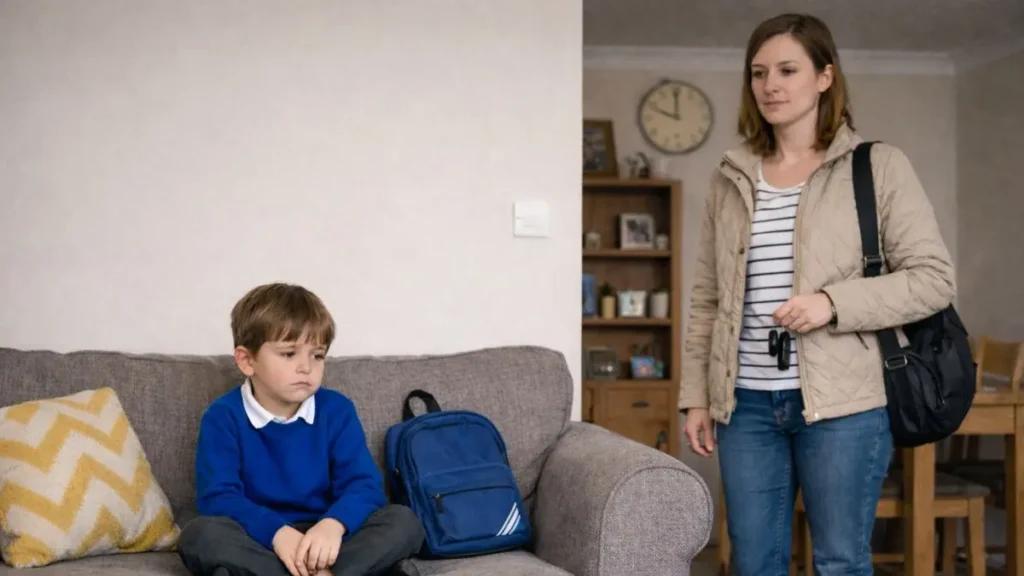
When your child feels anxious about school, it is natural to want to fix it quickly. It can leave you feeling helpless or unsure what to do next. But anxiety often grows louder when pressure increases. This article explores how to support school anxiety in a way that reduces escalation rather than unintentionally intensifying it.
Quick summary
When a child feels anxious about school, pushing for reassurance, explanations, or immediate solutions can sometimes increase distress.
What helps more:
- Staying calm and steady, even if they are not
- Reducing pressure before increasing expectations
- Listening without rushing to correct or dismiss
- Working with the school collaboratively rather than urgently
Support works best when it lowers the emotional temperature rather than raising it.
This article is for / not for
This article is for:
- Parents of children who feel anxious about school
- Families noticing increasing morning resistance or emotional distress
- Parents who want to respond calmly rather than reactively
This article is not for:
- Immediate safeguarding concerns
- Severe, persistent anxiety requiring urgent clinical intervention
Medical disclaimer
This article provides general parenting information and is not a substitute for medical or psychological advice. It does not diagnose or provide treatment guidance. If your child’s anxiety is persistent, severe, or significantly affecting daily functioning, speak to your GP or refer to NHS guidance on childhood anxiety.
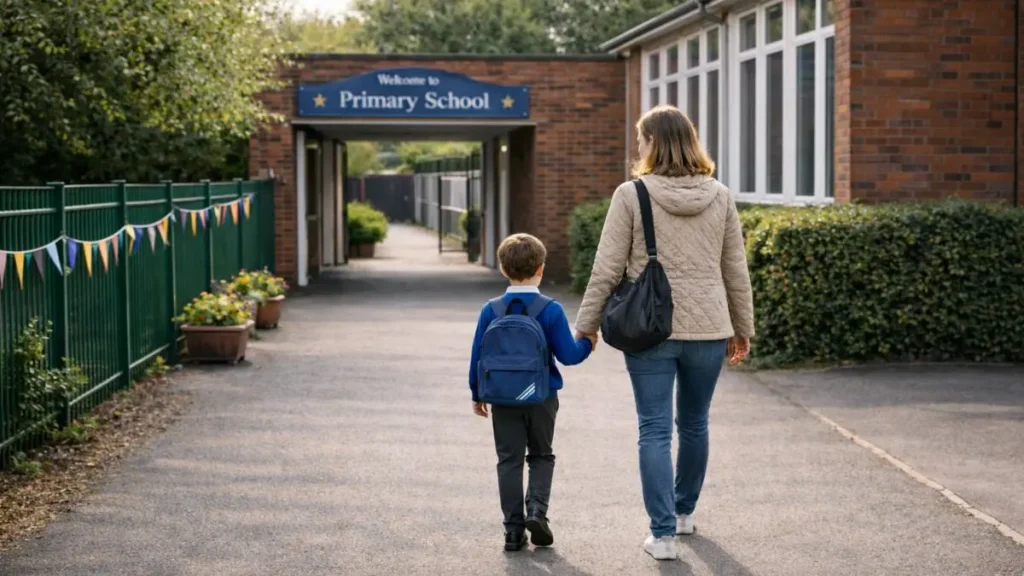
What escalation often looks like
Escalation rarely starts with shouting or conflict. It often begins with urgency.
Urgency can sound like repeated reassurance, rushed explanations, quick solutions, or a sudden increase in intensity around getting out of the door. It is the shift in tone that communicates, even unintentionally, that something must be fixed immediately.
Parents may respond with repeated reassurance, detailed explanations, or attempts to remove every possible trigger. While well intentioned, this can signal to a child that the situation is dangerous or overwhelming.
Anxiety is highly sensitive to tone. If a child senses urgency, their nervous system may interpret that as confirmation that something is wrong.
Why pushing harder can backfire
When a child is anxious, their body is already in a heightened state. Logic, persuasion, or consequences tend to be less effective in that moment.
Increasing pressure with phrases like “You will be fine,” “You have to go,” or “It is not a big deal” may seem helpful at first. However, they can unintentionally communicate that a child’s feelings are unacceptable or exaggerated. This often increases internal tension rather than reducing it.
The goal is not to eliminate anxiety instantly. It is to create enough safety for it to settle.
What calmer support looks like
For example, if your child says, “I cannot go, I feel sick,” a connecting response might be, “I can see this feels really hard this morning. Let’s take a breath together and work out the next small step.” This keeps the expectation in place while lowering the emotional intensity.
Another approach that has worked for us is calmly saying, “Let’s try going in, and if you are still feeling unwell or overwhelmed, you can tell your teacher and they will call us.” This keeps the door open without removing the expectation.
It is important to agree this plan with the teacher first so it builds trust rather than undermines it. In our experience, we never received the call, but the reassurance helped our child feel safe enough to go.
Calmer support does not mean removing expectations entirely. It means adjusting how those expectations are held.
Building connection in the moment helps a child’s nervous system settle. The following approaches work because they signal safety and understanding rather than correction or pressure.
You might:
- Acknowledge the feeling without amplifying it
- Keep routines predictable and steady
- Avoid long, intense conversations during peak anxiety moments
- Offer short, grounding statements such as “I can see this feels hard”
Consistency builds safety. Safety reduces escalation.
Morning anxiety: reducing the build up
Morning anxiety often reflects anticipation rather than the school day itself.
It is also worth acknowledging that your child’s anxiety can trigger anxiety in you. After a difficult morning, we found ourselves worrying all day and hoping our child was ok in school. That response is understandable. Noticing your own anxiety and regulating it gently can make a meaningful difference to the tone you bring the next morning.
Keeping mornings low stimulation, reducing rushed transitions, and limiting last minute discussions about worries can help. It is usually more productive to explore concerns later in the day, when your child is calmer.
If school attendance becomes a frequent battle, early communication with school is important. Collaboration is more effective than confrontation.
Working with school constructively
Schools have a duty to make reasonable adjustments where a child’s needs are affecting their access to education.
This does not mean lowering standards, but adjusting the path toward them. Support does not have to be limited to small changes. While simple adjustments such as seating, check ins, or transitional support can help, sometimes broader planning is needed.
Reasonable adjustments might include flexible start arrangements, reduced homework during high anxiety periods, access to a quiet space, adapted expectations around presentations, or a named adult for emotional check ins. In some cases, a more structured support plan may be appropriate.
If concerns continue, speak with the class teacher first and, where appropriate, the school’s SENDCo to explore what reasonable adjustments could look like for your child.
Approach conversations with curiosity rather than accusation. Share what you see at home and ask what staff observe in school.
A joined up response prevents children from feeling caught between adult perspectives.
When to seek more support
If anxiety is intensifying, spreading to other areas of life, or leading to avoidance patterns such as repeated school refusal, increasing physical complaints, or widening fears beyond school, further support may be needed.
That may involve speaking to your GP, exploring school based support, or discussing whether additional needs should be considered.
Seeking help is not overreacting. It is protecting your child’s wellbeing.
Explore more on school anxiety and expectations
If you would like to understand how school expectations and anxiety sometimes overlap, these may help:
- When school expectations don’t match your child explores how pressure and capacity can fall out of sync and what that can look like at home.
- Why some children cope all day at school then fall apart at home looks at how effort and masking can contribute to emotional release later in the day.
For additional UK clinical guidance on childhood anxiety, the NHS provides practical information for parents.
What matters most
Supporting an anxious child is not about eliminating every worry.
It is about helping them feel safe enough to face what feels difficult without increasing the emotional temperature around it.
Calm is contagious.