
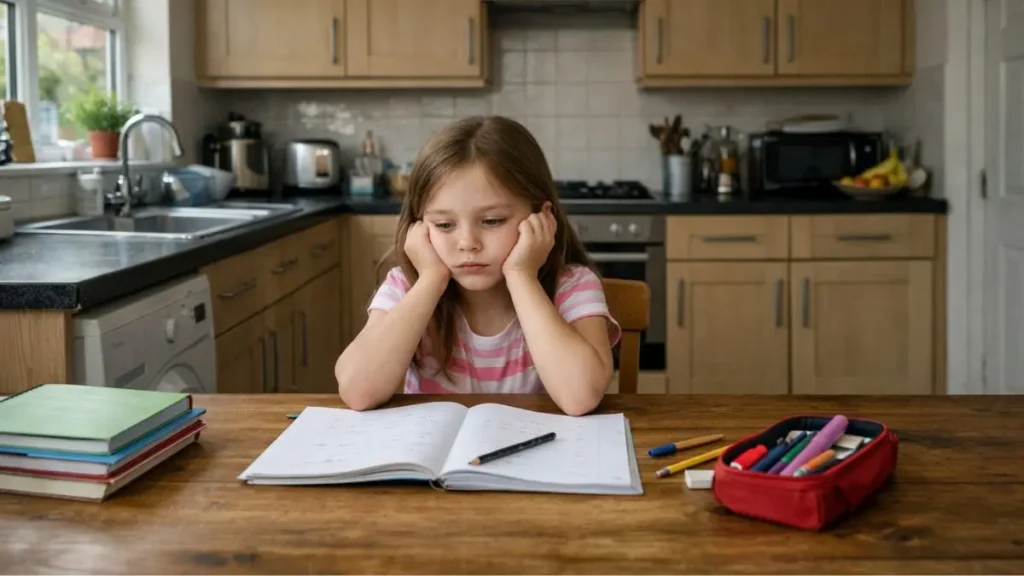
When your child is upset, withdrawn, or overwhelmed, it can be hard to know what to do next. Most parents face moments like this, even if they rarely talk about them. Many want to help but worry about saying the wrong thing or making it worse. This article explores what calm support for children actually looks like in real family life, in a way that feels steady rather than scripted.
Quick summary
Calm support for children is less about finding the perfect words and more about creating emotional safety. When a child is struggling, what helps most often looks like this:
- Staying steady, even if they are not
- Reducing pressure rather than increasing it
- Listening before offering solutions
- Accepting feelings without rushing them away
- Adjusting expectations for a while
Calm support is not dramatic. It is consistent.
This article is for / not for
This article is for:
- Parents who feel unsure how to respond when their child is emotional
- Families navigating shutdowns, tears, anger, or overwhelm
- Parents who want reassurance that steady support is enough
This article is not for:
- Emergency mental health situations
- Advice about diagnosis or therapy plans
- Situations where a child is at immediate risk
Medical disclaimer
This article is written from lived experience and research and is for general information and parental support only. It does not diagnose emotional or mental health conditions or provide medical or therapeutic instruction.
If you are worried about your child’s emotional wellbeing or safety, speak to your GP or seek guidance from recognised UK organisations such as the NHS or Mind.

What calm support really means
Calm support is rooted in emotional safety rather than perfect responses.
Calm support does not mean being perfectly composed at all times. It means being steady enough that your child’s emotions do not have to carry the whole room.
When children are struggling emotionally, their nervous system is often overloaded. In that state, correction, lectures, or detailed explanations rarely land well. Support begins with safety.
Staying steady when emotions are big
If your child is crying, angry, or shut down, the most helpful thing you can often offer is steadiness.
That might mean lowering your voice, slowing your movements, or sitting nearby without immediately asking questions. You do not need to solve the emotion. You are helping it move through safely.
Reducing pressure in the moment
When a child is emotionally overwhelmed, even small demands can feel heavy, such as being asked to tidy up, answer questions, make simple decisions, start homework, or explain what happened.
Calm support for children often looks like temporarily lowering expectations. Homework can wait. Conversations can pause. Decisions can be postponed. Reducing pressure does not mean avoiding responsibility forever. It means recognising that regulation comes before reasoning.
Listening without rushing to fix
Many of us were raised to fix problems quickly. It is natural to want to make the feeling stop, especially when your child’s distress triggers your own discomfort, worry, or urge to protect them.
But calm support often sounds more like:
- “I can see this feels really hard.”
- “I’m here with you.”
- “We can figure it out later.”
These responses create space rather than control.
When children feel understood, their nervous system often settles enough for clearer thinking to return.
Allowing feelings without turning them into a problem
Struggling emotionally does not automatically mean something is wrong. Children have intense feelings because they are still learning how emotions work.
Calm support means allowing those feelings to exist without immediately labelling them as dramatic, disrespectful, or over the top.
For example, after-school tears over something that seems small, a refusal to talk after a difficult day, or a sharp reaction during sibling conflict may signal emotional overload rather than misbehaviour.
That does not mean all behaviour is acceptable. It means separating the feeling from the boundary.
When children are allowed to sit with feelings safely, they begin to understand them rather than fear them, and that is how emotional skills grow over time.
Small, ordinary actions matter
Calm support is often quiet. It might look like making a drink and sitting nearby, going for a short walk together, offering a blanket, or giving space while staying available.
These small actions tell a child, “You are safe, even when this feels hard.” Over time, this is how emotional security builds.
When calm support does not feel easy
There will be days when staying steady feels difficult, especially if you are tired, stressed, or overwhelmed yourself. That does not make you a failing parent; it makes you human.
Repair matters more than perfection. If a moment escalates, coming back later and saying, “That was hard for both of us,” still teaches safety.
If this resonated, you might also find these helpful
If you are exploring how to respond in emotionally charged moments, these articles build on similar themes:
- How to tell when your child needs emotional support (not fixing) – Recognising when your child is asking for understanding rather than solutions.
- Supporting a child’s mental health without making it a ‘problem’ – How to stay supportive without turning normal emotions into something bigger than they need to be.
For UK support and guidance on children’s emotional wellbeing, you may also find these helpful:
- NHS – children’s mental health support
- Action for Children – support for families and children’s emotional wellbeing
What matters most
Calm support for children is not about having the perfect script. It is about creating enough emotional safety that your child does not have to face hard feelings alone.
If you are staying present, reducing pressure, and listening before fixing, you are already offering something powerful.
Small, steady moments build trust over time. You know your child better than anyone, and that steady presence is more powerful than it often feels in the moment.
Trust that instinct to slow down and stay with them; it is often exactly what they need.
FAQ
Is calm support the same as being permissive?
No. Calm support allows feelings while still holding boundaries around behaviour. You can say, “I can see you are angry,” and still say, “I cannot let you hit.”
What if my child pushes me away when I try to help?
Some children need space before they can accept closeness. Calm support can include giving room while making it clear you are available.