
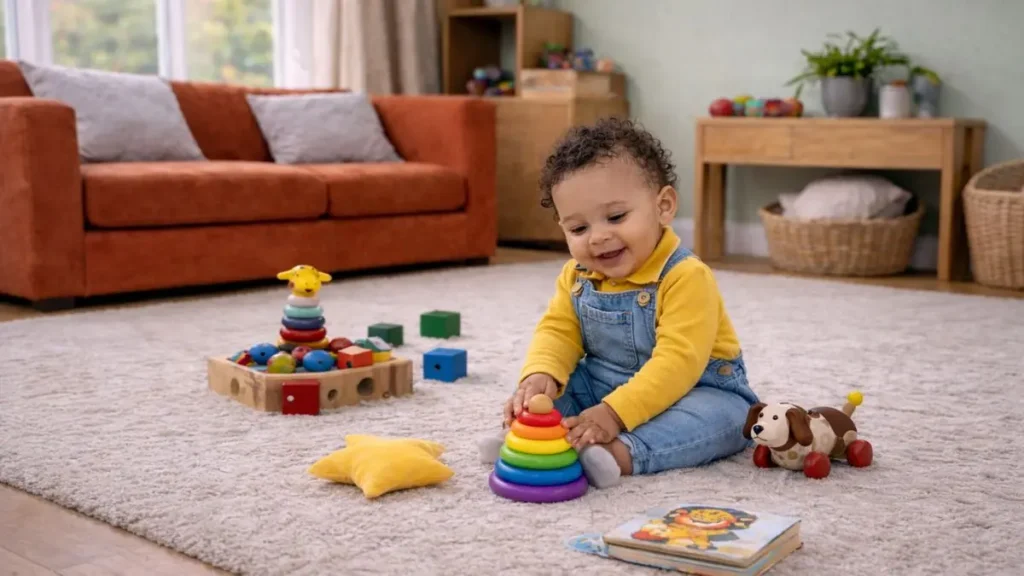
It can feel like your baby should be sitting up by now, especially if they keep toppling over or you are seeing other babies sitting steadily. You might find yourself watching closely, wondering when it will happen or if they are behind. The reality is that learning to sit takes time, and there is a wide range of what is considered typical.
Quick summary
If you are wondering when babies usually sit up, it is easy to feel like you should be seeing this by now. Looking at a few key signs together can give you a clearer sense of what’s typical and when to relax or check in. If your baby is gaining strength and showing early signs like good head control or pushing up, differences in timing are usually nothing to worry about:
- Many babies start sitting with support around 4–6 months
- Independent sitting often develops between 6–9 months
- Good head and trunk control usually comes before sitting
- Wobbling and falling are part of learning
- There is a wide range of what is typical
This article is for / not for
This article is for:
- Parents wondering when their baby should sit up
- Those comparing their baby to others and feeling unsure
- Parents looking for reassurance about development timing
This article is not for:
- Babies with diagnosed developmental conditions
- Situations where a professional has already raised concerns
Medical disclaimer
This article is for general awareness and reassurance only. It does not provide medical advice or diagnosis. If you are concerned about your baby’s development, speak to a GP or health visitor. For further guidance, you can refer to NHS information on baby development.
When do babies usually start sitting up?
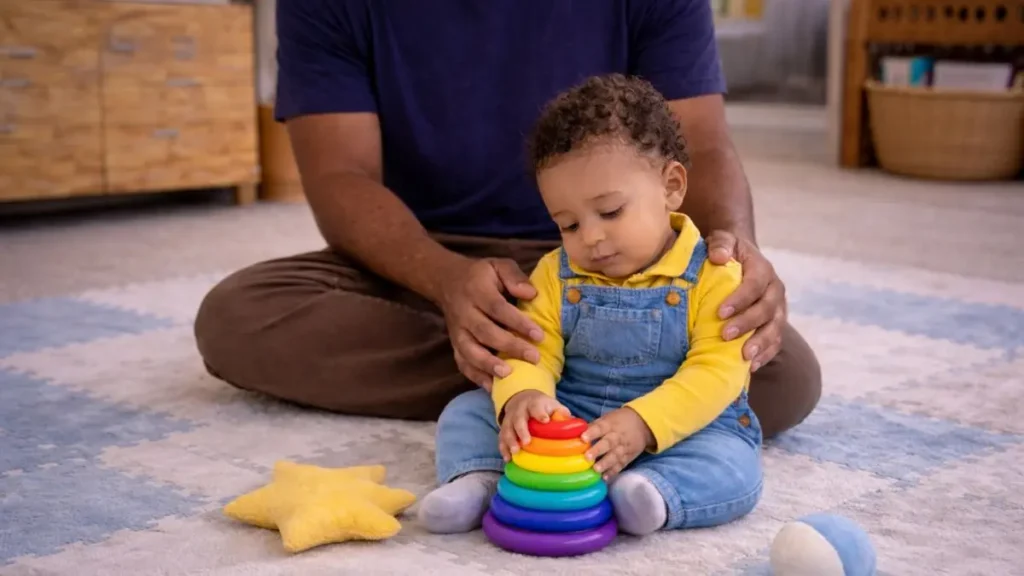
Most babies begin to sit with some support between 4 and 6 months. This might mean sitting propped up with cushions or leaning forward on their hands.
Independent sitting, where your baby can sit without support, often develops between 6 and 9 months. Some babies reach this earlier, while others take a little longer, and rather than focusing on a single moment, it can help to think of sitting as a gradual skill that develops over time.
Signs your baby may be getting ready to sit
Sitting builds on earlier development, particularly strength and balance.
You might notice your baby holding their head steady, pushing up during tummy time, or starting to roll both ways. They may also begin to prop themselves up on their arms when placed in a sitting position.
You might also notice a “tripod” position, where they lean forward on their hands to steady themselves, as well as wobbling and correcting themselves as they learn balance.
These signs show that your baby is building the core strength and coordination needed to sit more steadily.
Supported sitting vs sitting independently
There is a difference between being able to sit with help and sitting on their own.
Supported sitting might include using cushions, sitting on your lap, or briefly balancing while leaning forward. This is often one of the first steps, with independent sitting usually coming later when your baby can stay upright without support and use their hands freely to play.
It can help to give your baby plenty of chances to sit with minimal support, as this allows them to build the core strength and balance needed to sit more steadily.
It is normal for babies to wobble, tip over, and need practice before they become steady. Because of this, it helps to stay close and use a soft surface while they are practising.
Why some babies sit earlier or later
Babies develop at different speeds, and sitting is no exception.
Some babies naturally focus on movement like rolling or crawling first, while others spend more time developing balance. Some are more active and eager to move, while others are more content observing before trying new skills, along with how much time they spend on the floor.
Looking at your baby’s overall development is more helpful than focusing on one milestone. If you want a clearer sense of how much variation there is in how babies grow, our guide to Average baby weight and height (UK guide) can help put this into perspective.
When it might be worth checking in
Most variation in sitting is completely normal. There are always outliers, and occasionally it can help to speak to a professional.
You may want to check in with a GP or health visitor if your baby is not showing signs of head control by around 4–5 months, or is not able to sit with support by around 8–9 months.
You might also want to ask if your baby feels very stiff, very floppy, or struggles to control their movements.
If something does not feel quite right, it is always okay to ask for reassurance.
How sitting fits into your baby’s development
Sitting is one part of a wider development journey.
It often follows skills like tummy time and rolling, and leads into movements such as crawling, pulling up, and standing. These stages can overlap, which is why progress can feel uneven at times.
Looking at development as a whole can help reduce pressure. Babies are not working to a strict timeline, and small differences in timing are very common.
Further reading to help you see how sitting links to other milestones
If you want to understand how sitting connects to other milestones, these may help:
- 28 baby milestones by age (UK): what to expect – shows how development unfolds over time
- Baby development 0–12 months: milestones at a glance – gives a simple overview of the first year
- When do babies crawl? (what’s typical in the UK) – explains what often comes after sitting and how movement develops
If you want to refer to general guidance, you can look at NHS information on baby development.
- NHS baby development guidance – general UK advice on development.
What matters most
Sitting can feel like a big milestone, but it is just one part of your baby’s overall development.
Most babies get there in their own time, and a wide range of timing is considered typical. Watching how your baby is developing overall will give you more reassurance than focusing on one specific age.
If you are unsure, speaking to a health visitor can help you understand what is typical for your baby.
FAQ
When do babies sit up on their own?
Many babies sit independently between 6 and 9 months, though there is a wide range of typical.
Is it okay to sit my baby up before they can do it themselves?
Short periods of supported sitting are usually fine, but babies still need time on the floor to build strength naturally.
What if my baby keeps falling over when sitting?
This is part of learning. Most babies need time to develop balance and coordination before sitting steadily.