
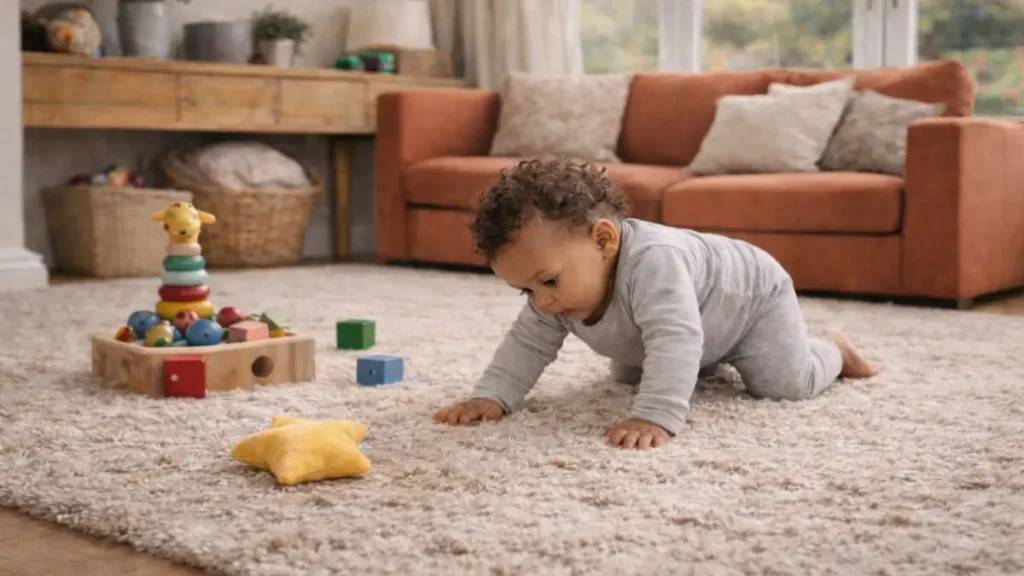
It can feel like crawling is something your baby should be doing by now, especially when you hear other parents talking about it. You might be watching closely, wondering when it will happen or if they are behind. The reality is that crawling varies more than most people expect, and many babies reach this stage in their own time without it being a concern.
Quick summary
If you are wondering when crawling should start, it is easy to feel like you should be seeing this by now. In reality, there isn’t one “right” age, and focusing on patterns is more helpful than watching the calendar. Looking at a few key signs together can give you a clearer sense of what’s typical and when to relax or check in:
- Many babies start crawling between 6 and 10 months
- Some babies crawl earlier, later, or skip it altogether
- Signs of readiness often matter more than the exact timing
- There are different types of crawling, not just one “correct” way
- Variation is normal, but there are times it is worth checking in
This article is for / not for
This article is for:
- Parents wondering when their baby should start crawling
- Those comparing their baby to others and feeling unsure
- Parents looking for reassurance about milestone timing
This article is not for:
- Babies with known developmental conditions
- Situations where a professional has already raised concerns
Medical disclaimer
This article is for general awareness and reassurance only. It does not provide medical advice or diagnosis. If you are concerned about your baby’s development, speak to a GP or health visitor. For further guidance, you can refer to NHS information on baby development.
When do babies usually start crawling?
Many babies begin to crawl somewhere between 6 and 10 months, but this is a broad range rather than a fixed rule. Some babies start earlier, while others take a little longer, and it is quite common for babies to move in different ways before crawling properly, such as shuffling, rolling, or pushing backwards.
A helpful way to think about this stage is that crawling is part of a wider movement journey, rather than a single moment that should happen at a specific time.
Signs your baby may be getting ready to crawl
Rather than focusing only on age, it can be more useful to look for signs that your baby is building the strength and coordination needed.
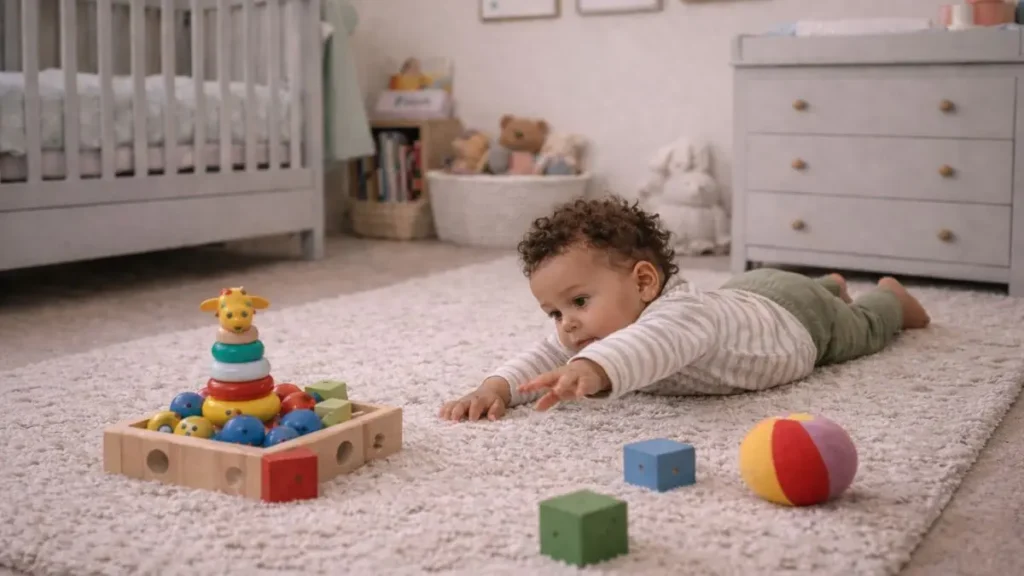
You might notice your baby spending more time on their tummy, pushing up on their arms, or rocking back and forth on hands and knees. This time on their tummy helps build the arm, neck, and core strength needed for crawling. They may start to move in small ways, such as turning in circles or pushing themselves backwards. You may also notice they move more easily barefoot, as this can help with grip and balance during early movement.
These early movements are all part of the process. They show that your baby is developing the muscles and balance needed for crawling.
Not all babies crawl in the same way
One of the biggest surprises for many parents is that crawling does not look the same for every baby.
Some babies crawl on their hands and knees in the way you might expect. Others use a bottom shuffle, an army crawl, or a mix of movements that get them from one place to another.
All of these variations can be completely normal. What matters more is that your baby is finding ways to move and explore their environment.
Why some babies crawl later (or skip it)
There are several reasons why crawling might happen later for some babies.
Some babies are more focused on other skills, such as sitting, standing, or interacting with people. Others may simply have a different natural pace of development.
It is also worth knowing that some babies skip crawling altogether and move straight to pulling up, cruising, or walking. While this can feel surprising, it is not usually a problem on its own. It can feel like they have skipped a step entirely, even though their development is still on track.
Looking at your baby’s overall development, rather than one milestone, gives a much clearer picture. If you want a broader view of typical growth patterns, our guide to Average baby weight and height (UK guide) helps put development into context alongside physical growth.
When it might be worth checking in
Most variation in crawling is completely normal, but there are times it can be helpful to speak to a professional.
You may want to check in with a GP or health visitor if your baby is not showing any signs of movement or attempting to get around by around 10–12 months, or if they seem very stiff, very floppy, or unable to support their weight during play.
Trust your instincts as well. If something feels different or you are unsure, it is always okay to ask for reassurance.
How crawling fits into your baby’s development
Crawling is just one part of your baby’s wider development.
It often follows earlier milestones like tummy time and sitting, and leads into later skills such as pulling up and walking. These stages can overlap, which is why development can feel uneven at times.
Looking at the overall pattern of development can make this stage feel less pressured. Babies are not working to a checklist, and small differences in timing are very common.
Further reading to help you understand how this fits into your baby’s overall development
If you want to understand how crawling fits into wider development, these may help:
- 28 baby milestones by age (UK): what to expect – shows how development unfolds over time
- Baby development 0–12 months: milestones at a glance – gives a simple overview of key changes in the first year
- When do babies sit up? (and what’s normal) – explains how sitting links to movement and readiness for crawling
If you want to double-check general guidance, you can refer to NHS information on baby development.
- NHS baby development guidance – general reference for UK advice on development
What matters most
Crawling can feel like an important milestone, but it is just one part of a much bigger picture.
Most babies reach this stage in their own time, and there is a wide range of what is considered typical. Watching how your baby is developing overall will give you far more reassurance than focusing on one specific age.
If you are ever unsure, a quick conversation with a health visitor can help you understand what is typical for your baby.
FAQ
What age do most babies crawl in the UK?
Many babies start crawling between 6 and 10 months, but there is a wide range of typical.
Is it normal if my baby skips crawling?
Yes, some babies move straight to standing or walking. This is not usually a concern if other development is progressing.
Should I be encouraging my baby to crawl?
Providing time on the floor and opportunities to move is usually enough. Most babies develop this skill naturally when they are ready.