
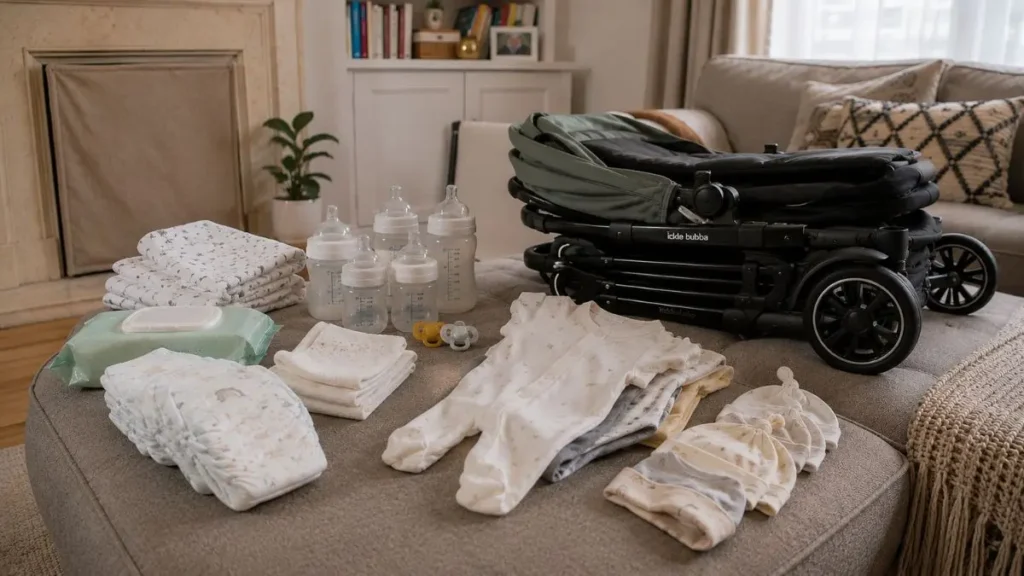
One of the hardest parts of preparing for a baby is working out what things are actually likely to cost. Most articles either throw out huge scary totals or turn into giant shopping checklists that make everything feel equally urgent. In reality, families spend very different amounts on baby essentials, and there is usually far more flexibility than it first appears.
That also makes it surprisingly difficult to give one simple “from and to” figure that genuinely reflects real families. Some parents keep costs very low with second-hand items and simple setups, while others spend far more because of lifestyle, transport needs, feeding choices, or convenience. The more useful question is usually where the costs vary most and what actually changes the total.
Quick summary
Baby essentials can cost anything from a few hundred pounds to several thousand in the first year, depending on feeding choices, childcare, travel systems, and whether you buy new or second-hand.
The biggest thing to remember is that spending more does not automatically mean you are better prepared. The costs that tend to matter most are usually:
- Safe sleep items such as a cot, crib, mattress, or Moses basket.
- Feeding costs, especially if using formula or combination feeding.
- Travel costs such as car seats and prams, where prices vary hugely.
- Everyday repeat spending like nappies, wipes, clothes, and toiletries.
- Childcare later in the first year, which can become one of the largest overall costs.
- The categories where prices vary most, especially sleep and travel setups.
This article is for / not for
This article is for you if:
- You want a realistic idea of what baby essentials cost in the UK.
- You feel overwhelmed by long baby shopping lists.
- You are trying to work out where spending really matters.
- You want to understand why some families spend far more than others in the same categories.
This article is not for you if:
- You want a detailed review of specific baby products.
- You are looking for a complete baby budgeting system.
- You want an exhaustive baby essentials checklist.
The real answer is that parents spend very different amounts
One reason baby costs feel confusing is because two families can buy the same category of item and spend completely different amounts.
One parent may buy a second-hand pram for £80 that works perfectly well for years. Another may spend over £1,000 on a travel system because they use it heavily every day, want specific features, or simply have the budget for it.
Neither approach is automatically right or wrong.
That is why giant “average baby cost” numbers are not always very helpful on their own. A large part of the cost difference comes down to:
- Whether you buy new or second-hand.
- Whether family or friends pass items on.
- Feeding choices.
- Childcare plans.
- Lifestyle and transport needs.
- How much you buy before the baby arrives.
The good news is that most babies do not need the most expensive version of everything. Safe, practical, and realistic usually matter far more than premium branding.
Sleep essentials costs
Sleep is one of the areas where costs can stay relatively low or become surprisingly expensive depending on the setup.
At the lower-cost end, many parents start with:
- A Moses basket or basic crib.
- A mattress.
- Fitted sheets.
- Basic sleeping bags or blankets following current safety guidance.
That setup may cost roughly £80 to £250 depending on whether items are bought new, second-hand, or passed down.
Mid-range setups often include:
- A bedside crib.
- A cot that converts later.
- Multiple sleep bags.
- Extra bedding.
That can move costs closer to £250 to £600.
At the higher end, nursery furniture bundles, premium bedside cribs, designer cots, and matching nursery décor can push costs much higher again.
This is one of the clearest examples of where spending varies because of preference rather than because babies fundamentally need more.
The area where parents usually choose to be more careful with second-hand buying is mattresses. Many families are comfortable buying cots or nursery furniture used, but prefer a new mattress for hygiene and safety reasons.
Feeding costs can vary more than people expect
Feeding costs are one of the biggest variables in the first year.
Breastfeeding is often described as “free”, but real life is usually more complicated than that. Some parents buy pumps, replacement pump parts, breast pads, nipple cream, feeding pillows, or specialist feeding support.
Formula feeding can become one of the larger monthly costs because the spending repeats every week rather than being a one-off purchase.
Roughly speaking, feeding costs in the first year might look something like this:
| Feeding setup | Approximate cost range |
|---|---|
| Mostly breastfeeding with basic extras | £50–£300+ |
| Combination feeding | £300–£800+ |
| Formula feeding with bottles and sterilising | £600–£1,500+ |
The wide range happens because babies feed differently, families use different brands, and some parents buy extra equipment while others keep things simple.
If you want a more detailed look at ongoing feeding costs, our article How much does a baby cost (UK)? looks at the bigger first-year picture in more detail.
Travel costs are where spending often jumps most
Travel is probably the category where prices vary the most.
A safe car seat is one of the most important purchases for many families, but the overall transport setup can look very different depending on lifestyle.
At the lower-cost end, parents may choose:
- A second-hand pram frame.
- A basic buggy.
- A baby carrier or sling.
- A new budget-friendly car seat.
At the higher end, some travel systems alone cost over £1,000 before accessories are added.
A lower-cost travel setup using a second-hand pram or buggy with a new budget-friendly car seat might stay around £150 to £400 overall. Mid-range setups often land somewhere between £500 and £1,200 once accessories, carrycots, changing bags, and extra bases are included.
Where spending often increases is convenience. Parents using public transport daily, walking long distances, or fitting equipment into small car boots may genuinely benefit from paying more for certain features.
For other families, a simpler setup works perfectly well.
This is one of the categories where it helps to separate “useful” from “marketed as essential”. A huge accessory bundle may look impressive but often includes items that are barely used.
Clothing costs are usually lower than expected
Baby clothing is one of the areas parents often overestimate at first.
Babies grow quickly, receive gifts, and may wear some outfits only a handful of times before moving up a size.
A simple clothing setup for the early months often includes:
- Sleepsuits.
- Vests.
- Socks.
- Hats.
- A coat or pramsuit if needed.
- A few daytime outfits.
Families using supermarket basics, bundles, second-hand clothes, or hand-me-downs may spend surprisingly little.
Roughly speaking:
- Low-cost clothing setups may stay under £100 in the early months.
- Mid-range spending may sit around £150 to £400.
- Higher spending can increase quickly with branded outfits, larger wardrobes, and frequent new purchases.
One thing many parents realise later is that babies often need fewer clothes than expected because laundry happens so regularly anyway.
Everyday repeat costs add up quietly
Some of the most important baby costs are not dramatic one-off purchases. They are the smaller things that quietly repeat every week.
That includes:
- nappies
- wipes
- baby toiletries
- replacement dummies or bottle teats
- muslins
- medicines and small health items
- washing and laundry costs
Individually, these may not seem huge. Over the first year, though, they become a noticeable part of the overall spending.
For many families, these repeat essentials may roughly add another £40 to £120+ per month depending on nappies, wipes, toiletries, medicines, laundry, and whether supermarket own-brand products or premium brands are used.
For many families, Child Benefit is enough to take a meaningful chunk out of some of these repeat essentials such as nappies and wipes. GOV.UK has the latest rates and eligibility information if you want to check what support may apply to your situation.
This is also one of the reasons some families find the smaller repeat costs more noticeable than the bigger one-off purchases. Individually they can seem manageable, but over months they quietly add up.
Helpful next reads on baby costs
If you are trying to understand baby spending without getting overwhelmed, these related guides go into more detail on specific areas.
- The realistic cost of baby nappies in the UK (what parents spend) – Useful if you want a clearer idea of one of the most regular repeat costs.
- Cost of baby formula (UK): what parents actually spend – Helps break down one of the largest ongoing feeding expenses for many families.
- How to budget for a baby (simple UK plan) – Useful if you want help turning these costs into a realistic monthly plan.
For UK-specific guidance and support, it can also help to check official sources alongside your own planning.
- GOV.UK: Child Benefit – Useful if you want to check current eligibility and payment information.
- Citizens Advice: help if you’re pregnant or have a child – Practical support and advice for families
What matters most
The cost of baby essentials is rarely one fixed number.
Some families spend very little and still cover everything their baby genuinely needs. Others choose to spend more because certain products fit their lifestyle better, save time, or reduce stress.
The most important thing is usually not finding the “perfect” setup. It is understanding where spending matters most, where there is flexibility, and where you can slow down before buying everything at once.
A calm, realistic setup that works for your family is usually far more valuable than trying to recreate an expensive social media version of parenthood.
FAQ
How much do baby essentials cost in the UK?
The cost varies hugely depending on feeding choices, transport systems, childcare, and whether you buy new or second-hand. Some families spend a few hundred pounds on essentials in the early months, while others spend several thousand across the first year.
What are usually the most expensive baby essentials?
Travel systems, car seats, nursery furniture, formula feeding, and childcare are often the biggest costs. Childcare later in the first year can become far more expensive than the newborn essentials themselves.
Can you buy baby essentials on a budget?
Yes. Many families reduce costs safely through second-hand buying, hand-me-downs, supermarket clothing basics, and by delaying non-essential purchases until they are genuinely needed.
Which baby items are worth buying new?
Many parents prefer to buy mattresses and car seats new for safety and hygiene reasons. Other items such as clothing, cots, books, and nursery furniture are commonly bought second-hand.
Is it worth buying expensive baby products?
Sometimes, depending on lifestyle and daily use. Certain families genuinely benefit from features that make transport, sleep, or feeding easier. However, spending more does not automatically mean a product is better for every family.