
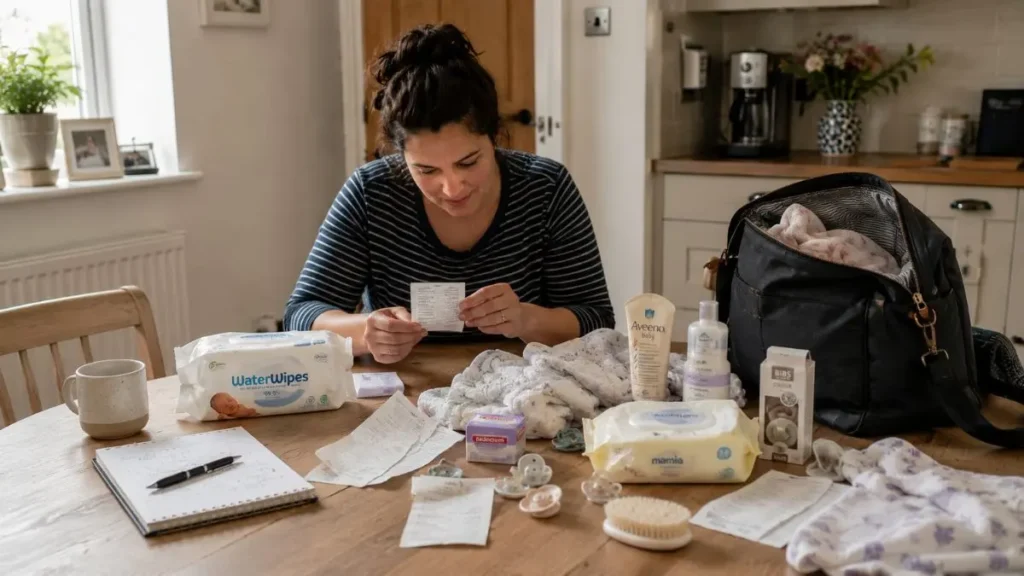
Most parents expect the big baby costs like a pram, cot, or car seat. The surprise is often the steady stream of smaller expenses that keep appearing afterwards. It is usually not one dramatic purchase that catches families out, but the way lots of small top-ups, replacements, convenience spending, and everyday extras quietly build up over time.
A lot of the extra spending comes from real-life adjustments rather than poor planning. Tiredness, time pressure, rapid baby growth, changing routines, and trying to make life easier all affect how families spend money in the first year.
Quick summary
A lot of the hidden costs of having a baby come from the smaller repeat purchases and convenience spending that standard baby shopping lists barely mention. The things that tend to catch parents out most often include:
- Replacement bottles, teats, dummies, creams, medicines, and feeding extras.
- Clothing costs caused by rapid growth, weather changes, and frequent washing.
- Convenience spending when exhaustion makes everyday life harder.
- Travel costs that increase quietly through parking, fuel, snacks, and extra journeys.
- Feeding costs that change over time rather than staying predictable.
- The “top-up effect” where lots of £5–£20 items slowly add up.
- The need for a realistic buffer because surprise spending is extremely common in the first year.
This article is for / not for
This article is for you if:
- You want to feel more prepared for the less obvious baby costs.
- You keep seeing giant baby shopping lists and feel unsure what really adds up later.
- You are trying to plan realistically rather than perfectly.
- You want reassurance that surprise spending is common.
This article is not for you if:
- You want a full first-year baby cost breakdown.
- You are looking for detailed budgeting spreadsheets.
- You want product reviews or “must-have” baby item lists.

The hidden costs are usually the small repeat purchases
A lot of parents expect the stress to come from one huge purchase such as a pram or travel system. In reality, the spending that catches families out is often the constant stream of smaller costs that quietly become part of everyday life.
Extra muslins, replacement bottle teats, nappy cream, calpol, wipes, spare dummies, bibs, fitted sheets, snacks while out, and emergency supermarket trips often feel minor in isolation.
The problem is that these purchases rarely happen once.
A £6 top-up here and a £12 pharmacy trip there may not feel significant at the time, but over weeks and months they quietly become part of normal life with a baby.
This is one reason the first-year costs can feel higher than expected even when parents are trying to be careful.
Feeding costs often change more than expected
Feeding plans also change for emotional and practical reasons far more often than many parents expect, and that usually reflects real life with a baby rather than poor preparation.
Many parents start pregnancy with one idea of how feeding will work, then find real life looks slightly different.
Some parents who planned to breastfeed may end up combination feeding or buying pumps, replacement parts, feeding pillows, breast pads, nipple cream, or specialist feeding support.
Formula feeding costs can also change as babies grow, feed more, switch brands, or need different bottle setups.
Then there are the smaller extras that standard cost lists rarely mention, such as bottle brushes, replacement teats, travel formula pots, insulated bottle bags, sterilising tablets, and extra bottles for nights or childcare.
None of these purchases are usually enormous on their own, but feeding is one of the areas where the “top-up effect” becomes very noticeable over time.
If you want a wider breakdown of how feeding, childcare, travel, and everyday spending fit into the bigger first-year picture, our article How much does a baby cost (UK)? looks at the overall costs in more detail.
Baby clothes costs add up faster than many parents expect
A lot of parents expect to buy clothes before the baby arrives. What catches people out is how quickly the spending continues afterwards.
Babies grow rapidly, seasons change, outfits get ruined, and laundry happens constantly.
We even found when our son was born that he was bigger than expected, and some of the clothes we had already bought did not fit properly.
A baby born in winter may suddenly need completely different clothes by summer. Some babies move through sizes far faster than expected, while others stay in one size much longer.
Then there are the purchases that happen because real life changes your priorities.
Parents who originally bought “nice outfits” often end up buying more practical sleepsuits, extra bibs, spare vests, or additional layers because those are the things that actually get used every day.
This is also one of the reasons second-hand bundles and hand-me-downs make such a big difference financially for many families.
A lot of families also notice household bills quietly increasing during the first year. Heating is often on more, washing machines run constantly, tumble dryers get used more frequently, and people usually spend more time at home during leave or recovery periods.
Convenience spending increases when everyone is exhausted
This is one of the hidden costs parents talk about less openly.
When people are exhausted, overwhelmed, sleep deprived, or trying to leave the house quickly with a baby, convenience spending naturally increases.
That might include:
- takeaway meals and supermarket meal deals
- paying for parking more often
- buying forgotten items while out
- online orders to save time
- paying slightly more for convenience shops
- duplicate items kept upstairs or in the car
None of this means parents are being irresponsible.
Often, people are simply trying to make difficult days easier.
This is also why some families find the emotional side of baby spending harder than expected. A lot of purchases happen because they reduce stress, save time, or help tired parents cope with daily routines.
Travel costs quietly creep upwards
Travel costs are another area that can slowly increase without feeling dramatic at first.
Parents often plan for the big items such as a pram or car seat, but not necessarily the everyday costs that come afterwards.
That often includes more fuel use, extra car journeys, hospital or appointment parking, café stops during long days out, snacks and drinks while travelling, paying for convenience rather than walking further, and replacing baby travel accessories.
Families using public transport may also notice spending changes because travelling with a baby can affect timing, routes, luggage space, and how practical certain journeys feel.
None of these costs are usually huge individually. Together, though, they can noticeably change monthly spending.
Even “free” baby items sometimes come with small hidden costs too, such as fuel to collect them, replacement batteries, missing parts, or extra cleaning before they can realistically be used.
Replacement and “top-up” spending never fully stops
One thing many standard baby cost articles miss is how often items need replacing.
Babies outgrow things quickly, wear items out, lose things, or suddenly need extras.
That can include replacing lost dummies, buying larger sleeping bags, moving up bottle teat sizes, replacing stained clothes, bigger nappies, additional medicines or thermometers, and buying spare comforters or toys.
A lot of parents expect baby spending to settle down after the first big purchases.
In reality, there is often an ongoing cycle of small replacements and upgrades throughout the first year.
That is one reason baby costs can feel surprisingly persistent even after the nursery and travel items are already bought.
Why small purchases add up so quickly
The hidden costs of having a baby are often less about one expensive item and more about how frequently spending happens.
When several £5–£20 purchases happen every week, it creates what many parents think of as the “top-up effect”. The tricky part is that most of these costs feel completely reasonable at the time.
A few extra muslins because the others are always in the wash, another bottle to make nights easier, a second changing mat for downstairs, or an unexpected supermarket trip because the baby suddenly moved up a nappy size rarely feel dramatic individually.
The surprise is how quickly these small decisions stack together over weeks and months, which is also why many parents find first-year spending harder to predict than they originally expected.
Building a realistic buffer helps more than chasing perfection
One of the most useful things parents can do is stop trying to predict every exact expense.
That usually becomes stressful very quickly because babies and routines change constantly.
A more realistic approach is building a small “unexpected costs” buffer into the budget from the start.
Even a modest buffer can help absorb:
- extra pharmacy trips
- replacement items
- feeding changes
- growth spurts
- emergency online orders
- travel surprises
- convenience spending during difficult weeks
A lot of banks now include savings “pots” or spaces inside their apps, and many parents find these genuinely helpful for separating baby-related money from normal day-to-day spending.
The aim is not to eliminate surprise spending completely. That is probably unrealistic for most families.
The goal is simply making those surprises feel less stressful when they happen.
Helpful next reads on baby costs
If you are trying to make sense of first-year spending without becoming overwhelmed, these related guides may help.
- Monthly cost of a baby (real example budget) – Useful if you want to see how baby spending can look month-to-month in real life.
- How to budget for a baby (simple UK plan) – Helps turn baby spending into a more manageable and realistic plan.
- Cost of baby formula (UK): what parents actually spend – Useful if you want a clearer picture of one of the most variable ongoing baby costs.
For UK-specific support and information, it can also help to check official guidance alongside your own planning.
- GOV.UK: Child Benefit – Useful if you want to check current eligibility and payment information.
- Citizens Advice: benefits and money help – Practical support for families dealing with wider budgeting or money worries.
What matters most
Most parents experience surprise baby spending in some form.
The hidden costs are usually not proof that someone has “failed” at budgeting or planning properly. They are often simply the result of real life with a baby being harder, messier, and more unpredictable than lists and spreadsheets make it appear.
Understanding that these smaller costs exist can make the first year feel less frustrating because you are less likely to feel blindsided when extra spending appears.
A realistic plan with some flexibility is usually far more useful than trying to predict every exact purchase in advance.
FAQ
What hidden baby costs do parents often forget?
The most commonly forgotten costs are usually smaller repeat purchases such as wipes, creams, medicines, replacement bottles or teats, spare dummies, muslins, parking, travel extras, and convenience spending caused by exhaustion.
Why do baby costs add up so quickly?
For many families, it is because lots of small purchases happen repeatedly rather than because of one giant expense. Frequent £5–£20 purchases across feeding, clothing, travel, and replacements can quietly build up over time.
How much extra should you budget for unexpected baby costs?
There is no perfect number because families and routines vary so much. Many parents simply find it helpful to keep a small flexible buffer for replacements, pharmacy trips, feeding changes, or convenience spending during difficult weeks.
What convenience costs increase after having a baby?
Many parents notice increased spending on takeaway food, meal deals, online shopping, parking, duplicate baby items, and convenience purchases made to save time or reduce stress.
Is it normal for baby costs to feel higher than expected?
Yes. Most families discover costs they did not fully expect before the baby arrived. That is extremely common and usually reflects how unpredictable the first year can be rather than poor planning.