

Planning a baby budget can feel overwhelming because every list seems to include something else to buy. The easier way is not to predict every future cost perfectly, but to sort the early essentials, plan your monthly basics, and leave room for real life. A baby budget should help you feel more prepared, not make you feel like you are already behind.
Quick summary
A good baby budget does not need to be perfect. It just needs to be clear enough to get you started without overthinking it.
A baby budget works best when it is simple enough to use, not so detailed that you give up before the baby arrives. Start with the costs that are most likely to happen early, then build from there:
- Separate baby costs into essentials, useful extras, and optional nice-to-haves.
- Plan for monthly costs such as nappies, wipes, formula if used, clothes, and childcare if relevant.
- Spread bigger one-off costs over several months where possible.
- Prioritise safe sleep, feeding, transport, and everyday care before nursery extras.
- Leave some flexibility because gifts, second-hand buys, family help, and your baby’s needs can change the plan.
This article is for / not for
This article is for you if:
- You are pregnant or planning ahead and want a simple baby budget.
- You want a UK-focused way to think about monthly baby costs.
- You feel overwhelmed by long baby shopping lists.
- You want to know what to prioritise first.
This article is not for you if:
- You need a full detailed breakdown of every possible baby cost.
- You are looking for personalised debt, benefits, or financial advice.
- You already have a detailed spreadsheet and want advanced financial planning.
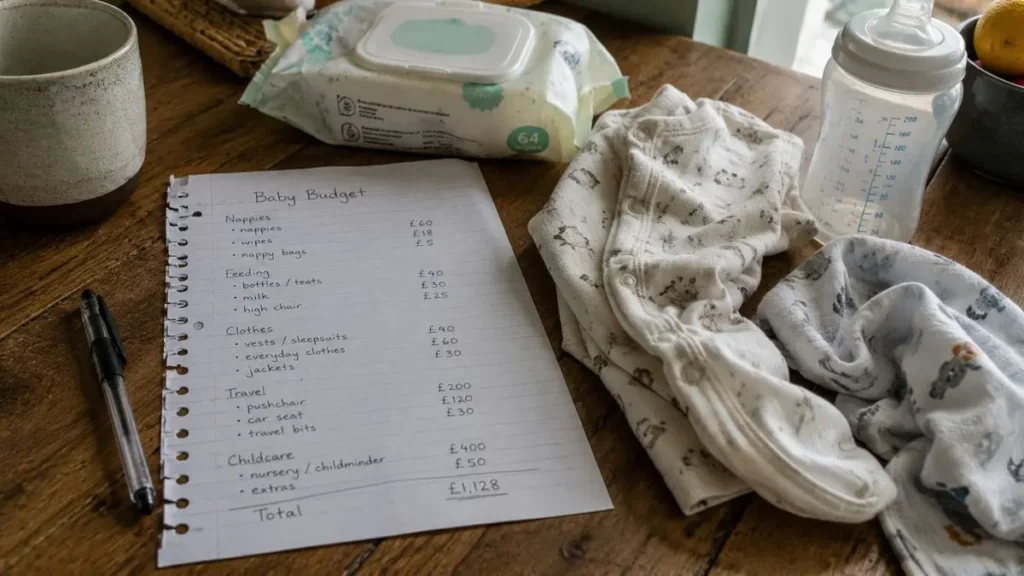
Start with the point of the budget
A lot of baby budgeting advice starts with giant shopping lists and huge cost totals. That can make it feel as though you need to solve every future expense before the baby even arrives.
In reality, most parents work things out gradually. Some items end up being used every day, while others barely leave the box. Some costs are higher than expected, while other things are gifted, borrowed, bought second-hand, or turn out not to matter much for your family at all.
The point of a baby budget is not to create a perfect prediction. Babies do not follow spreadsheets, and families do not all spend in the same way.
A useful budget should make things feel calmer and clearer. It should help you separate the things that genuinely matter early on from the things that can wait.
The real point is to answer three simple questions:
- What do we need before the baby arrives?
- What will probably cost us money every month?
- What can wait until we know we actually need it?
That last question matters. A lot of baby spending happens because parents feel they should be prepared for every situation. In reality, some things can be bought later, borrowed, found second-hand, or skipped completely.
A useful baby budget gives you breathing room. It should show you what matters first and what can stay flexible.
Step 1: split baby costs into simple categories
Before adding numbers, it helps to put baby costs into plain categories. This stops everything feeling equally urgent.
A simple way to do it is:
- Essential from the start: somewhere safe to sleep, nappies, wipes, clothes, feeding items, basic baby care, and transport home from hospital.
- Likely but variable: formula if used, bottles, breastfeeding support items, extra clothes, medicines, baby toiletries, and laundry costs.
- Bigger one-off items: pram, car seat, cot or crib, mattress, baby monitor, changing table, and high chair later on.
- Optional extras: nursery décor, lots of toys, specialist gadgets, matching outfits, expensive baby furniture, and duplicate items.
- Future costs: childcare, groups, activities, weaning items, larger clothes, shoes, and days out.
This does not mean optional items are bad. It just means they are not the same as nappies, a safe sleep space, or a suitable car seat.
When money is tight, the budget needs to protect the essentials first. When money is more comfortable, the same structure still helps because it stops the spending from drifting.
Step 2: separate one-off costs from monthly costs
One of the easiest ways baby budgeting goes wrong is mixing everything together. A pram is not the same kind of cost as nappies. A cot mattress is not the same kind of cost as wipes.
Try making two lists.
The first list is for one-off or occasional costs. These are things you buy once, or only replace now and again:
- car seat
- cot, crib, or Moses basket
- mattress
- pram or travel system
- baby bath or bath support
- thermometer
- bottles and sterilising equipment if bottle feeding
- initial clothes
- changing bag
The second list is for monthly costs. These are the things that may keep appearing in your spending:
- nappies
- wipes
- formula if used
- clothes as your baby grows
- baby toiletries
- laundry costs
- childcare if needed
- transport or parking for appointments
- small replacement items
This simple split makes the budget easier to control. You can spread one-off costs across pregnancy or the months before the baby arrives, while monthly costs help you see what your household spending may look like once the baby is here.
Step 3: build a simple monthly baby budget
You do not need to know the exact number for every item before you start. Use sensible estimates, then adjust once real spending becomes clearer.
Use this as a starting point rather than a fixed budget. It is there to guide you, not to lock you into exact numbers.
Here is a simple example of how a UK baby budget might look each month:
| Category | Example monthly amount | Notes |
|---|---|---|
| Nappies and wipes | £35–£60 | Can vary by brand, size, offers, and whether you use reusable nappies. |
| Formula, if used | £40–£90+ | Depends on age, feeding pattern, brand, and whether the baby is fully or partly formula-fed. |
| Clothes | £10–£30 | Often lower if you use hand-me-downs, bundles, gifts, or second-hand clothes. |
| Baby toiletries and basics | £5–£15 | Includes things like baby wash, nappy cream, cotton wool, or small care items. |
| Replacement or small extras | £10–£30 | Useful for unexpected bits such as extra bottles, dummies, muslins, or mattress sheets. |
| Childcare | £0–£1,000+ | This varies hugely depending on work, family help, age, location, and funded hours eligibility. |
For many families, the biggest difference is whether childcare and formula are part of the budget. Without childcare, the monthly baby costs may be much more manageable. With childcare, the whole household budget may need a bigger rethink.
This is why a single “average baby cost” can be misleading. Two families can both be careful with money and still have very different monthly totals.
If you want a wider breakdown of what parents often spend across pregnancy, newborn essentials, feeding, childcare, and the first year overall, our article How much does a baby cost (UK)? goes into the bigger picture in more detail. This guide is more focused on turning those costs into a manageable monthly plan.
Step 4: prioritise what matters first
If you simplify everything, it comes down to this order.
A helpful baby budget does not treat every purchase as equal. Some things matter because they affect safety, feeding, sleep, and getting out of the house. Other things are useful, but not urgent.
If you are trying to keep the budget under control, prioritise in this order.
First, cover safe sleep. Your baby needs a safe place to sleep, a suitable mattress, and bedding that follows current safety guidance. This matters more than a decorated nursery.
Next, think about feeding. If you are breastfeeding, you may still want things like breast pads, muslins, and perhaps a pump later, but you may not need everything before the baby arrives. Some parents also end up budgeting for things like breastfeeding pillows, nipple cream, replacement pump parts, or feeding support if feeding becomes difficult or painful. If you are formula feeding or combination feeding, bottles, sterilising, and formula need to be planned into the budget.
Then plan for transport. A suitable car seat is important if your baby will travel by car. A pram, sling, or carrier may also matter, but the best choice depends on your home, public transport, car space, and daily routine.
After that, cover everyday care. Nappies, wipes, basic clothes, muslins, and a way to change your baby are usually more important than big nursery furniture.
Once those areas are covered, you can decide what extras are worth it for your family.
What can usually wait until later
A lot of baby items feel urgent before the baby arrives because they appear on every checklist. In practice, some things can wait.
Some purchases naturally happen later, so they do not always need to be part of the first big spending wave before your baby arrives.
Items linked to weaning, play, or longer-term routines can often be added gradually once you know what your baby actually needs. A full nursery setup may also matter less if your baby sleeps in your room at first, and many parents find it easier to wait before buying lots of extra feeding or sleep gadgets until they know what genuinely helps day to day.
Before your first baby, it is easy to feel that buying more means being more prepared. Often, being prepared means having the basics sorted and keeping some money back for what you discover later.
A useful rule is: if it is not needed for the first few weeks, it does not need to be bought in the first wave unless you find a very good deal.
How to spread costs before the baby arrives
If you have several months before the baby arrives, spreading costs can make the budget feel less frightening.
One practical approach is to divide your planning into stages:
- Early planning: work out your likely essentials and check what you already have or can borrow.
- Middle months: buy or source bigger items such as a cot, car seat, pram, or crib.
- Later months: add nappies, wipes, clothes, hospital bag items, and feeding basics.
- After birth: buy the things you now know you need, rather than guessing everything in advance.
This helps avoid a last-minute rush. It also gives you time to compare prices, wait for sales, look at second-hand options, and accept help from family or friends without buying duplicates.
If money is tight, it can help to set a small monthly baby pot. Even £20 or £30 a month can give you more choice later, especially for nappies, wipes, or small emergency purchases.
A lot of banks now include savings “pots” or spaces within their apps, and we have found them genuinely helpful for separating baby money from normal day-to-day spending. We also like putting that money into an easy-access savings pot so it earns a little interest while gradually building things up before the baby arrives.
Adjust your expectations without feeling guilty
Baby budgeting can bring up a lot of pressure. There are beautiful nursery photos, expensive travel systems, matching outfits, and long lists of things that sound essential.
But your baby does not need a perfect-looking setup. They need care, safety, warmth, feeding, sleep, and responsive adults around them.
There is nothing wrong with using second-hand clothes, accepting hand-me-downs, buying bundles, borrowing items, or choosing supermarket own-brand products where they work for your family. Many babies barely wear some outfits before growing out of them.
The main caution is safety. Some things are better bought new or checked carefully, especially mattresses and car seats. With second-hand car seats, you need to be confident about their history, fit, age, and condition. If you are unsure, it is safer to get proper advice or buy new within your budget.
The aim is not to spend the least possible amount on everything. It is to spend where it matters and avoid feeling pushed into buying things that do not really help.
A simple baby budget template you can copy
You can keep this very basic. A note on your phone, a spreadsheet, or a page in a notebook is enough.
Use these headings:
| Budget area | Estimated cost | Needed by | Essential, useful, or optional | Notes |
| Safe sleep | Before birth | Essential | Cot, crib, mattress, sheets. | |
| Feeding | Before birth or after birth | Essential / variable | Depends on breast, bottle, formula, or combination feeding. | |
| Nappies and changing | Before birth | Essential | Nappies, wipes, cream, changing mat. | |
| Clothes | Before birth | Essential | Start small, then adjust sizes. | |
| Travel | Before birth | Essential if using a car | Car seat, pram, sling, or carrier. | |
| Childcare | Before returning to work | Variable | Often the biggest later cost. | |
| Extras | Flexible | Optional | Toys, décor, gadgets, duplicate items. |
The most useful part is the “needed by” column. It stops you treating a six-month cost as if it has to be solved this week.
What to do if the numbers feel too high
If your first budget feels too expensive, do not treat that as failure. That is exactly what the budget is for. It shows you where to adjust before the money is spent.
Start by asking:
- Can this item wait?
- Can we buy it second-hand safely?
- Could we borrow it?
- Is there a simpler version?
- Are we buying this because we need it, or because it feels like everyone else has it?
- Could family or friends help with one useful item instead of several small gifts?
Then look at the biggest pressure points. For some families, that will be childcare. For others, it will be formula, transport, or one-off equipment.
Small savings help, but the biggest wins usually come from avoiding unnecessary large purchases, using second-hand bundles, and not buying too far ahead before you know what your baby actually needs.
Planning for income changes
Baby budgeting is not only about buying baby things. It is also about what happens to household income.
If maternity leave, paternity leave, shared parental leave, self-employment, reduced hours, or unpaid time off are part of your situation, include that in the plan. A baby budget that ignores income changes can look fine on paper and still feel stressful later.
You may want to make two simple versions:
- Before baby arrives: what you can afford to buy or save now.
- After baby arrives: what your monthly spending may look like with any income changes included.
This does not need to be perfect. It just helps you see whether the pressure is coming from baby items, lower income, childcare, or a mix of everything.
For many families, standard UK Child Benefit is often enough to take a noticeable chunk out of regular costs like nappies and wipes. GOV.UK has the current rates and eligibility rules if you want to check what support you may be entitled to.
When to get extra money help
This article can help you structure a baby budget, but it is not personalised financial advice. If you are worried about debt, benefits, rent, bills, or not having enough money for essentials, it is worth getting proper support early.
In the UK, Citizens Advice can help with benefits, debt, bills, and wider money worries. GOV.UK also has information on maternity pay, paternity pay, Child Benefit, and childcare support.
Asking for help early is not a sign that you have failed. It is often the most practical step, especially when a baby is coming and your household costs or income may change.
Helpful next reads on baby costs
If you are working out your baby budget, these related guides can help you plan the details without trying to do everything at once.
- Baby products you don’t need vs what’s actually useful – Useful if you are trying to avoid unnecessary spending and focus on the products parents often end up genuinely using in the first year.
- Saving money as a parent (what actually helps) – Useful if your budget feels tight and you want practical ways to reduce pressure without feeling deprived.
- Monthly cost of a baby (real example budget) – Helps you see how these budgets can look in real life month-to-month.
For UK-specific financial support and guidance, it is worth checking official sources alongside your own budget.
- GOV.UK: Maternity pay and leave – Useful for checking current rules around statutory maternity pay and leave.
- GOV.UK: Child Benefit – Helpful if you want to understand whether you can claim Child Benefit and how it works.
- Citizens Advice: benefits and money help – A practical UK authority for support with debt, benefits, bills, and money worries.
What matters most
A good baby budget does not need to be perfect. It needs to be clear enough to help you make calmer decisions.
Start with the essentials, separate one-off costs from monthly costs, and give yourself permission to adjust as you go. Some things will cost more than expected. Some things you thought you needed may turn out to be unnecessary.
That is normal. The aim is not to predict every pound. It is to feel more prepared, protect the most important costs first, and avoid being pulled into spending from panic or pressure.
FAQ
How much should I budget monthly for a baby in the UK?
It depends heavily on whether you are paying for childcare and whether you use formula. Without childcare, many monthly baby costs are everyday items such as nappies, wipes, clothes, feeding supplies, and small replacements. With childcare, the monthly cost can be much higher, so it is worth budgeting for childcare separately rather than mixing it into general baby spending.
What are the main baby costs to plan for first?
The main early costs are usually safe sleep, feeding, nappies and changing, basic clothes, and transport such as a car seat or pram. Nursery décor, toys, gadgets, and duplicate items can usually come later if the budget is tight.
Can you budget for a baby on a low income?
Yes, but it helps to be very clear about priorities and to get support early if money is already stretched. Focus on essentials first, use second-hand items safely where appropriate, accept useful hand-me-downs, and check whether you may be entitled to benefits or other support.
What baby items are essential and what are optional?
Essentials are the things your baby needs for safety, feeding, sleep, changing, clothing, and transport. Optional items are things that may be nice, convenient, or attractive, but are not needed straight away. The exact line can vary between families, but it helps to ask whether the item solves a real problem now.
Is it better to buy baby things gradually or all at once?
Gradually is usually easier for most families because it spreads the cost and reduces panic buying. Bigger items can be planned earlier, while some extras can wait until after your baby arrives and you know what you actually use.