
You might hear the word dyslexia and think about reading difficulties, but what does that actually look like day to day? Dyslexia affects reading and writing in ways that aren’t always obvious at first. For many children, it’s not one clear problem, but a pattern of small challenges that build up over time. This guide shows what dyslexia can look like in real life, so you can better understand what your child may be experiencing. It can look normal at first.
Quick summary
Dyslexia affects reading and writing by making them slower, more effortful, and less automatic, even when a child understands the content. In everyday situations, this can show up as:
- Difficulty matching sounds to letters when reading new words
- Spelling that seems inconsistent or unpredictable
- Writing that takes longer, even for simple tasks
- Losing place or skipping words when reading
- Getting tired more quickly during reading or writing tasks
- Next step: notice patterns over time and speak to your child’s teacher if you’re unsure
This article is for / not for
This article is for:
- Parents who want to understand what dyslexia looks like day to day
- Parents noticing reading or writing differences
- Anyone trying to make sense of real-life impact, not just definitions
This article is not for:
- A formal diagnosis
- A detailed clinical explanation of dyslexia
Medical disclaimer
This article is for general understanding only and does not diagnose dyslexia. If you are concerned about your child’s development, your child’s school is usually the best first step, as teachers and SENCOs can observe learning patterns and arrange support. A GP can help rule out other issues (such as hearing or vision) and guide you if needed, but they do not typically diagnose dyslexia. You can also refer to NHS guidance on dyslexia in children.
How dyslexia affects reading day to day
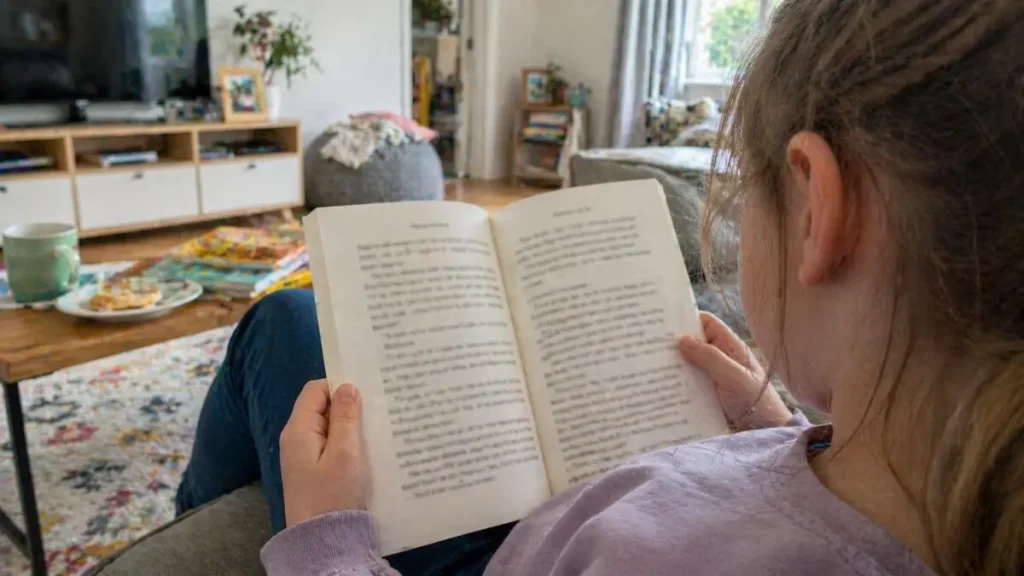
Reading is often where dyslexia is first noticed, but the experience behind it isn’t always obvious.
A dyslexic child may recognise some words quickly but struggle with others, especially unfamiliar ones. They might rely on guessing based on the first letter or the shape of the word, rather than sounding it out fully.
Reading can feel slow and effortful. It’s not just about recognising words; it’s about holding sounds in mind, blending them together, and making sense of the sentence at the same time.
It can feel like reading through a slight blur, where each word needs extra focus to come into place. They can get there, but it takes more concentration and energy.
How dyslexia affects writing day to day
Writing often brings a different set of challenges.
A child might have clear ideas in their head but find it difficult to get them onto paper. Even when using a laptop or tablet, which can remove the handwriting part, the challenge of turning thoughts into written words often still remains. Spelling may be inconsistent, even with words they’ve seen many times. Sentences can be shorter or simpler, not because they lack understanding, but because writing takes so much effort.
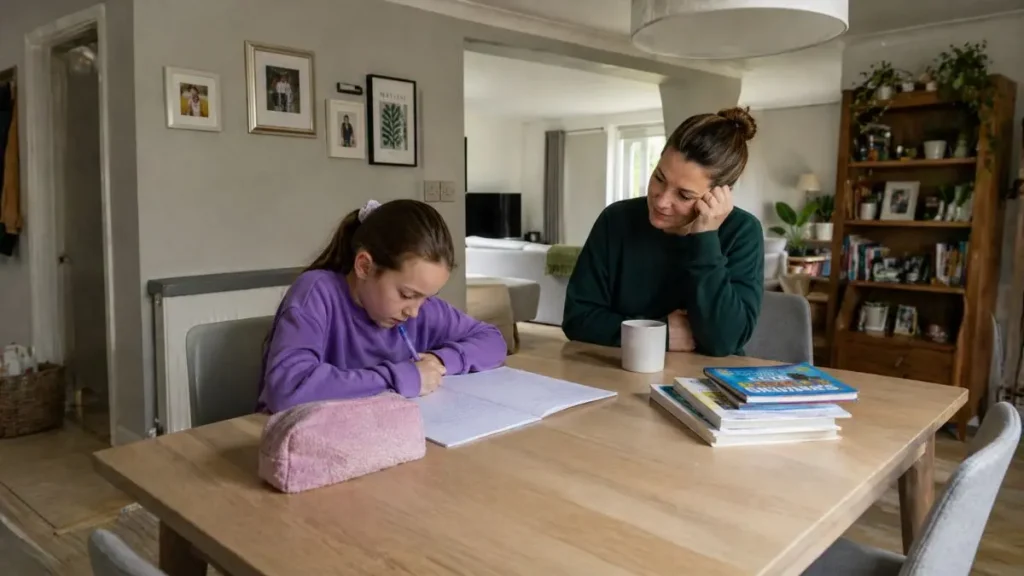
You might notice that homework takes longer than expected, or that your child avoids writing tasks altogether. One simple way to ease this is to start with verbal brainstorming, letting your child talk through their ideas first before writing anything down. This can reduce the pressure of a blank page and make starting feel easier.
What this looks like at school and at home
The difference between understanding and output is often most noticeable in everyday situations.
At school, a child might contribute well in discussions but struggle more with written work. For example, they may be able to explain an answer clearly when asked, but then find it much harder to write that same answer down on a worksheet.
At home, this can look like frustration during homework, taking longer to complete simple reading tasks, or needing more support than expected.
These patterns can feel confusing, especially when your child clearly understands what’s being taught.
Why it can be so tiring
One of the most common things parents notice is how tiring reading and writing can be.
This isn’t about effort or motivation. It’s because these tasks require more concentration. A dyslexic child may be thinking about each word, each sound, and each letter more consciously.
That extra mental effort adds up. It can lead to quicker fatigue, frustration, or avoiding tasks that feel difficult. Some children also experience visual stress, where text can feel overwhelming, letters may seem to move slightly, or the brightness of the page makes reading uncomfortable. This can add to that sense of tiredness.
When this is normal and when to look closer
All children develop at different rates, especially when it comes to reading and writing.
It’s not unusual for some children to take longer to become confident readers or writers. What matters more is the pattern over time, rather than any single moment.
You might want to look a bit closer if:
- Difficulties persist rather than gradually improving
- There is a noticeable gap between spoken understanding and written work
- Your child becomes increasingly frustrated or avoids tasks
If you’re unsure, speaking to your child’s teacher is often the best first step.
What this means for your child
What you’re seeing is less about ability and more about how your child processes written language.
A dyslexic child can understand ideas, stories, and lessons just as well as their peers, but reading and writing may take more effort to show that understanding. This gap between what they know and what they can get down on paper is often where frustration builds.
Focusing on how they learn, rather than how quickly they read or write, can make a noticeable difference. Small adjustments, like giving more time, using verbal responses, or breaking tasks into steps, can help them show what they know without the same pressure. It can also help to praise effort rather than the end result, so your child feels recognised for trying, not just for getting things right.
Over time, the right support can help build both confidence and independence.
If you want to step back and understand the bigger picture behind this, including how dyslexia is often explained and sometimes misunderstood, Dyslexia film: what it gets right (and what parents should know) connects these day-to-day experiences to the wider conversation.
Where to go next
If this sounds familiar, you don’t need to have all the answers straight away.
Start by noticing patterns in your child’s reading and writing, and speak to their teacher to build a clearer picture. It can also help to jot down a few examples over a week, so you can see patterns more clearly and share something concrete if you ask for support.
Simple reassurance can also help. Let your child know they’re not doing anything wrong, and that learning can look different for everyone. Keeping things calm and low-pressure can help protect their confidence while you work out next steps.
More that can help you understand this
If this article has helped you recognise some of these patterns, the next step is usually understanding them a bit more clearly and seeing how they fit together. These guides go a little deeper in different ways, depending on what you need right now:
- Signs of dyslexia in children: what parents often notice first – if you’re still unsure, this helps you recognise the small, early patterns with more confidence
- Dyslexia explained for parents (and why it’s often missed) – if you want the bigger picture, this explains what dyslexia is in simple, real-life terms
- Is dyslexia a ‘superpower’? A more honest look for parents – if you’ve heard mixed messages, this gives a balanced, realistic view without overpromising
For additional trusted UK guidance, you can also refer to:
What matters most
Dyslexia doesn’t look the same for every child. What matters is understanding how it affects your child day to day.
With the right support and reassurance, children with dyslexia can build confidence and develop their own ways of learning.
FAQ
How does dyslexia affect writing?
Writing can take longer and feel more difficult. Spelling may be inconsistent, and children may struggle to get their ideas onto paper.
Why is reading harder with dyslexia?
Reading often requires more conscious effort, which makes it more tiring and slower, even when the child understands the content.