
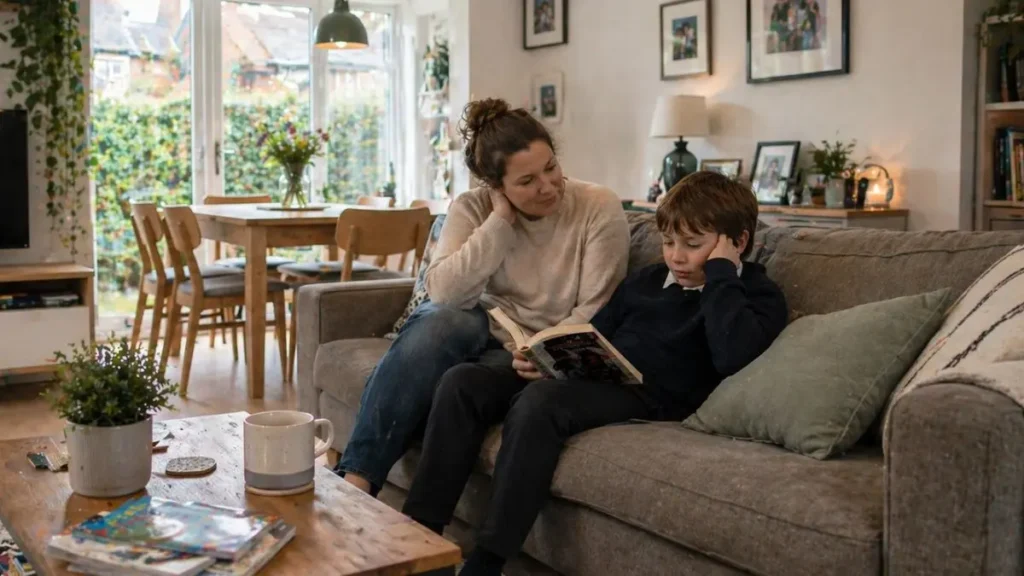
You might have a feeling something isn’t quite clicking for your child. Dyslexia can show up in subtle ways early on, and it often doesn’t look the way parents expect. This guide walks through the signs you’re most likely to notice first, without jumping to conclusions or overthinking every small detail.
Quick summary
If you’re wondering whether what you’re seeing could be dyslexia, you’re not alone. These early signs can be easy to miss or explain away. Early signs of dyslexia in children often show up as slower reading, difficulty matching sounds to letters, and frustration with writing tasks. The key is not any single behaviour, but patterns over time. Here are some early patterns parents often notice:
- Reading seems slower or more effortful than expected
- Words are misread or guessed based on shape rather than sound
- Spelling is inconsistent, even with familiar words
- Instructions need repeating or breaking down
- Your child may avoid reading or writing tasks
- These signs can vary widely and don’t always mean dyslexia on their own
- Next step: notice patterns over time and speak to your child’s teacher if you’re unsure
This article is for / not for
This article is for:
- Parents who are noticing early reading or writing struggles
- Parents unsure what is normal vs worth looking into
- Anyone wanting a clearer picture of early dyslexia signs
This article is not for:
- A formal diagnosis
- Detailed clinical definitions of dyslexia
Medical disclaimer
This article is for general understanding only and does not diagnose dyslexia. If you are concerned about your child’s development, speak to your GP, your child’s school, or a qualified professional. You can also refer to NHS guidance on dyslexia in children.
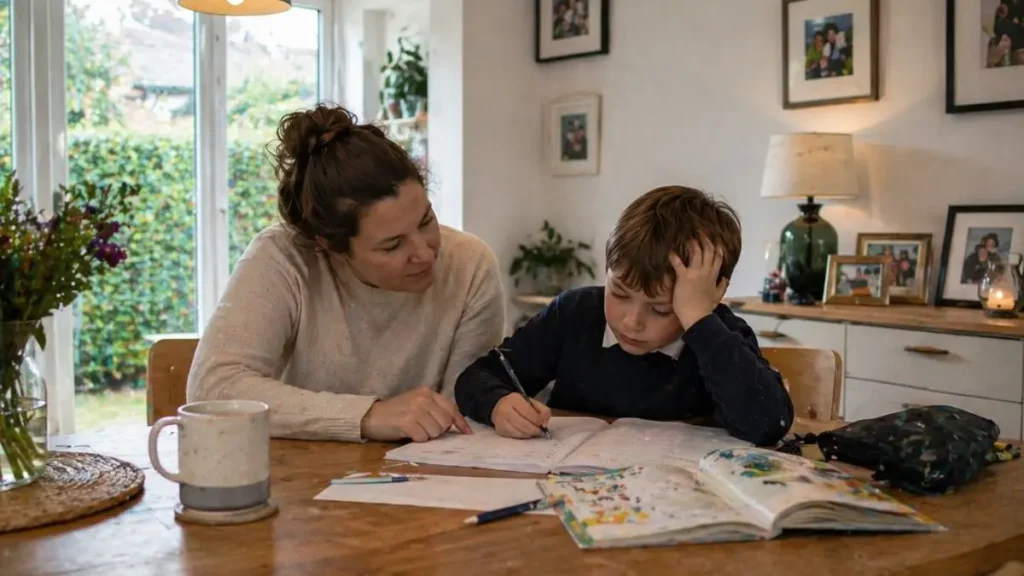
Early signs of dyslexia in younger children
In early years, signs can be easy to miss because children develop at different speeds.
You might notice your child struggling to recognise rhymes, having difficulty remembering simple sequences like days of the week, or mixing up sounds in words. They may enjoy stories but find it harder to join in with sounding out words.
At this stage, it can look like a mild delay rather than something specific.
These patterns often become clearer once school expectations increase.
Signs of dyslexia at primary school age
Reading might still feel slow or effortful. Your child may lose their place easily, skip words, or guess based on the first letter. Writing can be more frustrating, with spelling that doesn’t seem to improve in a predictable way.
You might also notice that your child understands things well when spoken to, but struggles more when reading or writing is involved.
Real-life signs that stand out at home
Often, it’s the small everyday moments that stand out most.
Your child might avoid reading aloud, take a long time to complete homework, or become frustrated over tasks that seem simple on the surface. For example, a short reading task that should take a few minutes might stretch into much longer, with your child re-reading the same sentence, losing their place, or guessing words to get through it.
You may notice they get tired quickly when reading, as it often takes more effort and concentration. It can feel similar to reading in a language you’re not fluent in, which can be draining. They may also lose confidence in schoolwork.
These patterns can be subtle but consistent.
When to worry (and when to wait)
It’s normal for children to develop at different rates, especially in early years. Some pick up reading quickly, while others take more time to connect sounds, letters, and words. This variation on its own isn’t usually a concern; it’s the pattern over time that matters more.
You might want to look a bit closer if:
- Difficulties persist over time rather than improving
- Your child becomes increasingly frustrated or avoids tasks
- There is a clear gap between spoken understanding and reading or writing
If you’re unsure, speaking to your child’s teacher is often the best first step. They can tell you whether what you’re seeing matches what happens in the classroom.
What this means for your child
If you’ve come across the dyslexia film “What is dyslexia?”, you might already have a sense that dyslexia is about more than just reading. If you want a clearer, real-life explanation of what that means day to day, Dyslexia film: what it gets right (and what parents should know) builds on that in simple terms.
Seeing these signs doesn’t automatically mean your child has dyslexia.
It does mean they may need support in a different way. Early understanding can make a big difference to confidence and progress.
One small thing that can help at home is reducing pressure around reading. For example, audiobooks or shared reading can still build understanding without the same level of effort.
Where to go next
If these patterns feel familiar, you don’t need to have all the answers straight away.
Start by noticing what your child finds easy and difficult, and speak to their teacher to build a clearer picture. It can also help to jot down a few examples over a week, so you can see patterns more clearly and share something concrete if you ask for support.
Alongside this, simple reassurance can make a big difference. Let your child know they’re not doing anything wrong, and that everyone learns in different ways. Keeping things calm and low-pressure at home can help protect their confidence while you work out next steps.
More that can help you make sense of this
If this is starting to sound familiar, these guides take you a step further in different ways:
- Dyslexia explained for parents (and why it’s often missed) – helps you understand the bigger picture and why signs can be easy to overlook
- Dyslexia and ADHD: why they often overlap (and what it means for your child) – useful if you’re noticing attention or focus differences alongside reading and writing
- How schools support dyslexia in the UK (and what to expect) – gives a clear idea of what help looks like once concerns are raised
For further trusted UK guidance and support, you can also look at:
- British Dyslexia Association – advice, resources and support for families
What matters most
Early signs are often small and easy to miss, but noticing patterns over time is what matters most.
You don’t need to jump to conclusions. Understanding your child’s experience, and getting the right support if needed, is what makes the biggest difference.
FAQ
What are the first signs of dyslexia in a child?
Early signs often include difficulty with sounds in words, slower reading, and inconsistent spelling.
At what age can dyslexia be noticed?
Signs can appear in early years, but often become clearer during primary school.
Should I be worried if my child struggles with reading?
Not always. Many children develop at different rates, but consistent patterns are worth paying attention to.