
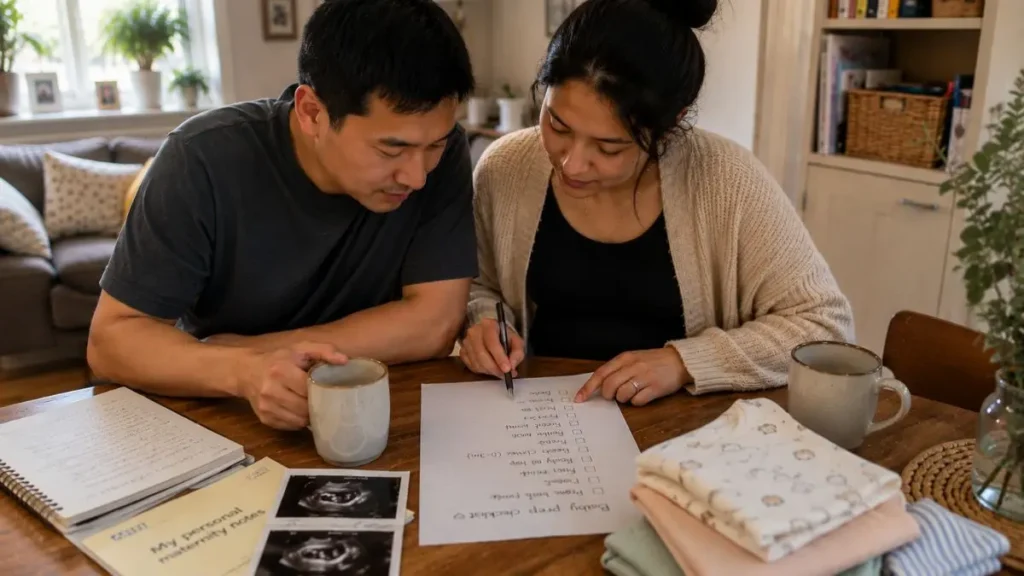
How to prepare for a baby: a practical UK checklist
Preparing for a baby can make you feel as if there are a hundred things to buy, sort, clean, decide and remember. In reality, your baby does not need a perfect nursery, a full wardrobe or every gadget on a baby list. This guide is here to help you focus on what actually matters before birth, what is useful if you have time, and what can wait.
Quick summary
If you are short on time, the simplest way to prepare for a baby is to think about the first few days rather than the whole first year. Before your baby arrives, it helps to have these basics sorted:
- A safe place for your baby to sleep
- A safe way to bring your baby home, such as a suitable car seat if travelling by car
- Basic nappies, wipes or cotton wool, and changing supplies
- A few simple newborn clothes and sleepsuits
- Feeding basics, depending on how you hope to feed
- Your hospital bag and maternity notes ready
- A loose birth plan or birth preferences
- A small amount of food, washing and home organisation done
- Key UK admin noted, such as leave, pay, birth registration and Child Benefit
- A realistic support plan for the first week
You do not need everything perfect. The aim is to make the first few days easier, safer and calmer, not to prepare for every possible situation before your baby has even arrived.
This article is for / not for
This article is for you if:
- You are pregnant and want one calm overview of what to sort before your baby arrives
- You feel overwhelmed by long baby checklists
- You want a UK-focused guide rather than a generic shopping list
- You are trying to work out what is genuinely useful and what can wait
- You want to prepare practically without feeling pressured to buy everything
This article is not for you if:
- You only want a detailed hospital bag list
- You only want a full newborn shopping checklist
- You need medical advice about your pregnancy, labour or baby
- You are looking for a detailed guide to birth complications or clinical decisions
Medical disclaimer
This article is a practical preparation guide, not medical advice. If you are worried about your pregnancy, your baby’s movements, labour symptoms, feeding, safe sleep or anything that feels urgent, speak to your midwife, maternity unit, GP, health visitor or NHS 111 as appropriate.
For health and safety topics such as safer sleep, car seats, feeding concerns and labour signs, use trusted UK guidance from the NHS, your maternity team and recognised organisations such as The Lullaby Trust.
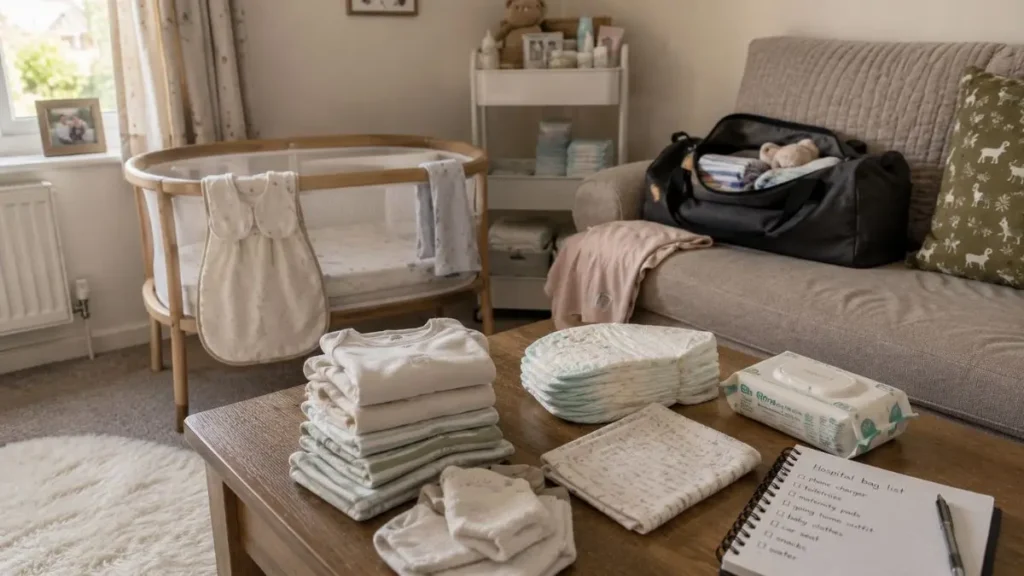
Start with the first few days, not the whole first year
One of the easiest ways to get overwhelmed is to prepare for the imaginary version of baby life where every cupboard is organised, every outfit is folded by size, and every possible product is already waiting.
A calmer way to think about it is this: what will help you get through the first 48 hours and the first week?
You will need somewhere safe for your baby to sleep. You will need a way to feed them, change them, dress them, clean them and get them home. You will need some basic food and rest for the adults. You will also need the phone numbers, notes and documents that help you know who to contact and what happens next.
That is a much smaller list than most baby marketing makes it feel.
You can still enjoy choosing baby things. There is nothing wrong with getting excited about a pram, sleepsuits, blankets or a nursery theme. The useful shift is not letting those extras become proof that you are “ready”. Being ready is mostly about safety, basic care, support and lowering the pressure on yourself.
What to prepare before birth
Before your baby arrives, it helps to split preparation into a few simple areas. You do not have to do them all in one weekend, and you do not need to make them perfect.
The main areas to think about are:
- Where your baby will sleep
- How your baby will travel home
- How you plan to feed your baby
- What you need for nappies and changing
- What you will pack for hospital or birth
- What birth preferences you want to note down
- How your home will work during the first week
- What admin or money tasks you need to check
- Who can support you after birth
That list may still look like a lot, but most of it can be kept simple.
For example, preparing a sleep space does not mean decorating a nursery. It means having a safe sleep setup ready. Preparing for feeding does not mean knowing exactly how feeding will go. It means having the basics ready and knowing where to get help if feeding is difficult.
Preparing for a baby is less about controlling everything and more about removing avoidable stress from the first few days.
Baby essentials you actually need at first
Baby essentials can quickly turn into a huge list, especially once you start looking at shops, adverts and social media. For the early days, it is better to think in categories rather than individual products. If you want the fuller buying guide, What you actually need for a newborn goes deeper into what is genuinely useful and what can wait.
Your baby will need somewhere safe to sleep, such as a cot, crib or Moses basket with a firm, flat mattress. The safest sleep guidance is more important than nursery style, so keep this simple and follow current safer sleep advice.
You will need a safe way to travel home. If you are using a car, that means having a suitable baby car seat fitted correctly before the birth.
You will need nappies and basic changing supplies. Some parents use disposable nappies, some use reusable nappies, and some decide later. For the first days, you mainly need enough to avoid an urgent shop trip while everyone is tired.
You will need simple clothes. Sleepsuits, vests, a hat for leaving hospital if needed, and a few layers are usually more useful than complicated outfits. Babies can go through several changes in a day, but they do not need a fashion wardrobe.
You will also need feeding basics. If you hope to breastfeed, it can help to know where support is available. If you plan to formula feed, you will need suitable bottles, formula and a safe way to prepare feeds. If you are unsure, prepare enough to feel supported without feeling locked into one perfect plan.
The point is not to buy the least possible or the most possible. It is to buy what helps.
Prepare your home for real life, not a perfect nursery
A perfect nursery is not essential before your baby arrives. Many newborns sleep in the same room as their parents at first, so a beautifully finished separate room may not matter in the early weeks.
What helps more is making the spaces you will actually use easier to manage.
Think about where you will change nappies during the day and at night. That might be a changing table, a mat on the floor, or a small basket with nappies, wipes or cotton wool, bags and spare clothes. The “right” setup is the one that is safe and practical in your home.
It can also help to have a few feeding spots ready. That might mean a water bottle, muslins, snacks, phone charger and cushions near the sofa or bed. If you are recovering from birth, small things being within reach can make a bigger difference than a perfectly arranged cupboard upstairs.
A bit of laundry, some easy meals and a basic clean can help too, but do not turn this into a full-house reset. The goal is not to impress visitors. The goal is to make it easier to sit down, feed your baby, change them, rest and find what you need.
For a deeper home setup guide, you can use Preparing your home for a newborn: what actually helps alongside this checklist.
Pack your hospital bag without packing the whole house
A hospital bag is one of those jobs that can make you feel more prepared quite quickly. It is also easy to overpack, especially if you read lots of different lists.
The main things are usually your maternity notes, birth plan or preferences, comfortable clothes, toiletries, phone charger, snacks, baby clothes, nappies and something for your baby to wear home. Your birth partner may also need their own basics, especially snacks, drinks, chargers and a change of top.
If you are giving birth in a UK hospital or midwife-led unit, remember that space can be limited. You do not need to bring everything you own. Some parents find it useful to pack one main bag and leave a second small bag in the car, or at home ready for someone to bring in if needed.
The full packing list belongs in a separate guide, so use Hospital bag checklist UK: what to pack for birth when you are ready to pack properly.
For this article, the important thing is simple: do not leave the hospital bag until the last minute if you can help it. It is one of the few practical jobs that can reduce stress if labour starts earlier than expected.
Make a birth plan, but keep it flexible
A birth plan does not have to be a long document, and it does not have to predict exactly what will happen. It is better to think of it as birth preferences.
You might want to note who you want with you, what pain relief you are open to, how you feel about monitoring, what helps you feel calm, what your birth partner can do, and any feeding preferences for after birth.
The useful part is not creating a perfect script. Birth can change. Plans can change. Sometimes the best thing a birth plan does is help you and your birth partner talk through what matters before everyone is tired and under pressure.
It can also be helpful for your birth partner to know what is important to you. They may need to speak up, ask questions, find something in your bag, remind you of a preference or simply help you feel steadier.
For a fuller guide, read Birth plan UK: what to include and what can change. If you also want a calmer overview of the process itself, What happens during labour: a simple UK guide can help you picture what may happen without making labour sound fixed or predictable. The birth plan guide goes deeper into what to include and how to keep preferences useful without making them feel rigid.
Use the third trimester as a final reset
The third trimester can feel like a strange mix of waiting, discomfort, excitement and mild panic. This is often when preparation starts to feel more real.
If you are in the final weeks, try not to treat every remaining job as equally important. Some things are genuinely useful. Others are just nice if you have the energy.
Useful late-pregnancy jobs include checking the car seat, packing your hospital bag, writing birth preferences, washing a small amount of baby clothing, setting up a safe sleep space and making sure you know when to contact your maternity unit. If you want a clearer idea of the routine conversations and checks that happen before birth, Antenatal appointments UK: what to expect before birth helps explain what appointments are for and what you can ask.
Less urgent jobs include finishing the nursery, organising every size of clothing, buying lots of toys, choosing every future baby product or making the house look visitor-ready.
If you are close to your due date and need a more focused final-weeks list, read Third trimester checklist: what to do before baby arrives. That is the better place for a tighter “baby due soon” checklist.
This pillar guide is here to give you the wider picture. The third trimester checklist is there when you need to narrow everything down.
UK admin and money tasks worth noting
Not every preparation task is about baby equipment. Some of the most useful jobs are admin jobs, especially if they help you avoid having to think about forms and deadlines while sleep-deprived.
Before your baby arrives, it is worth checking your maternity leave, paternity leave, Shared Parental Leave and pay options if they apply to your family. If you are self-employed, on a low income or unsure what you can claim, check official guidance rather than relying on guesses from social media.
It is also useful to know what happens after birth. In England, Wales and Northern Ireland, births are usually registered within 42 days. In Scotland, births are usually registered within 21 days. The process differs depending on where your baby is born, so use the official guidance for your part of the UK.
You may also want to note Child Benefit, Healthy Start if eligible, Sure Start Maternity Grant if eligible, and any workplace paperwork you need to complete.
If you live in Scotland, it is also worth checking the Scottish Baby Box scheme before buying everything yourself.
This does not mean you need to fill in every form before birth. Some things cannot be done until after your baby is born. The useful preparation is knowing what exists, where the official pages are, and what you may need later.
Emotional preparation counts too
Preparing for a baby is not only about buying things and ticking boxes. There is an emotional side too, and it is often overlooked.
You may feel excited, nervous, detached, impatient, calm, scared, or all of these at different times. That does not mean you are doing pregnancy wrong. Big life changes can feel messy, especially when sleep, hormones, money, relationships and expectations are all involved.
It can help to talk through simple things before the baby arrives. Who is doing what at night? How will you handle visitors? Who will deal with messages? What kind of help would actually be useful? What would make the first week feel calmer?
Some families want lots of visitors. Others need quiet. Some parents want grandparents involved straight away. Others need space to recover and find their feet. There is no single correct version, but it helps when expectations are not being worked out for the first time at 2am.
One practical step is to write a short “first week plan”. It does not need to be formal. It might simply say: easy meals, limited visitors, one person handles laundry, one person handles messages, and both adults get chances to rest where possible.
What does not need to be perfect before baby arrives
This may be the most important part of the whole checklist: plenty of things do not need to be perfect.
Your nursery does not need to be finished. Your baby will not care whether the room has matching storage baskets.
You do not need every outfit washed in every size. A small set of newborn and 0-3 month clothes is enough to start, and you can adjust once you know your baby’s size and what you actually use.
You do not need every future item before birth. Highchairs, weaning equipment, many toys, baby walkers and older-baby items can wait.
You do not need to know exactly how feeding, sleep or routines will go. Newborns vary, and your recovery matters too. It is enough to know the basics, know where to get help, and respond to the baby you actually have.
You do not need your home visitor-ready. The early days are not a house inspection.
A useful test is to ask: will this help with safety, feeding, changing, sleep, recovery, travel or support in the first week? If yes, it may be worth doing. If not, it can probably wait.
A simple preparing for baby checklist
Here is a practical checklist you can use without turning it into a huge project.
Before birth, try to sort:
- A safe sleep space
- A fitted car seat if you will travel by car
- Basic nappies and changing supplies
- A few simple baby clothes
- Feeding basics
- Hospital bag
- Maternity notes kept somewhere easy to grab
- Birth preferences
- A few easy meals or snacks
- A small laundry reset
- Important phone numbers
- Leave, pay and benefits guidance checked
- A rough visitor and support plan
Useful if you have time:
- Batch cooking
- Organising baby clothes by size
- Setting up a small changing basket downstairs
- Preparing a feeding spot
- Checking local breastfeeding, formula feeding or health visitor support
- Saving official guidance pages on your phone
- Talking through night-time expectations with your partner or support person
Can wait:
- Full nursery decoration
- Most toys
- Older-baby equipment
- A big wardrobe of clothes
- Weaning items
- Perfect storage systems
- Buying every product recommended online
This is not a test. It is just a way to reduce the noise.
Helpful next reads before baby arrives
If you want a bit more help after this overview, these next reads cover the other things parents often start thinking about once the main preparation basics are in place:
- How to choose a baby name: what to think about first: useful if you have moved from practical prep into baby-name decisions and want a practical way to narrow down your shortlist.
- Baby feeding guide: breast, bottle, solids: helpful if feeding is the part you feel least sure about and you want a simple overview of your options before the baby arrives.
Useful official UK links
These official and trusted links are useful for safety, birth preparation and UK admin:
- GOV.UK: Maternity pay and leave: explains statutory maternity leave and pay.
- GOV.UK: Child Benefit: explains how Child Benefit works and how to claim.
- GOV.UK: Register a birth: covers birth registration for England and Wales, with signposting for other UK areas where relevant.
- mygov.scot: Register a birth: covers birth registration in Scotland.
- nidirect: Registering and naming your baby: covers birth registration in Northern Ireland.
What matters most
Preparing for a baby is not about proving you are organised enough to become a parent. It is about making the first few days a little easier.
If you have a safe sleep space, a way to get your baby home, basic feeding and changing supplies, simple clothes, your hospital bag, your maternity notes and a rough support plan, you are already covering the most important things.
The rest can be done gradually.
Your baby does not need a perfect home. They need safe care, feeding, warmth, comfort and adults who are allowed to be tired, learning and imperfect.
FAQ
When should I start preparing for a baby?
You can start gently in the second trimester if you want to spread things out, but many practical jobs happen in the third trimester. A good approach is to sort the big safety and admin basics first, then leave the less urgent jobs until you have the energy.
What should I prepare before my baby arrives?
The most useful things to prepare are a safe sleep space, a car seat if needed, basic clothes, feeding and changing supplies, your hospital bag, your maternity notes, and a rough plan for support after birth. You do not need everything done at once, just the things that make the first few days safer and easier.