
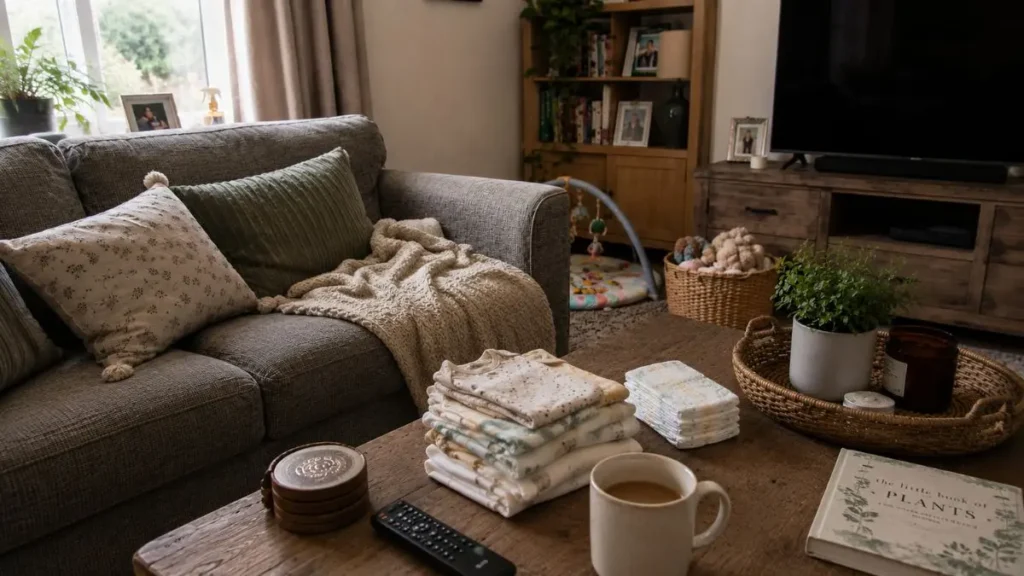
Getting your home ready for a newborn can quickly turn into a long list of things you feel you should buy or set up. It can feel like everything needs to be ready before your baby arrives, but most of what you see online is not what you will actually use in the first few days. In reality, most parents need far less than they think. This guide focuses on what actually makes the first few days at home easier, safer and less stressful, without the pressure of a perfect nursery.
Quick summary
Preparing your home for a newborn is mainly about setting up a few practical areas that make feeding, changing and resting easier in those early days. To prepare your home for a newborn, focus on a safe sleep space, a simple feeding and changing setup, and keeping essentials within easy reach. You do not need a fully finished nursery or lots of equipment to start with. Focus on these first:
- Set up a safe sleep space in the room you will be using most.
- Create a simple changing setup that works where you spend time.
- Have a comfortable feeding spot with essentials within reach.
- Keep nappies, clothes and muslins easy to grab in more than one place.
- Prepare a small “parent recovery” area with snacks, water and basics.
- Set up a simple leaving-the-house spot for pram, car seat or bag.
- Leave nursery styling, toys and babyproofing for later.
This article is for / not for
This article is for you if:
- You are preparing for a newborn and want a realistic home setup.
- You want to make the first few days easier without overbuying.
- You are working with a small space or shared rooms.
- You feel unsure what actually needs to be ready before birth.
This article is not for you if:
- You need urgent medical advice about your baby or pregnancy.
- You are looking for a full product-by-product shopping list.
- You want detailed safety guidance beyond basic home setup.
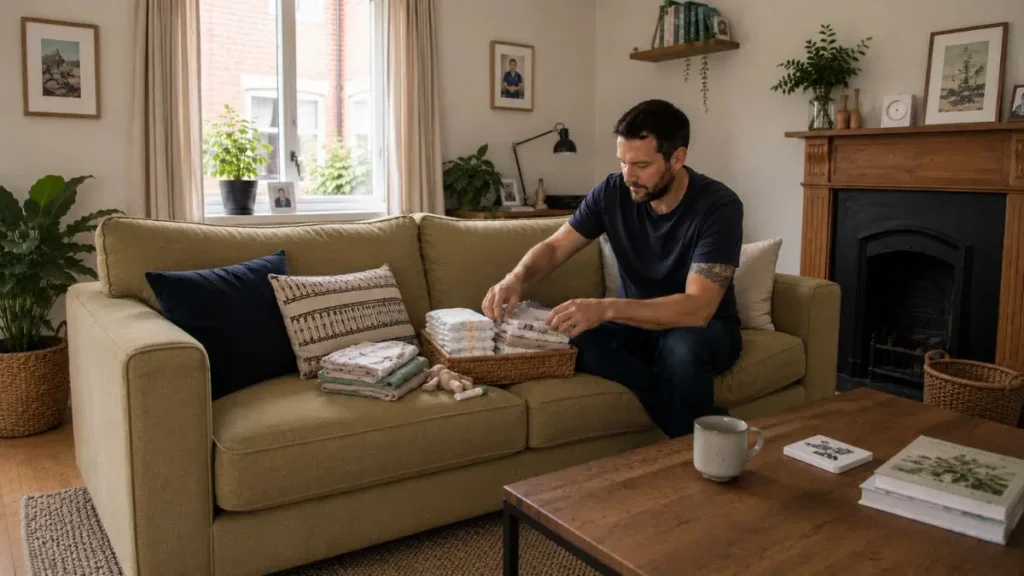
How do you prepare your home for a newborn?
The simplest way to prepare your home is to think in terms of how your day will work once your baby is here.
If you want the full picture of getting ready beyond just your home setup, Preparing for a baby: a practical UK checklist walks through the wider preparation without turning it into a long, overwhelming list.
Most of your time in the early days will revolve around three things: feeding, changing and trying to rest. So rather than setting up a whole nursery, it is often more useful to make sure those moments are easy wherever you are in the house.
A helpful way to approach this is to set up a few small “zones” that support those tasks, rather than trying to get every room finished before your baby arrives. For example, that might mean a bedside sleep space for nights and a sofa setup with a basket of nappies and muslins for daytime.
Set up a safe sleep space for your newborn
Safe sleep is the one area that really does need to be ready before your baby comes home.
The NHS and The Lullaby Trust recommend that babies sleep in the same room as their parents for the first six months. That means your main sleep space is likely to be in your bedroom or wherever you plan to spend the night.
You can use a cot, crib, carrycot or Moses basket, as long as it has a firm, flat mattress that fits properly. Bedding should stay simple. Newborns do not need pillows, duvets or loose blankets.
This is one of the few areas where it is worth following trusted guidance closely. The NHS and The Lullaby Trust both provide clear advice on safe sleep and are good places to check if you are unsure.
What matters most here is not the style of the room, but that your baby has a safe, consistent place to sleep.
Create a changing setup that works where you live
Changing nappies happens often, and usually when you are tired. So the best setup is the one that is easy to use, not the one that looks the most organised.
A full changing table is not essential. Many parents use a changing mat on a bed, sofa or floor, with a basket nearby holding nappies, wipes, nappy bags and a spare outfit. It also helps to think about where used nappies will go. A standard open bin can start to smell quickly, especially upstairs, so some parents keep nappy sacks in their basket or use a small lidded bin to make things easier.
If you have more than one floor, it can help to keep a small set of essentials upstairs and downstairs. That way you are not constantly moving around the house every time your baby needs changing.
The goal is simple: you can change your baby quickly without having to think about where anything is.
Set up a feeding spot that works for you and your newborn
Feeding often takes up a large part of the day and night in the early weeks. Having a comfortable place to sit can make a big difference.
This does not need to be a special chair or a perfectly styled corner. It might just be your usual spot on the sofa or bed, but with a few helpful things nearby.
Think about what you might want within reach. This could include a drink you like, a few easy one-handed snacks, muslins or cloths, your phone and charger, and a small light if you are feeding at night. A soft, warm nightlight can make night feeds and changes feel calmer, while bright overhead lights can wake both you and your baby more than needed.
If feeding is the part you feel least sure about, a simple guide to breast and bottle feeding can help you understand your options without overcomplicating things.
Keep nappies, clothes and essentials easy to grab
Newborns go through a surprising number of outfit changes. Having everything in one perfectly organised drawer can sound good, but it is not always the most practical option.
Instead, think about accessibility and ease of use.
A small basket or drawer with vests, sleepsuits, nappies and muslins in the room you use most can save a lot of back and forth. Some parents also keep a second small stash in another room.
You do not need to stockpile large amounts. A few days’ worth of essentials is enough to begin with, and you will quickly learn what you use most.
Make space for your own recovery and comfort
One of the biggest gaps in most “home prep” advice is how little it focuses on the parent.
The first days at home are not just about the baby. You may be tired, sore, recovering physically and adjusting to feeding.
It helps to set up a small area that supports you as well as your baby.
This could include a water bottle or drinks nearby, easy snacks, your phone and charger within reach, maternity pads or other recovery items if needed, and a comfortable place to sit or lie down.
If you have a partner, it is worth thinking about them too. They may be doing feeds, nappy changes and night wake-ups as well, so having space for them to sit comfortably, reach essentials easily and rest where possible can make those early days feel more manageable for both of you.
This does not need to be a dedicated space. It just needs to make those long feeding and resting periods a bit easier.
Keep a simple “leaving the house” setup
Even if you are not planning to go out much at first, it helps to have a small, organised spot ready for when you do.
This might be a corner or a hook where you keep the pram or pushchair, the baby car seat if you are using one, and a changing bag with basic essentials. If you are storing these in a hallway or porch, it is worth thinking about damp or cold conditions, especially in winter. Fabrics like pram liners or car seat covers can pick up moisture if left in unheated spaces, so a dry indoor spot is usually more reliable.
Having this ready means you are not trying to find everything at the last minute if you need to leave the house, whether that is for an appointment or just some fresh air.
What should you set up before bringing your baby home?
If you want a simple way to check you are ready, focus on whether the basics are in place: a safe sleep space, a simple changing setup, a comfortable feeding spot, easy access to nappies, clothes and muslins, a few days’ worth of essentials, and some support for your own comfort and recovery.
If those are covered, you are in a strong position for the first few days at home.
How do you prepare a small home for a newborn?
Many UK homes do not have space for a full nursery or multiple baby stations, and that is completely fine.
In a smaller home, it often works better to keep things flexible rather than fixed.
A Moses basket or bedside crib can move between rooms. A changing mat can be stored away when not in use. A single basket of essentials can travel with you rather than having multiple setups.
The aim is not to fit everything in. It is to make the space you already have work in a simple, practical way.
What home setup can wait until after birth?
It is very easy to feel like everything should be ready before your baby arrives, but a lot of things can wait.
You do not need a fully decorated nursery, a full toy area, babyproofing for crawling or walking stages, a detailed routine setup, or large amounts of clothes in multiple sizes. If you are unsure where to draw the line, a guide to what baby products you actually need and what can wait can help you sense-check what is worth setting up now and what can wait.
Once your baby is home, it becomes much clearer what you actually use and what would make life easier. Waiting can save money, space and stress. Most parents figure this out quickly once the baby arrives.
More help with getting ready for your baby
If you want to go a bit further with your preparation, these can help depending on what you’re thinking about next:
- Third trimester checklist: what to do before baby arrives: useful if you are focusing on the final few weeks and want to prioritise what actually needs doing now.
- What you actually need for a newborn (and why less is often better) helpful if you are unsure what to buy and want to avoid overbuying or ending up with things you will not use.
- Hospital bag checklist UK: what to pack for birth: useful if packing for labour and the first hours after birth is the next practical job you want to sort.
For further trusted UK guidance, you may also find these helpful:
- NHS: What you’ll need for your baby: covers essential items and safe sleep basics.
- The Lullaby Trust: Safer sleep for babies: clear guidance on safe sleep and reducing risks.
What matters most in the first few days at home
You do not need a perfect setup to bring your baby home.
What matters most is that the basics are in place and easy to use. A safe sleep space, simple feeding and changing setups, and a bit of support for your own comfort can make a big difference.
Everything else can grow over time, once you know your baby and your routine a little better.
FAQ
How do I prepare my home before bringing a newborn home?
Focus on the basics first: a safe sleep space, a simple feeding and changing setup, and keeping essentials within easy reach. You do not need a full nursery or lots of equipment to be ready.
Do you need a nursery for a newborn?
No. Many babies sleep in the same room as their parents for the first few months. A separate nursery is not essential straight away.
What is the most important thing to set up before a baby arrives?
A safe sleep space is the most important. After that, focus on feeding, changing and having essentials within easy reach.
How much should I prepare before the baby is born?
It helps to have the basics ready, but you do not need everything done. You can adjust and add things once your baby is home.