

Trying to sell a pram, cot, or high chair can quickly turn into a drain on your time and space. They are awkward to store, difficult to post, and often attract time-wasting messages. This guide shows you how to sell bulky baby items in a way that keeps things simple, avoids hassle, and actually gets them out of your house.
Quick summary
If you want a straightforward way to move bulky items without getting stuck in back-and-forth or failed collections, focus on keeping things simple and buyer-friendly from the start. This is what tends to work best:
- Sell bulky items locally to avoid postage, damage risk, and unnecessary hassle
- Be clear about size, condition, and collection details upfront
- Price realistically to encourage quick interest
- Keep collection simple with clear times and expectations
- Set a simple rule for holds and do not keep items reserved for long without commitment
- Be ready to move on quickly if an item is not worth the effort
This article is for / not for
This article is for:
- Parents trying to clear large baby items quickly
- Anyone struggling with space taken up by prams, cots, or furniture
- People who want to avoid postage and keep things simple
This article is not for:
- Selling small items or clothing bundles
- Running a resale business at scale
- Shipping items nationwide or internationally
If this isn’t quite right for you
You might find these more helpful:
- The best place to sell baby items – helps you compare local and online options before listing
- 30 hours free childcare: Here is how you can qualify– worth checking if childcare costs are something you’re navigating at the moment.
Or browse all our Money articles.
If this article feels relevant for you, read on.
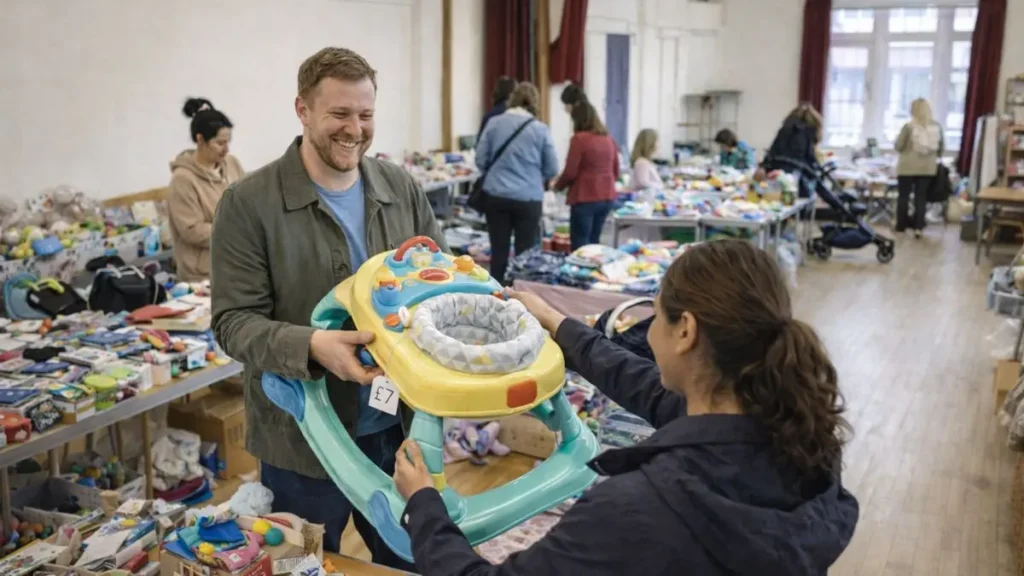
Which bulky baby items are best sold locally
Some items are simply not suited to postage, no matter how valuable they feel, even if they originally cost hundreds.
Things like prams, travel systems, cots, cot beds, high chairs, and larger toys are usually much easier to sell locally. These items are often too big for standard parcel sizes and can be awkward to dismantle, pack, and send safely.
From experience, once something goes beyond roughly a shoebox size, the effort of posting increases quickly. With bulky items, that effort often outweighs any benefit of listing them on platforms that rely on postage.
Local selling avoids that problem entirely. Buyers can see the item in person, and you avoid the risk of damage or disputes over condition during delivery.
Where to sell bulky baby items locally
In practice, where you list bulky items can make a big difference to how quickly they sell and how much effort is involved.
Facebook Marketplace is usually the easiest starting point. It reaches local buyers quickly and is designed for collection, which suits larger items well.
Local selling groups (such as community Facebook groups) can also work well, especially if they are active and focused on family items.
Second-hand baby markets and nearly-new sales are another good option if you have multiple items. These events attract parents specifically looking for baby gear, which can make it easier to sell bulky items in one go without arranging separate collections.
Some parents also use local apps or community noticeboards, but these tend to be slower and less predictable.
In most cases, starting with Facebook Marketplace and then considering local pre-loved markets if items do not sell is a simple and effective approach.
Setting up your listing so it attracts the right buyer
With bulky items, clarity matters more than anything else.
Buyers are often trying to decide quickly whether it is worth the trip, so your listing needs to answer their questions upfront. Clear photos, accurate measurements, and honest descriptions all help reduce unnecessary messages.
It also helps to include practical details such as whether the item is already dismantled, how large it is when assembled, and whether help will be needed to move it.
The more clearly you set expectations, the less time you spend answering the same questions repeatedly.
Pricing for a quick, realistic sale
Bulky items are different from smaller items when it comes to pricing.
Even if something originally cost a lot, buyers will factor in the effort of collecting it. That often means prices need to be slightly more realistic to encourage interest.
From experience, pricing with the goal of a straightforward sale rather than holding out for the highest possible amount tends to work better, otherwise items can sit for weeks. A slightly lower price can save days or weeks of back-and-forth.
If you want a quick way to sense-check your price, this rough guide can help:
- Great condition (clean, complete, near-new): around 60–80% of original price
- Good condition (used but well kept): around 40–60% of original price
- Heavily used (visible wear or missing extras): around 20–40% of original price
These are not fixed rules, but they give you a starting point so you are not guessing.
If you are unsure, checking similar items locally can give you a rough sense of what people are actually willing to pay.
Handling messages without getting stuck in back-and-forth
One of the biggest frustrations with local selling is messaging.
You may get multiple enquiries that do not lead anywhere, or people asking questions already answered in the listing. Keeping replies short and consistent helps reduce the time this takes.
It can also help to set simple expectations early, such as collection times or whether the item is still available. This reduces the chance of long conversations that do not result in a sale.
If someone is slow to reply or unclear, it is better to keep your options open rather than waiting.
Making collection simple and low stress
Collection is often the part people worry about most, but a few simple steps can make it easier.
Choose a time that works for you, and avoid leaving large gaps where you are waiting around. Let the buyer know clearly where to collect from and whether help will be needed to move the item.
If possible, keep collection straightforward. Having the item ready to go, near a door or in an accessible space, can make the process quicker and more comfortable for everyone.
For safety, some parents prefer to have another adult at home during collection or keep the interaction brief and practical. In our experience, buyers usually want this too, and collections are often over within a minute or two.
It can also help to keep things simple when it comes to payment. Many parents prefer cash on collection, or a bank transfer before the item is loaded, so everything is clear and settled before the item leaves.
Handling no-shows and time-wasters
No-shows are one of the most frustrating parts of selling locally, so it helps to have a simple rule in place.
From experience, it is best not to hold an item for long periods without commitment. A simple approach is to only hold for a short window (for example, a couple of hours) unless a collection time is firmly agreed.
This keeps things moving and avoids losing genuine buyers while waiting on someone who may not turn up.
When local selling is not worth the effort
Even with the right approach, not every item is worth selling.
If something is very low value, heavily worn, or likely to attract lots of time-wasting messages, it may not be worth the effort. Large items can take up space while you wait for the right buyer, which adds its own pressure.
In those situations, it can be easier to reduce the price, give the item away, or donate it rather than continuing to manage enquiries.
The goal is not to maximise every sale, but to make the process manageable.
What to think about before listing
If you are unsure whether to sell locally, it can help to ask a few simple questions.
Is the item easy enough to move or store while you wait?
Are you comfortable arranging a collection time?
Would a quicker, simpler option feel better than holding out for more money?
If local selling feels like the least stressful option, it is usually the right one for bulky items.
Where to go next
If you want to make the process even smoother or explore other options, these can help:
- Selling baby items on Facebook Marketplace – useful for reaching local buyers quickly and understanding how listings perform in practice
- Is ebay worth it for selling baby items? – helps you decide if an item might be worth the extra effort of listing online instead
- When donating baby items makes more sense than selling – helps you decide when it is easier to move on without the hassle
What to take away
Bulky baby items are often easiest to deal with when you keep things simple.
Selling locally removes a lot of the friction that comes with posting large items, but it still works best when expectations are clear and the process is straightforward.
Focusing on ease rather than squeezing out every pound can make the whole experience feel much more manageable.
FAQ
What is the best place to sell bulky baby items locally?
Facebook Marketplace is often the easiest option, as it connects you with nearby buyers quickly.
Should I dismantle items before selling?
If possible, yes. It makes transport easier for buyers and can make your listing more appealing.
What if buyers do not turn up?
This can happen with local selling. Keeping communication clear and confirming collection times can help reduce the risk.