
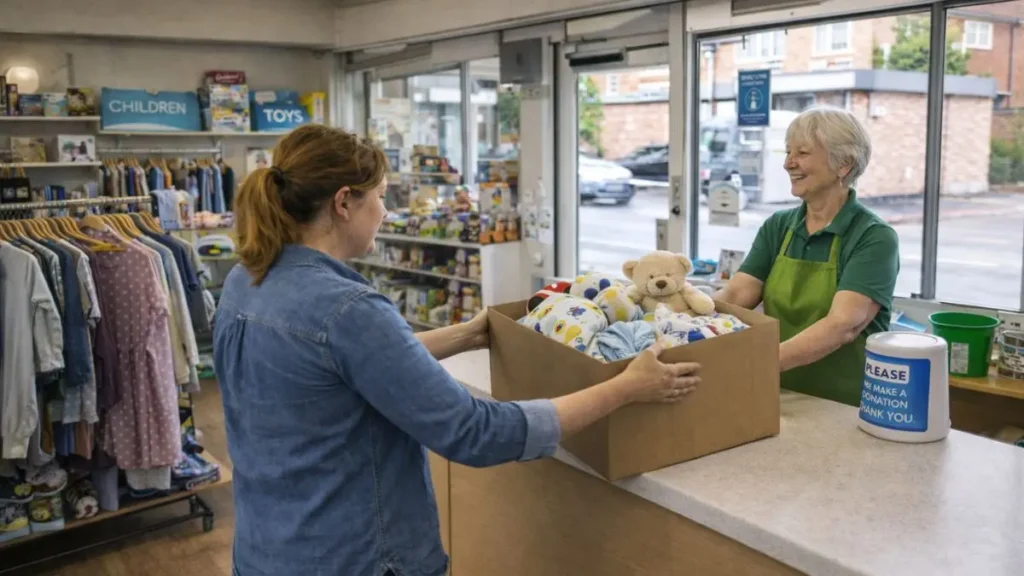
If you are looking at a pile of baby items and wondering whether it is even worth listing them to sell, this is the quickest way to decide. Some things sell easily, but others sit, take time, and add more effort than they are worth. This guide helps you work out when to sell and when it is easier to donate, so you can move things on without second-guessing.
Quick summary
If you are stuck deciding whether to list or let go, use this quick filter to decide in under a minute. Start by asking: would this realistically sell for enough to justify the time it will take to clean, photograph, list, message, and wait? If the answer is unclear, these checks help you make a practical call quickly without overthinking:
- If an item is low value or widely available, donating is often the quicker and easier option
- If you would not buy it yourself second-hand, others may not either
- If listing feels like a chore, it is often a sign to donate
- If time or space matters more right now, donation is usually the easier option
- Letting go can be the most practical decision, not a wasted one
This article is for / not for
This article is for:
- Parents deciding whether selling is worth the effort
- Anyone feeling stuck between listing and letting go
- People who want a simpler way to clear space
This article is not for:
- Maximising profit from high-value items
- Running a resale side business
- Detailed advice on where to donate (this is about the decision itself)
If this isn’t quite right for you
You might find these more helpful:
- The best place to sell baby items – helps you decide where to list if selling still makes sense
- Tidying with toddlers – Tidying up with Marie Kondo on Netflix – helpful if you are finding it hard to let go of things, especially when there is emotional attachment, as it focuses on keeping what matters and releasing the rest without guilt
Or browse all our Money articles.
If this article feels relevant for you, read on.
When selling starts to feel like more effort than it is worth
Selling works well for some items, but not everything.
In practice, there is a point where the time spent taking photos, answering messages, and waiting for interest starts to outweigh what you will get back.
This is often where things stall. Items sit, you keep meaning to list them properly, and they quietly become clutter again.
Recognising this early can save a lot of time and mental load.
For example, if something is going to take you 45 minutes or more to clean, photograph, write a description, answer messages, and then pack and drop off, but you can only sell it for a few pounds, it is worth pausing and asking whether that time is better spent elsewhere. In many cases, it simply is not worth the effort.
Signs an item is probably not worth selling
Some items look like they should sell, but in real life they rarely do.
This often includes heavily worn clothing, low-value toys, or items that are easy to find cheaply new.
A few simple checks can help you decide quickly:
- If similar items are listed cheaply and not selling, yours may struggle too
- If you would only price it very low, the effort may not be worth it
- If it needs cleaning, fixing, or extra work before listing, that adds friction
These are not strict rules, but they help you filter without getting stuck.
When donation makes more sense
There are times when donating is simply the better option.
If you need space quickly, donation removes the waiting and the back-and-forth.
If an item has low resale value but is still usable, it can be more helpful to someone else than sitting unsold.
And if you are already stretched for time, skipping the listing process can make everything feel lighter.
In many cases, the value is not in the money you might make, but in getting the item out of the house and off your mind.
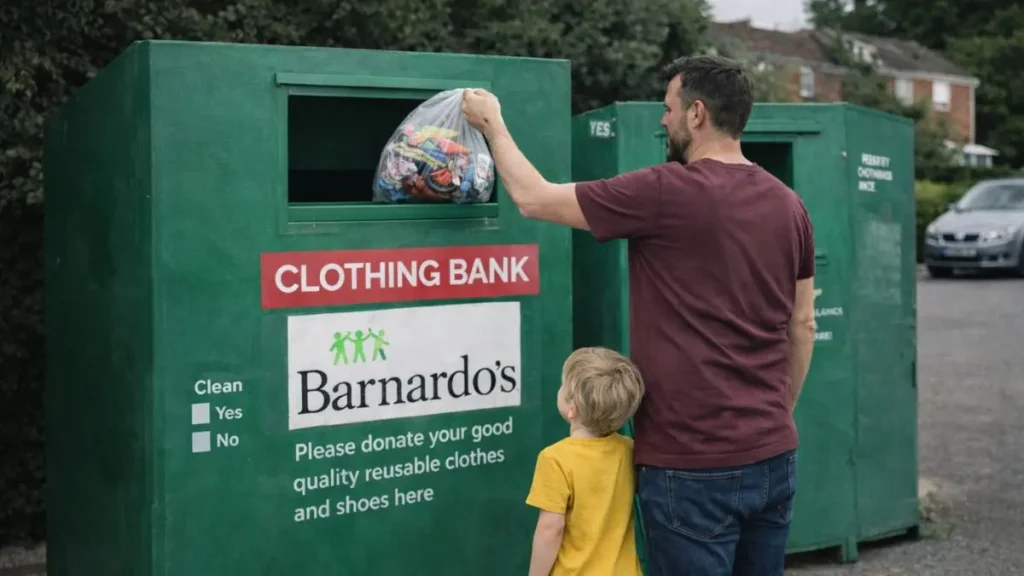
It is also worth doing a quick sense-check before donating. Items that are heavily stained, broken, or very worn can be difficult for charities to resell and may create extra work or disposal costs for them. If something is not really usable, it is often better suited to a clothes bank or recycling rather than a charity shop.
Similarly, leaving bags outside charity shops, especially outside opening hours, can cause problems if they get wet, damaged, or cannot be accepted. A quick check before donating helps make sure your items are genuinely helpful rather than adding to the workload.
The emotional side of letting things go
It is not always just about practicality.
Baby items often carry memories, and letting them go can feel bigger than it should.
Selling can sometimes feel like a way to hold on a bit longer or to make it feel “worth it”.
But in reality, choosing to donate can be just as valid. It is simply a different way of moving on from that stage.
For many parents, letting go without the pressure to sell can feel like a relief.
What we have found in real life
From experience, a simple rule works well: sell the few items that are clearly worth it, and donate the rest. Trying to sell everything usually adds time, messages, and waiting without much return. Focusing your effort on higher-value or in-demand items keeps things manageable and helps you move everything on faster.
Why choosing the easier option is sometimes the smarter one
It can feel like you “should” try to sell everything, especially if money is tight.
But in practice, the return on many items is small compared to the effort involved.
Choosing the easier option is not giving up. It is recognising what is worth your time right now.
For many parents, that shift makes the whole process feel less overwhelming.
Where to go next
If you are deciding what to do with your items, these can help you take the next step:
- What baby items you should not sell second-hand – helps you filter out items that are better avoided entirely
- How to sell bulky baby items without the hassle – useful if you have larger items that are still worth selling
- Selling baby items on Facebook Marketplace – helps you understand when local selling is the easier option
What to take away
Not every baby item needs to be sold.
If something feels like more effort than it is worth, it probably is.
Choosing to donate can save time, reduce stress, and still feel like a positive way to move things on.
Sometimes, the simplest option is the one that works best.
FAQ
Is it better to donate or sell baby items?
It depends on the item and your situation. Higher-value items are often worth selling, but for lower-value or slower-moving items, donating is usually quicker and easier.
What baby items are not worth selling?
Items that are heavily worn, low value, or widely available tend to be harder to sell. These are often better donated.
Do people still want second-hand baby items?
Yes, but demand varies. Items in good condition and at the right price tend to sell, while others may struggle to attract interest.